VAIVÉN
A sensory portrait of fleeting human connection along the beaches of Barcelona
Directed by Riley Blakeway
words by Isabella Bazoni
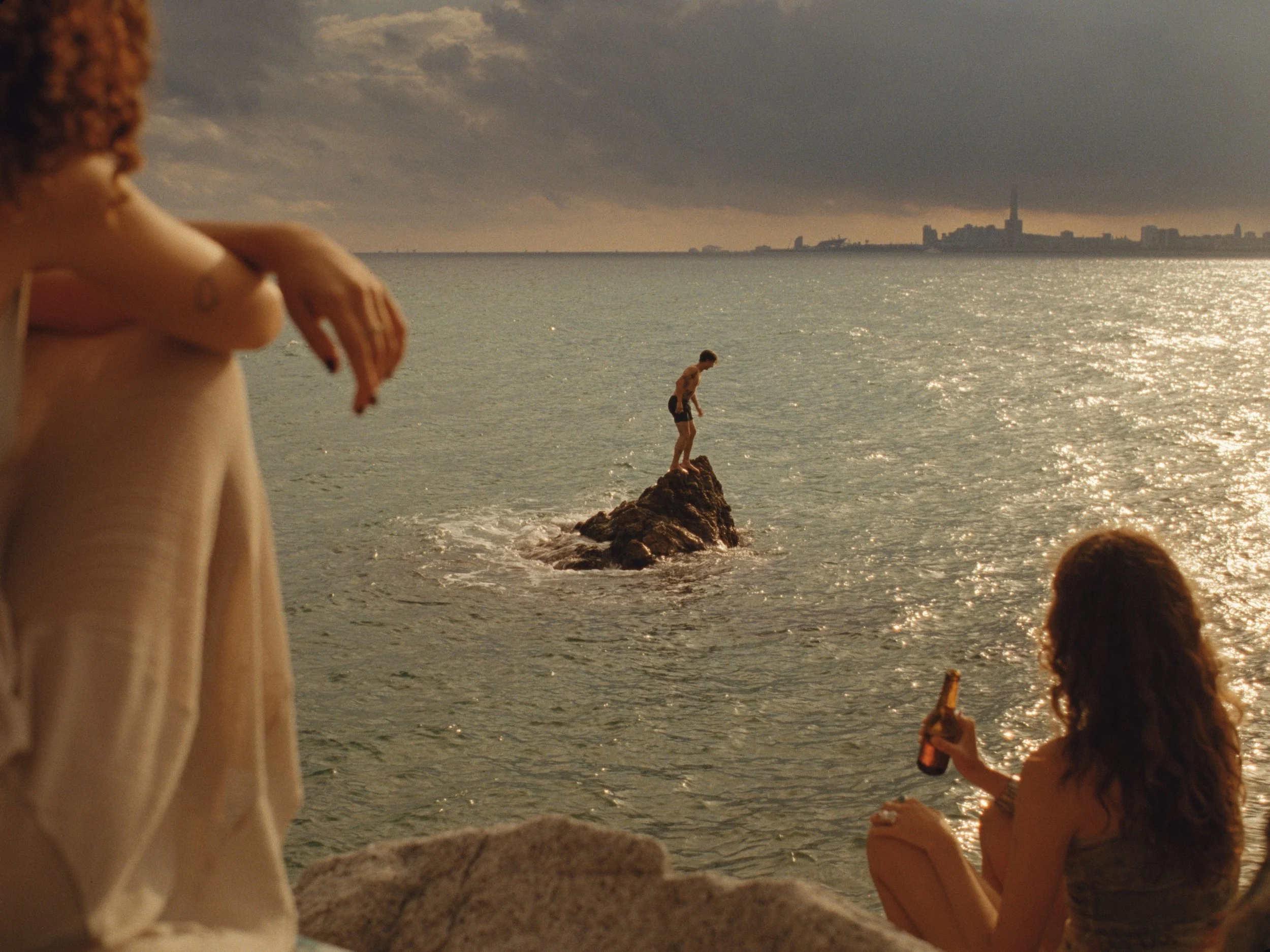
In Vaivén, director Riley Blakeway turns his attention toward the quiet choreography of a day at the beach. Moving from sunrise to sunset across the Barcelona coastline, the film observes three generations of beachgoers through fragments of movement, gesture, sound, and interaction—small moments that gradually build into something deeply immersive and human.
Rather than following a conventional narrative, Blakeway approaches the beach almost like a living organism, shaped by repetition and rhythm. Waves roll in and out, bodies drift through the frame, conversations overlap, and moments of intimacy emerge almost incidentally. There’s a looseness to the observation that feels instinctive, allowing the atmosphere of the space to guide the film rather than imposing structure onto it.
Known for work that moves fluidly between documentary, music video, and narrative filmmaking, Blakeway brings the same emotional sensitivity here, but in a more restrained register. The film relies heavily on sound and texture, using Thom Pringle’s original score and detailed sound design to pull the viewer into the sensory flow of the environment. What emerges is less a portrait of a specific place than a meditation on shared experience, routine, and the subtle emotional currents that pass between strangers. There’s no dramatic arc or destination in Vaivén, only the gradual accumulation of moments. But within that simplicity, the film finds something expansive: a portrait of people moving through time together, suspended between stillness and motion, solitude and community.
Vaivén leans into something very minimal and observational, yet it holds your attention throughout. At what point did you realise that these small, everyday moments could carry an entire film?
Honestly, I never even stopped to think about this. I feel a lot of my earlier work centred around these small human observations and I never really stopped to think if they would be “enough”. If anything, I think we just refined how long we can stay with them and hold attention. Or how we could use them in a sequence to tell a bigger story. Music played a big role in this execution.
There’s a really strong sense of rhythm running through the piece, almost like a visual composition. Was that something you were consciously constructing, or did it emerge more intuitively during the shoot?
I love that. A visual composition is a great description for what we set out to accomplish. The original idea was essentially a music video created by the natural cadence of a day at the beach. Originally, only images that contributed to the soundtrack would be used and when we were scouting, myself and the composer Thom Pringle were just searching for visual elements that made noises that could contribute to a rhythm. As things progressed I felt that this approach was detracting from the humanity and the film evolved into a more fluid space with soundtrack.
Sound feels like it’s doing as much storytelling as the image, if not more in certain moments. What did that collaboration look like with Thom Pringle, and how early did you start shaping that sonic world?
Thom was my key collaborator from the beginning. He makes a lot of the music in my work. Almost all of the music in my personal work. So our relationship is extremely close and we get each other without saying much. The end result doesn’t speak to this so much but we created a lot of the sequences sonically, with sound elements in pre production. The volleyball sequence for example, we had already created this hit-turned-beat sequence before we shot, so in that sense the sounds really did dictate quite a lot. Things free’d up in the edit but that’s where we started.
“The original idea was essentially a music video created by the natural cadence of a day at the beach.”
Shooting in a real, ever-changing environment like a public beach comes with its own unpredictability. How much of what we see was planned, and how much came from responding to what was happening around you?
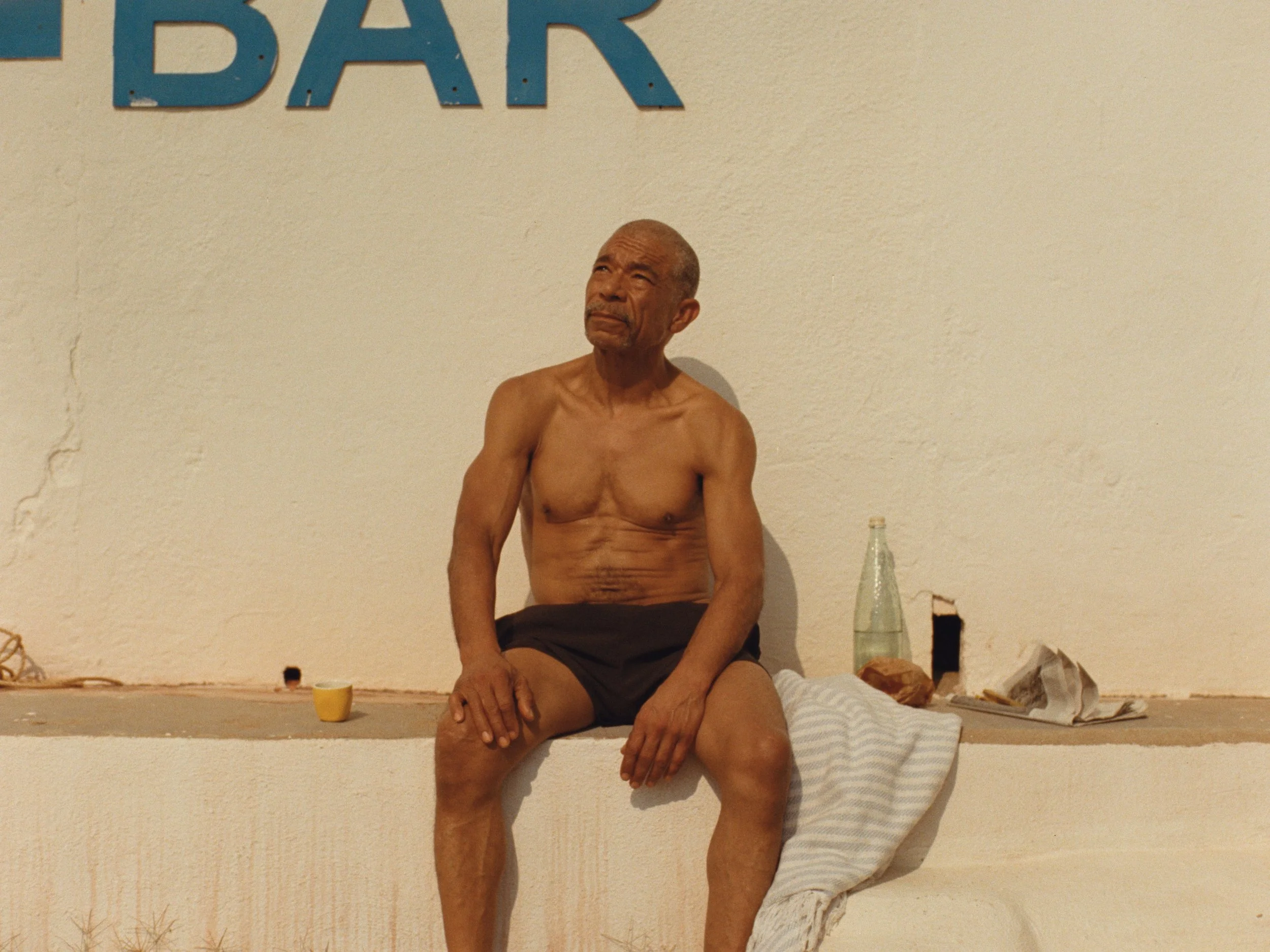
The majority was planned. All of the set elements were purposely minimal and designed, all of the blocking was crafted in pre production. I wanted the action to be natural and observed, but the setting to feel stripped back, minimal and almost otherworldly. There’s a certain familiarity with dissonance to the film that is potentially my favourite part of what we executed. A lot of this was my DOP Jack Birtles putting his stamp on things too.
The film moves gently between different people and generations without ever feeling fragmented. What were you looking for in casting, and how did you approach directing non-performative, natural moments?
As best I could! In casting, It was more feeling based for me rather than preconceived ideas. I work with non-actors a lot and so this space feels comfortable. I just wanted an ensemble that felt real. The performance element was simple in that regard, the challenge was making the performances feel real inside these very purposeful stacked shots. But it was all very fluid on the day. Working with kids that age is not without it’s challenges but I try to just play along with them as a friend and allow them space to be themselves (with a giant camera in their face).
“Once I got in the edit I threw any commercial expectations out the window and built the sequences purely from the way the shots made me feel.”
You’re holding quite a delicate balance between structure and looseness here. When it came to the edit, how did you know when a moment had “landed” without overworking it?
A beautiful question but one I’m not sure I can articulate in definitive terms. This work is pure feeling and so taking on the role of editor for this project was crucial to me. Once I got in the edit I threw any commercial expectations of shots making sounds and concept out the window and built the sequences purely from the way the shots made me feel. Then Thom and I riffed off each other in conversation until we had a composition that just felt right. But truth be told, I am always interrogating shot length until the final hour.
This piece feels like a continuation of your interest in human behaviour and emotional texture, but also a step into something more stripped back. Did making Vaivén shift anything in how you think about storytelling or scale?
I love how stripped back this film is. The approach really strips away any distraction from the moment. But I feel from a narrative standpoint, in a feature film for instance, the audience would potentially start to lose faith in the realism. Even if only on a subconscious level. And so, yes I would love to make more work like this… but with my upcoming feature film, I don’t feel this will be the approach.
director — RILEY BLAKEWAY
director of photography — JACK BIRTLES
original music — THOM PRINGLE
executive producer — SARAH BRANNAN, TRUST
production company — ANNEX
executive producer — MARTÍ TORREBADELLA
producer — SOPHIE ZAYAN
production coordinator — AINARA ARIZTOY
production designer — MARIA JOSÉ GIL
1st ac — MARTÍ ESTUPINYÀ
2nd ac — FERRAN HERNÁNDEZ
gaffer — DANI ÁLVAREZ
sound recordist — AGUS BALDA
runner — JULIANA HERNÁNDEZ
editor — RILEY BLAKEWAY
sound design — THOM PRINGLE
colour grade & key art — WESLEY GRANT
cast — MICHAEL WALLACE-TARRY, LATIFA OUNACEUR, IRENE MARSAL BLASCO, LAZARO IZQUIERDO ALVAREZ, ALYSSA GRANT, TATIANNA BAKWENYE, ANNA OGE BAKWENYE, SCOUT PLIZ, KODAK POHL
special thanks — IMOGENE BARRON, MARTÍ HERRERA, GUILLEM CRUELLS, MINH PHAM, SANDRA POHL
supported by — TRUST, ANNEX, KODAK, NAPALM