UK Music Video Awards 2026 Opens for Entries
With entries open until 3 August, we spoke with organiser and Event Director Louise Stevens and Event Producer Nadya Jones about the past, present and future of the UK Music Video Awards.
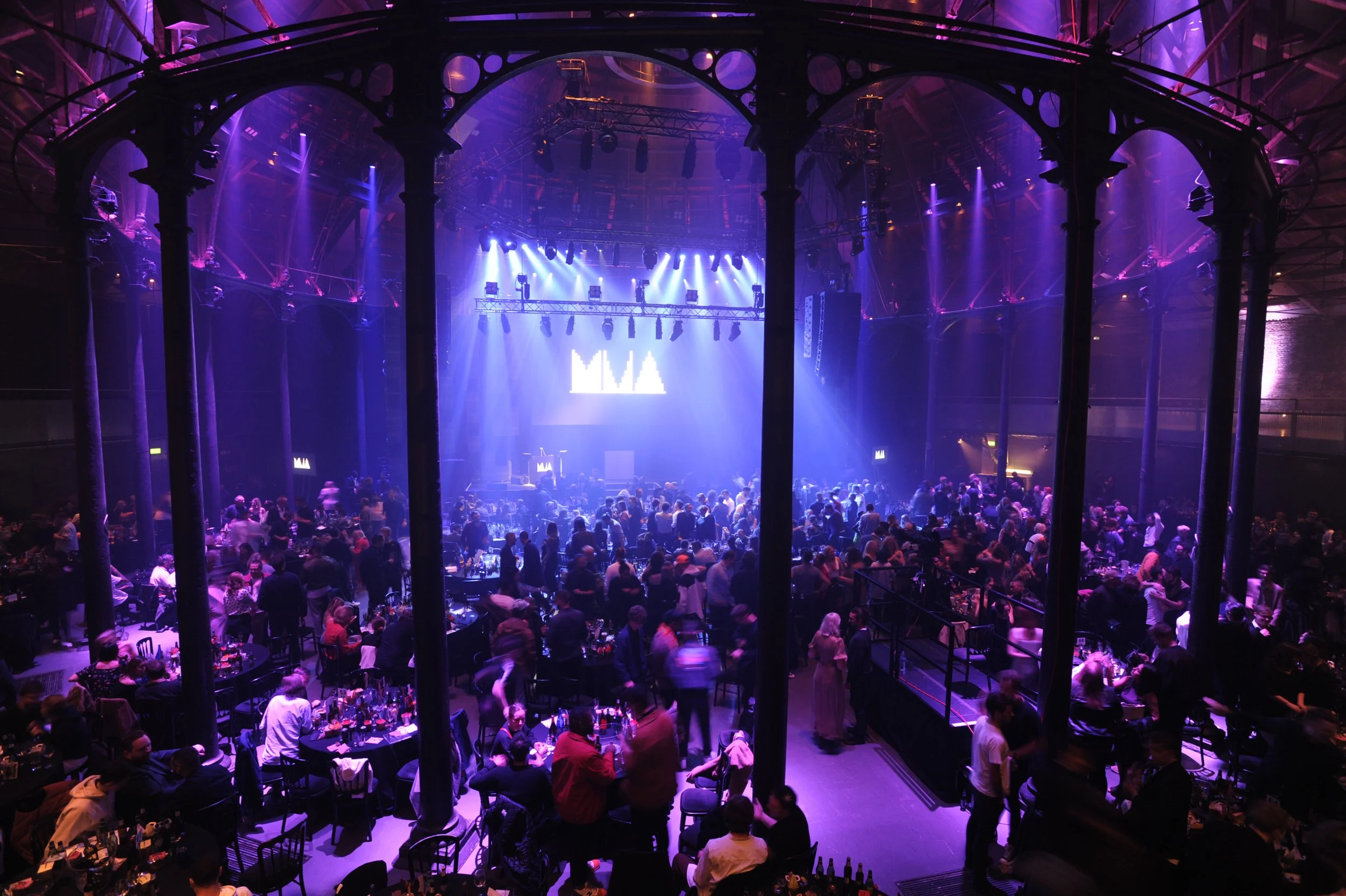
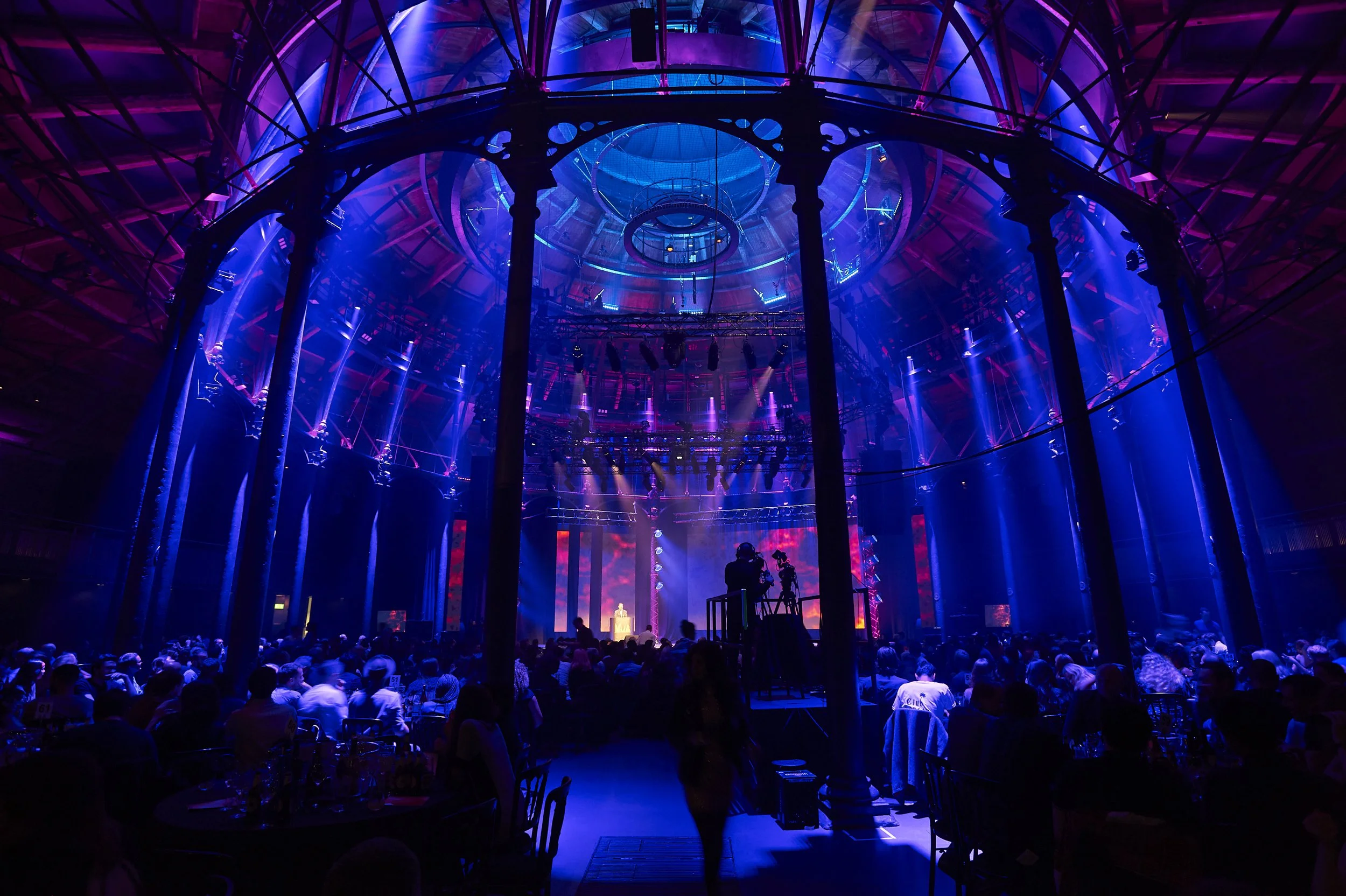
The UK Music Video Awards ceremony at London's Roundhouse.
By Curation Hour
With submissions open until 3 August, the UK's leading celebration of music video craft returns for another year of championing the filmmakers shaping the medium.
Entries are now open for the UK Music Video Awards 2026, with directors, producers, commissioners, production companies and craftspeople from around the world invited to submit their work before midnight (UK time) on 3 August 2026. Since launching in 2008, the UKMVAs have established themselves as one of the industry's most respected celebrations of music video, recognising excellence across every stage of the filmmaking process. This year's awards will be taking place at London's Roundhouse on 4 November 2026.
What sets the UKMVAs apart is the breadth of the work they recognise. Alongside awards for directing and genre-specific music videos, the programme shines a light on the people behind the camera — from producers, cinematographers, editors, production designers, stylists and choreographers to colourists, animators, VFX artists, commissioners and agents. It's a reminder that music videos are among the most collaborative forms of filmmaking, and that every creative discipline plays a vital role in bringing an artist's vision to life.
The awards have also become an important platform for discovering new talent. Over the years, the Best New Director category has recognised filmmakers including Luna Carmoon, Andrew Thomas Huang, Oscar Hudson, Aube Perrie, Helmi, David Wilson and AG Rojas long before they became some of the industry's most sought-after creative voices. At the other end of the spectrum, the UKMVAs' Icon Award has honoured figures whose work has helped define the medium, including Jonathan Glazer, Michel Gondry, Floria Sigismondi, Jonas Åkerlund, Hammer & Tongs, Joseph Kahn and Julien Temple.
As music videos continue to evolve alongside advertising, fashion film and short-form cinema, the UKMVAs remain one of the few awards dedicated entirely to the format and the people pushing it forward.
Ahead of this year's edition, we spoke with Louise Stevens, organiser and Event Director, and Nadya Jones, Events Producer at the UKMVA, about the story behind the awards, how the landscape has evolved over the past eighteen years, and why music videos remain one of the most exciting spaces for emerging filmmakers today.
The UKMVAs have now been championing music videos for nearly two decades. Looking back to 2008, what was the original motivation behind creating the awards, and how has that vision evolved over the years?
Louise Stevens: Simply put, we launched the UKMVAs to highlight the cultural significance of an industry that has always been a hotbed of creative talent. It has always been about celebrating brilliant collaborations between musicians and directors, and the vital contribution of filmmaking crafts like cinematography, production design, editing and animation in the making of videos. Our vision had been to get away from the formality of awards shows in hotels, and make something that felt right for our industry: presenting the work on the big screen where it deserved to be seen and making it open and accessible to as many people as possible.
The previous year, we had launched BUG, a big screen showcase of music video creativity at the British Film Institute hosted by comedian and broadcaster, Adam Buxton. To this day, BUG remains one of the BFI's most successful long-running strand, and while other commitments have affected how regularly we've been able to put on the BUG shows in recent years, the strand remains very much alive and is currently at Lightroom in London's King's Cross with its David Bowie Special.
With BUG underway and pulling in big audiences, it felt like the right time to create a music video awards event that recognised the talent behind the incredible creativity we were showcasing at the BFI. The first UKMVAs was launched in Spring 2008 and culminated in an awards show in October of that year at a major cinema in London’s Leicester Square, with Adam Buxton as host, Jonathan Glazer collecting the Icon Award and Bjork’s Wanderlust named Video of the Year. It was a riotous, joyful night and we knew we were on to something special.
Nadya Jones: My journey with the UKMVAs began 13 years ago. Lou and I had known each other for some time through our work in the music industry. I had previously worked at the UK's Official Charts Company and the Brit Awards and other UK record industry key awards. So, I had experience of large scale events, a comprehensive knowledge of the full awards lifecycle and extensive knowledge of the music industry, but I was sick of corporate life and was looking for new opportunities in a space where creativity wasn’t stifled and was platformed front and centre, so when Lou approached me to join the team, I was all in.
The year I joined the UKMVAs, we moved the Awards show to the Southbank Centre to accommodate our growing audience: we had extended the number of international categories and we were welcoming more filmmakers from outside of the UK to the awards show. We were also in the midst of an incredible period of music video creativity with directors like Diane Martel, Floria Sigismondi, Hiro Murai, Martin de Thurah, Garth Jennings, Megaforce and Keith Schofield all featuring in the nominations and over 750 industry professionals at the show.
Over the following years, international awareness of the UKMVAs continued to grow and last year we saw entries from 39 different territories representing all continents of the globe and the Awards itself has become one of the industry's most loved and respected gathering of music video creatives, under one roof.
The music video landscape has changed dramatically since the UKMVAs launched — from broadcast television to YouTube, social media, streaming platforms, and increasingly fragmented viewing habits. How do you see the current state of music videos as a creative medium? And what do you think has allowed the format to survive, and perhaps even thrive, through so much change?
LS: I think it’s precisely the creativity and invention required to make music videos which has enabled them to survive and thrive. While viewing habits have undoubtedly changed, directors are demonstrating that they still understand the audiences, and are best placed to create visuals for music that challenge, surprise and delight fans. I don’t think there’s any doubt that music videos are still a hotbed of visual creativity, and can still deliver impact across multiple platforms.
“We launched the UKMVAs to highlight the cultural significance of an industry that has always been a hotbed of creative talent.”
The UKMVAs receive work from across the world and across every scale of production. When it comes to building a shortlist, what does your curatorial process look like, and what are you hoping to discover each year?
NJ: We have the most extensive Jury of any awards of this kind, with over 400 industry professionals taking part in the judging process. Every entry into the UKMVAs is seen by the Jury, with jury members allocated individual categories from our music genre, video, craft and technical categories to assess online via our bespoke platform in round one. The scores from round 1 judging deliver a ‘longlist’ which is then taken to a second round of judging. For the 2nd round, panels of Jury members are selected in accordance with their specialisms and invited to attend online judging sessions where they discuss the work ahead of voting in a secret ballot. These final votes decide the nominations and winners.
Our individual and company categories see nominees present a body of work from the past year, and Jury members are invited to vote in 1 or more of these categories to select the final shortlist and winners.
LS: Of course it’s always great to discover work and directors who you haven’t come across before, and our global reach means that we get the opportunity to see new directors who are pushing the boundaries of music video creativity. Also, our partnerships with a series of other global music video festivals gives a chance for creators from territories who might not otherwise submit work to be seen by our Jury.
But it’s also important to us that the UKMVAs continues its legacy of championing standout work by individuals and teams whose passion for music videos has helped to keep the art form alive in the face of myriad changes and challenges. It’s always satisfying to see some of our more experienced creatives being recognised for continuing to push the boundaries of excellence over multiple years.
One of the things that makes the UKMVAs unique is the attention given not only to directors, but to the wider creative ecosystem behind a video. At the same time, categories like Best New Director have become known for spotlighting future industry leaders. What role do you think platforms like the UKMVAs can play in helping creative talent build sustainable careers?
LS: We’ve always been keen to recognise excellence across the spectrum of music video production, because, let’s face it, the medium demands a level of passion and skill across all departments to create really standout work. So, whether that be agents and commissioners who are championing new talent, producers who are making the impossible possible, or craftspeople and technical artists whose individual skills elevate the final film, there are some hugely talented and dedicated people out there who are keeping the artform vital and they deserve to be celebrated. Last year, we added an award for casting directors to recognise their role in music video creativity and we were delighted when Selma Nicholls CDA was awarded the trophy for her work on Tom Emmerson’s Bakar – Lonyo! video.
Obviously being nominated for or winning an award is a fantastic showcase for directors and all production talent, but I think the impact of the UKMVAs goes deeper than that. Just being able to get your work in front of such an extensive Jury, or having the chance to take part in Jury sessions with people you might not have met before can start conversations and lead to future collaborations. And having everyone together in a big room for the night of the Awards is the pinnacle of that – knowing you’re part of a bigger community and being able to meet others who share your passion is essential. The feelgood factor of a night like that shouldn’t be underestimated!
“I was looking for new opportunities in a space where creativity wasn’t stifled and was platformed front and centre, so when Lou approached me to join the team, I was all in.”
As people who have spent years immersed in music videos through both BUG and the UKMVAs, have you noticed any recurring themes, visual languages, or broader creative shifts emerging in recent years? Are there any trends that particularly excite you?
LS: Absolutely! When you’ve been around as long as we have, you do see recurring themes and occasionally homages to earlier videos. Nadya and I go through every single entry before we launch judging and when you’re looking at that many videos, you can’t help noticing recurring imagery. But there are always plenty of surprises too! It’s fun to see directors developing their visual language but also enjoyable when you see creators deliver something completely unexpected.
Naturally with the proliferation of new technologies we’ve seen a shift towards experimentation in the newcomer and low budget categories, but it’s still exhilarating to see the level of craft in a stop-motion piece, or where there has been an investment in carefully thought-out casting, production design or choreography.
In recent years, alongside our sponsor Kodak, we’ve been tracking the videos entered into the UKMVAs which are shot on film and it’s been great to see that the number is rising again.
And of course, we’re going to say that there still aren’t enough female directors being recognised – but the talent is out there!
After nearly twenty years of celebrating music videos, what still excites you about the medium, and what's next for the UKMVAs?
LS: Everything! The work, the people, the constant innovation and agility, the dedication to the craft. Our work brings us into contact with a lot of different companies and individuals and it’s a privilege to be the recipients of their hard work.
As for what’s next, you’ll have to wait and see! Our 20th anniversary is just around the corner and it’ll be one helluva celebration!
At a time when the boundaries between music videos, branded content, fashion film and narrative filmmaking have become increasingly fluid, music videos remain one of the few spaces where directors can experiment freely, develop a distinct visual language, and take creative risks. Many of today's most celebrated commercial and narrative filmmakers first established their voices through the format, making it an enduring incubator for new ideas and emerging talent.
The UKMVAs continue to reflect that spirit. By recognising not only finished films but also the creative teams behind them, the awards celebrate the collaborative craft that makes music videos such a unique form of filmmaking. From breakthrough newcomers to established directors and world-class craftspeople, they offer an annual snapshot of where the medium is today — and where it's heading next.
Entries for the UK Music Video Awards 2026 are open until 3 August. The programme spans music video genres, directing, production, cinematography, editing, choreography, styling, production design, colour grading, animation, visual effects, casting, creative commissioning, executive production and more, alongside the long-standing Best New Director category, which continues to spotlight the industry's next generation of filmmaking talent.
For more information, submission guidelines and the full list of categories, visit the UK Music Video Awards website.