THE CURE
A handmade fever dream of heartbreak, obsession, and emotional unraveling
Directed by Cat Solen and Jaime Gerin
words by Isabella Bazoni
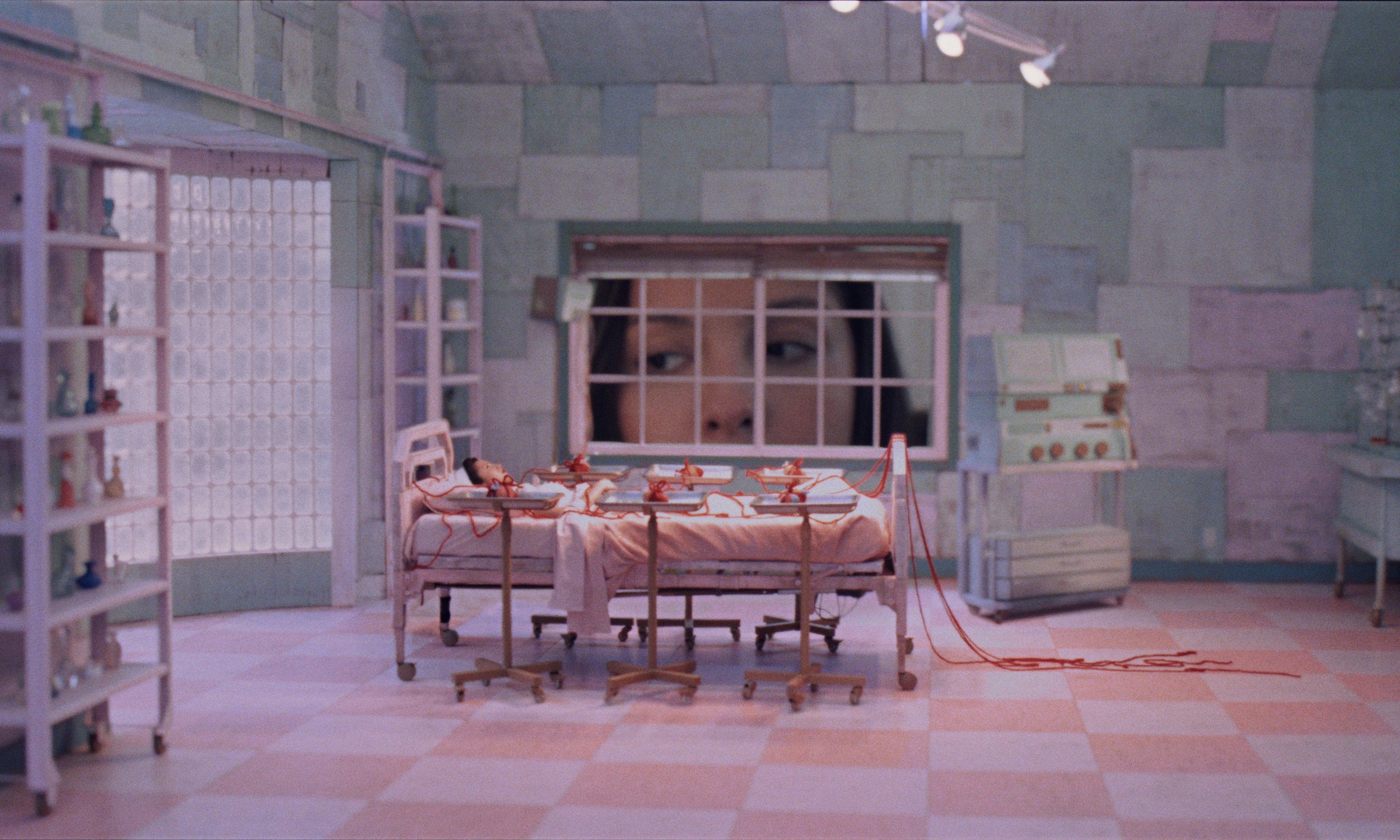
In The Cure, directors Cat Solen and Jaime Gerin turn heartbreak into a tactile fever dream. Set inside a handmade cardboard hospital, the video follows Olivia Rodrigo through looping corridors of emotional collapse, where broken hearts are dissected, stitched back together, and slowly pushed toward ruin again.
Blending live action, stop motion, stitched textures, and practical craft, the film feels fragile in the best possible way — like a world that could physically fall apart at any second. Beneath the surrealism and theatricality, though, there’s something emotionally sharp holding it all together: a portrait of heartbreak staged with the logic of a handmade nightmare. The collaboration between Solen and Gerin brings together two distinct sensibilities that feed naturally into one another. Gerin’s original concept and boards establish the emotional architecture of the piece, while Solen’s long history working with tactile mixed-media and stop-motion techniques gives the film its handmade physicality. Rather than treating craft as nostalgia or novelty, they use it to heighten the emotional instability running through the video.
At its centre, though, the video remains focused on performance. Humour, theatricality, and heartbreak constantly overlap as Rodrigo moves through the chaos with a mix of vulnerability and restraint, grounding the film’s handmade absurdity in something recognisably human. The result feels both intimate and unhinged — an emotional breakdown staged like a carefully constructed fever dream.
The Cure creates such a specific handmade universe, balancing something playful, surreal, and emotionally raw all at once. How did the two of you first begin developing the concept together, and what initially drew you toward this cardboard hospital world?
Cat Solen: When Olivia and Jaime first brought me onto the project, they had already developed the concept together. Jaime had written on a piece of people “I cannot stress enough that this entire hospital is made of arts and crafts,” and had drawn storyboards for all of the main beats of the video. I was immediately drawn to the project, having extensive experience with practical effects, animation, and, specifically, a background in fiber arts. Meeting Olivia and Jaime, I immediately felt a connection to them and was very excited for the collaboration.
Jaime, Cat mentioned immediately connecting to your original concept and boards. What were some of the earliest visual references, ideas, or emotions shaping the project during those first stages of development?
Jaime Gerin: The idea was originally just a stream of consciousness I wrote out after driving around listening to the song. My very first mood boards included the cardboard room in The Science of Sleep, a random picture of a felt heart, a corded telephone that was wrapped in cardboard, various vintage Avon bottles, and this image from a 1920s Movie magazine called Pantomime. This was the image that inspired our ending shot, where she’s surrounded by hearts. Through compiling this imagery that, at a glance, feels random, we were able to build out a world where it all fit together. The most important thing to me was that emotionally, it felt like a response to Olivia’s incredible song and that the visual and the song are in conversation with each other.
“The most important thing to me was that emotionally, it felt like a response to Olivia’s incredible song—and that the visuals and the song are in conversation with each other.”
Cat, your background with tactile mixed-media and stop-motion work feels deeply connected to the visual language of this piece. What was it like returning to those materials and techniques in a completely new context all these years later?
CS: It was so exciting to reconnect with my experience in tactile mixed media, combining fiber arts with stop-motion animation. The first time I commercially combined animation with felting/embroidery was in 2002 for my first music video, Bowl of Oranges by Bright Eyes, and I was one of the first people to ever do it on that broad a scale.
I had been a student of fiber/material studies with a double major in film. To me, animation and fiber arts were a very natural pairing because the tedious nature of both forms of art-making was so similar. Stitches create the illusion of larger images, the way frames create the illusion of movement. It’s been about 20 years since my second Bright Eyes video for At the Bottom of Everything, which combined felted clouds and papier-mache airplanes with live action human passengers.
When Jaime first told me her and Olivia’s concept for The Cure, I knew it was the right time to bring it back. I also think it’s the perfect time (in the film and commercial industries) to make things by hand. To show practically how our effects are done, to connect very directly and deliberately with others.
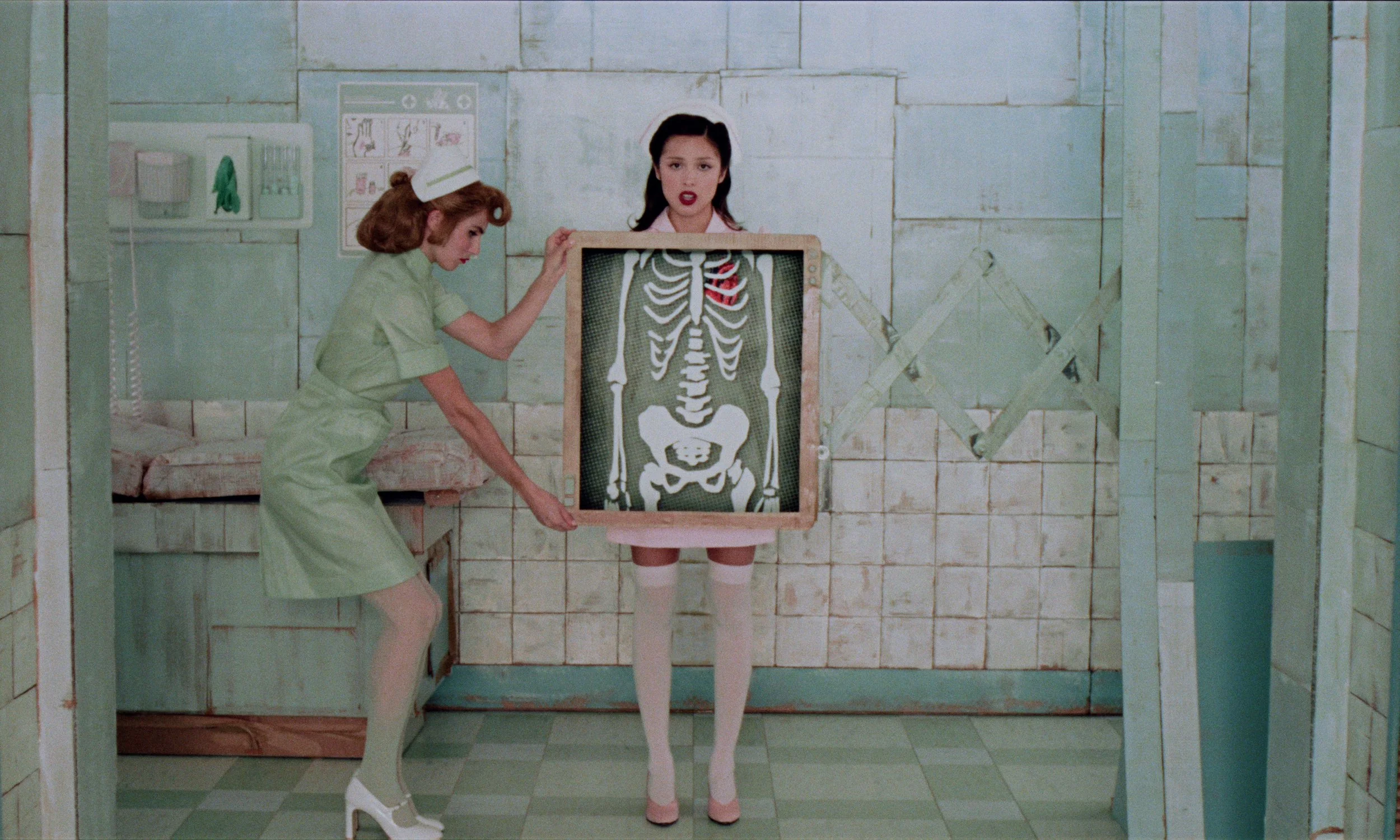
The video constantly shifts between live action, handcrafted sets, and stop motion, but it still feels very cohesive both visually and emotionally. How did you approach blending all of those elements without losing the intimacy at the centre of the story?
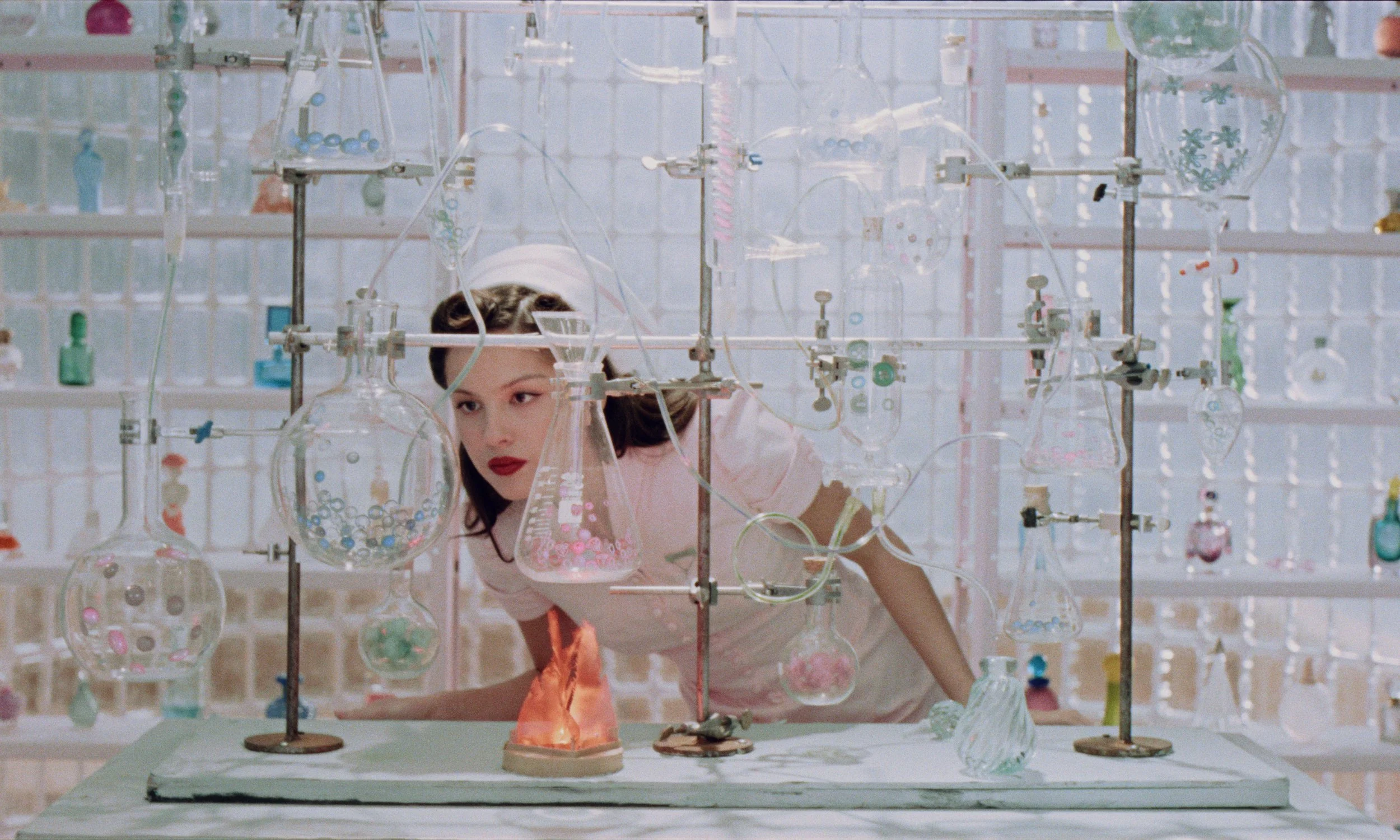
CS: What an incredible compliment!! This kind of balance is deeply important to me! I worked so hard to ensure that all of our elements were dependent on one another while also supporting one another… Liam Moore, our production designer, helped us establish a very tight palette that we didn’t deviate from. Jaime, Liam, and I also worked on steadfast rules for the world. Everything that would be wood or concrete in the real world became cardboard and paper. Paper became fabric. Liquids became beads and buttons. Bodily fluids became yarn, wool, and strings.
My biggest worry was that these combinations of materials would look unbalanced or childish. When you work with a handmade concept, it can be easy for things to fall into those categories and get away from you. But, I believe my background in stop-motion greatly helped us avoid that, and I was also so lucky to work alongside Jaime and Liam, who both also have extensive art backgrounds.
Whenever I make anything, I always make drawings first. Sometimes blocking maps, concept art, and character designs, but nearly always storyboards. Because I had to make sure Olivia, Jaime, and I were all on the same page from the beginning, I prioritized creating a very detailed animatic based on the storyboards. I think this animatic and all our pre-pro R&D really helped everyone on our team feel more in control of the visual and emotional elements we were balancing in this video.
Olivia’s performance sits within a very stylised and controlled environment, yet it never feels distant or overly performative. What conversations were you having with her around tone, vulnerability, and character while shooting?
CS: This is all Olivia! She made sure that we had very specific conversations about the tone and specifically her character. She was very clear about how she wanted to perform throughout the song/narrative and what she needed from us. Olivia is also an incredible actor. Her level of control is unbelievable. She can do so much with so little and is unbelievably subtle. On set, we had to do our due diligence and make sure to get all of the performance and acting in various ranges. In the edit, we ended up using all of her most subtle takes… She knew those would be our faves and had even mentioned it on set.
“I also think it’s the perfect time to make things by hand. To show practically how our effects are done, to connect very directly and deliberately with others.”
Co-directing can create a really unique creative energy when two sensibilities start feeding into one another. What did your collaboration look like day-to-day, and how did each of your instincts shape the final film?
CS: Jaime is the best!! She took the job so seriously. She was always on time or early, fun to solve problems with, and always available and so respectful. I think both of us were somehow quickly keenly aware of what the other person was uniquely bringing to the project. We respected that instantly and let the balance permeate throughout the production. We had a long convo at the start of the project about how to stay on the same page so we never gave our HODs contradictory information. I’m so proud of this collab, and I can’t wait to work with Jaime again.
directors — CAT SOLEN & JAIME GERIN
production company — WAYS & MEANS
produced by — LANA KIM, JETT STEIGER, BRANDON ROBINSON
production designer — LIAM MOORE
director of photography — CHRISTOPHER RIPLEY
wardrobe stylist — CHLOE & CHENELLE DELGADILLO
makeup artist — ALEXANDRA FRENCH
hair stylist — JAKE GALLAGHER
editor — SEAN LEONARD
stop motion studio — STUDIO LINGUINI
vfx — PRETEND VFX
colourist — DANTE PASQUINELLI, ETHOS STUDIO
patient — JOE PERA
nurses — SYDNEY WINN, ASHLEY WANG, ANGELINA JESSON, SUNNAYA NASH