BOX WITH GOD
A descent into transformation, where bodies dissolve and systems take over
Directed by Thomas Harrington Rawle
words by Isabella Bazoni
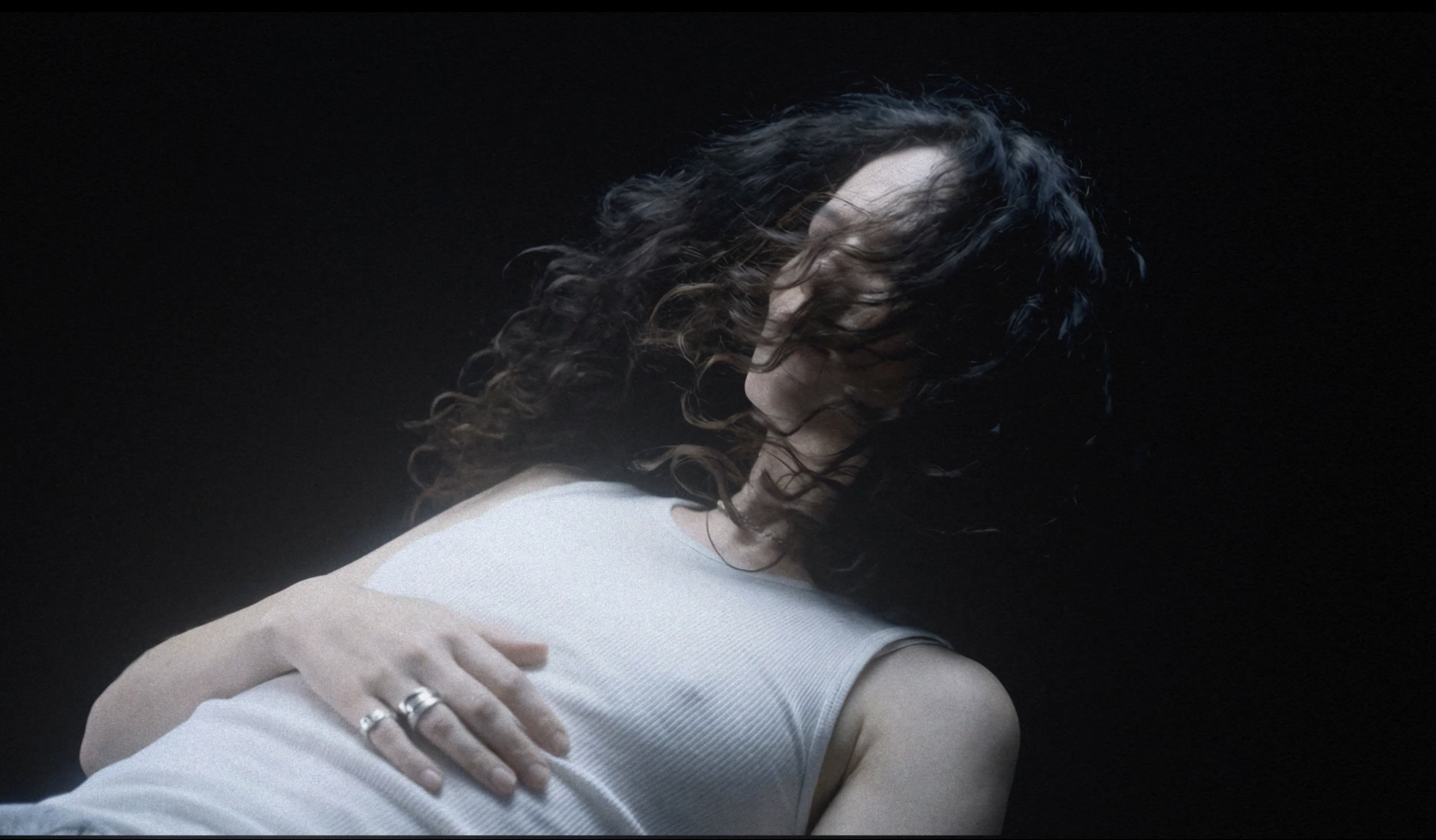
In Box With God, director Thomas Harrington Rawle constructs a world that feels both clinical and disorienting, where control slips away and something collective begins to take over. Created for Daisy Maybe and developed with London-based production company Studio Private, the film begins in a stripped-back, recognisable space before gradually mutating into something far less stable—less a narrative than a system unfolding.
Rawle, whose practice spans film, sound, and installation, often builds immersive visual environments that blur the line between the physical and the constructed. That approach is central here. Bodies become units within a larger structure, faces dissolve, and individuals are reorganised into a unified presence, guided by an unseen logic. There’s a ritualistic quality to it that feels controlled, repetitive, and slightly unnerving.
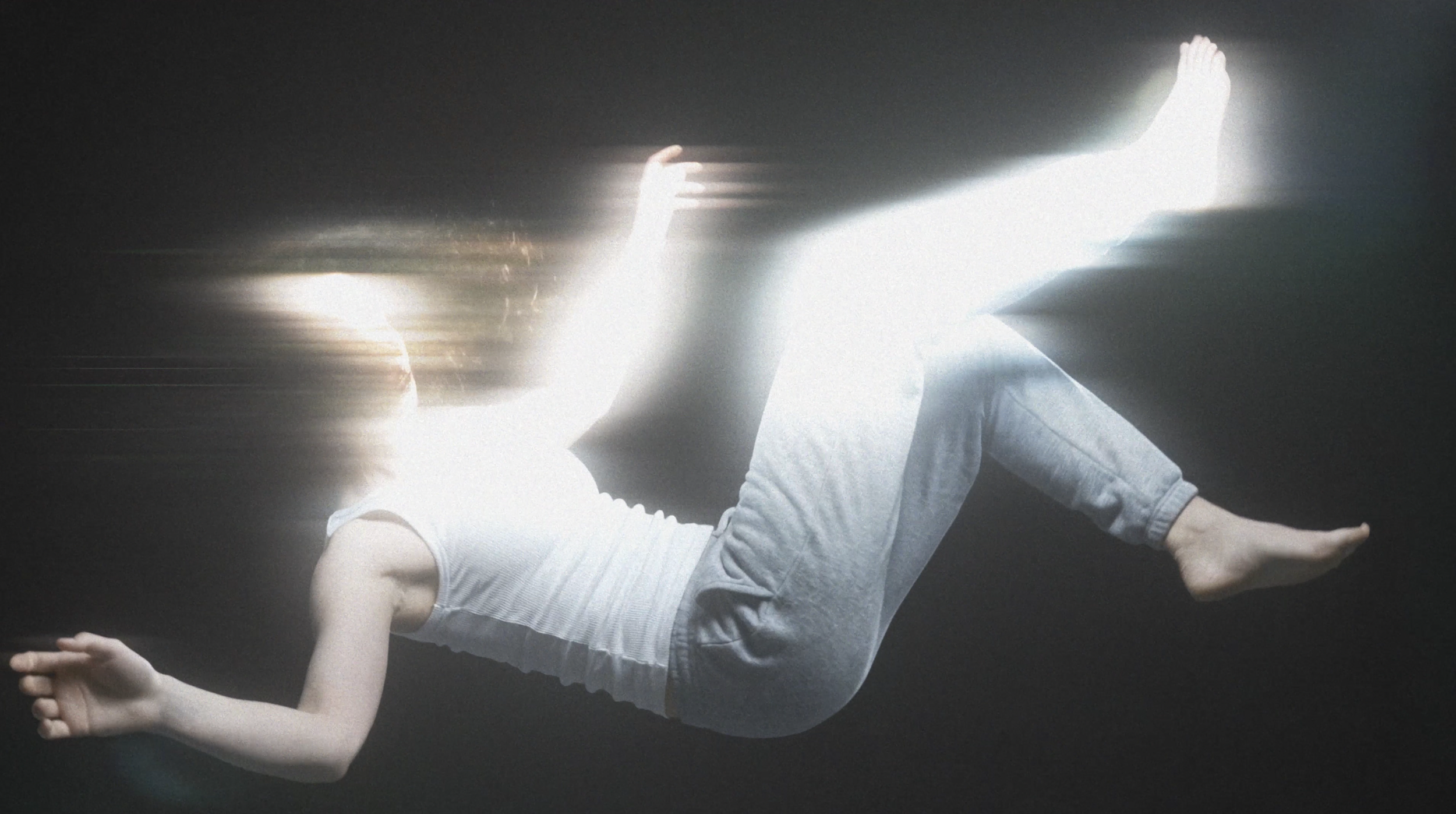
Shot with a live cast and later reworked extensively in post, the film moves fluidly between real and constructed space without drawing clear boundaries. In collaboration with VFX artist Cathal McKeon and producer Esmé Creed-Miles, Rawle fragments and rebuilds the footage into shifting, elastic compositions. Rooms expand, figures multiply, and the image itself feels in constant negotiation.
Despite its shifting form, everything remains tightly composed. Rather than pushing toward resolution, the film holds its tension—pulling the viewer into its internal logic, where control and surrender blur, and identity becomes something shared, unstable, and continuously redefined.
Your films often feel more like systems than narratives. When starting Box With God, what was the initial idea or structure you were building from, and how did that evolve over time?
That is actually a good way of putting it, I think because I'm a self taught director my early work was such a collage of mediums and i would generally need to have some kind of world logic that would explain the fact that one was bouncing between so many different aesthetics and dimensions. My early 'Care More' films from a few years back centred around a fictional universe in which while some characters were animated in 2D, some in 3D, some real they all shared the same reality. I think when your bouncing around that much you end up thinking about the reality and atmosphere more than the narratives of the things within it. Although I'm trying to get better at narrative and trying to tell that through a space and an atmosphere.
There’s a strong sense of control being both imposed and surrendered throughout the film. What were you thinking about in terms of control and influence while making this?
With this I was reading that book 'The Weird and Eerie' by Mark Fischer, in it he talks about this other book called 'The Anubis Gates' by Tim Powers which, without ruining the story (minor spoilers i guess), it shows a work of writing that comes from 'nowhere' that guides someone to write it. I took this as the concept of an 'idea consciousness' in that perhaps some ideas have their own desires and agencies and possess the individuals that they grow in. In this video I thought of the idea of a group of people that have been overtaken by an individual external agent that requires their total brain mass to achieve some goal. In doing so, the people in the room disappear, in the same way that a devout ideology and can vanish a person.
“When you’re bouncing around that much you end up thinking about the reality and atmosphere more than the narratives of the things within it.”
You begin with a very minimal, recognisable environment and gradually destabilise it. What draws you to working from something grounded and then pushing it into something more abstract or alien?
I think the alien in a grounded and stable environment is the most foundational images of human experience. Everyone at some point has an experience where everything is one way, then suddenly another with no warning, no preamble, just sudden transformation. Falling madly in love for instance, or a loved one dying, or sudden physical trauma, to me the alien in the regular room is representative of this constant threat. A threat of change that we have to live with in a way that doesn't drive us mad.
The transformations in the film are quite subtle but still manage to feel deeply unsettling. How did you approach that balance?
We filmed using real people and then selectively replaced elements of them, the transformations on the bodies are subtle but also quite calculated, weird freckle arrangements that are too organised, eye lids that haven't quite formed right, featureless faces are the most extreme. Also the extreme pulsing that happens in a few shots. I think because these altered physicalities are rooted in real imagery it strikes a balance.
Your process blends live action & CGI into something that still feels cohesive. How do you navigate these different tools without letting the technology dictate the outcome and at what point in the process do those elements come in for you?
Well with all of the tools we're still using them within a traditional pipeline, with the CGI we would build over the filmed plates in select spots then composite back in as you would in a normal VFX pipeline. We built out the wide shot first and from there then honed in on the looks for the closeups.
“Everyone at some point has an experience where everything is one way, then suddenly another with no warning—just sudden transformation.”
You’ve spoken about being interested in “rituals embedded within the everyday.” Could you expand on how that idea manifests in this film, and where you observe those rituals in real life?
I think of things like corporate decorum, office layouts things like this where a group of people have to serve a singular function. Or maybe they are serving a higher function that is more obscured and siloed. For instance you might be involved in in the production of a mobile phone, perhaps designing the user interface with a team. The structure for such an organisation can sculpt its outcome, I kinda wonder sometimes, if the way things are setup are almost like enforced rituals that lead to unavoidable outcomes, or nearly unavoidable without structural disruption. A bit like if you pour water into flat plain that has an indent in the shape of a square, the water will take the shape of the square. Sometimes I can't help but think about things this way.
Collaboration seems central to this project, particularly in post-production. How did working with Cathal McKeon on VFX shape the visual language and final form of the film?
Cathal's involvement was hugely important, because we were working with a mix of mediums and integrating it with real film plates we had to have access to grade, post and compositing at all stages of the edit being able to bounce back and forth in parallel. This allowed us to sculpt the piece into a cohesive world that doesn't feel like its jumping around so much.
Your work often sits between formats - film, installation, music video. When you’re making something, are you thinking about where it will live and who will see it, or just following the idea?
I always just follow the idea, i never really thought of myself as a particular kind of artist, my background was music and i never really thought of myself as a musician. I think if your an artist all mediums are at play and sometimes the ones you are least familiar with can yield the largest rewards. I think this is because your relationship with the work is more akin to the viewer rather than the maker. I think so much of becoming an artist is being able to see and do at the same time, which is REALLY hard and a lifetime eduction in progress at all times!
director & vfx — THOMAS HARRINGTON RAWLE
cinematographer — JOSEPH DUNN
gaffer — PAUL BRENNAN
vfx — CATHAL MCKEON
producer — ESMÉ CREED-MILES / ECM PRODUCTIONS
runner — EDITH HOLM
special thanks — BABACAR, EVIE, NATHAN, JESSICA AND FAYE