ONE DAY AT A TIME
A quiet portrait of resilience, routine, and recovery
Directed by Luke Jaden
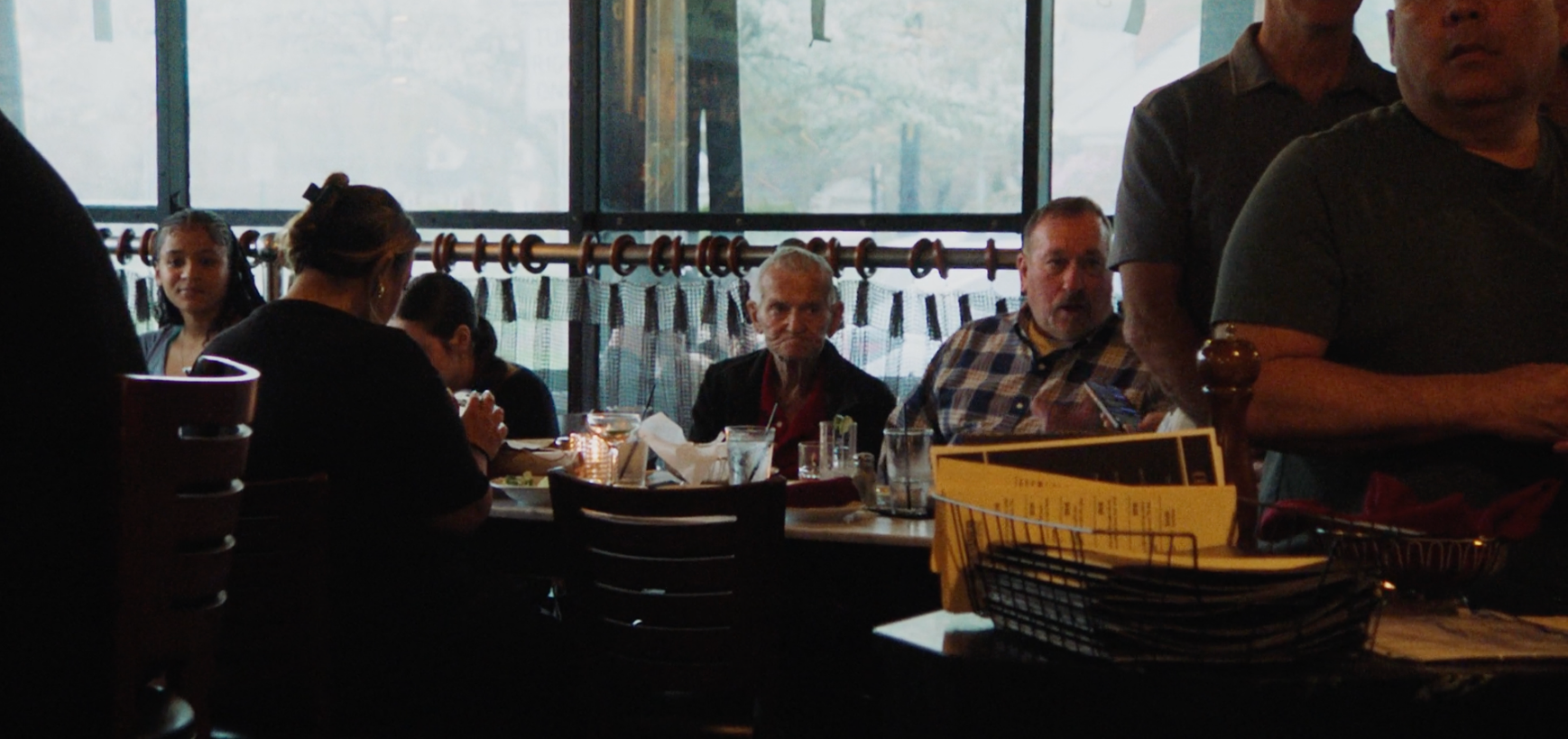
words by Isabella Bazoni
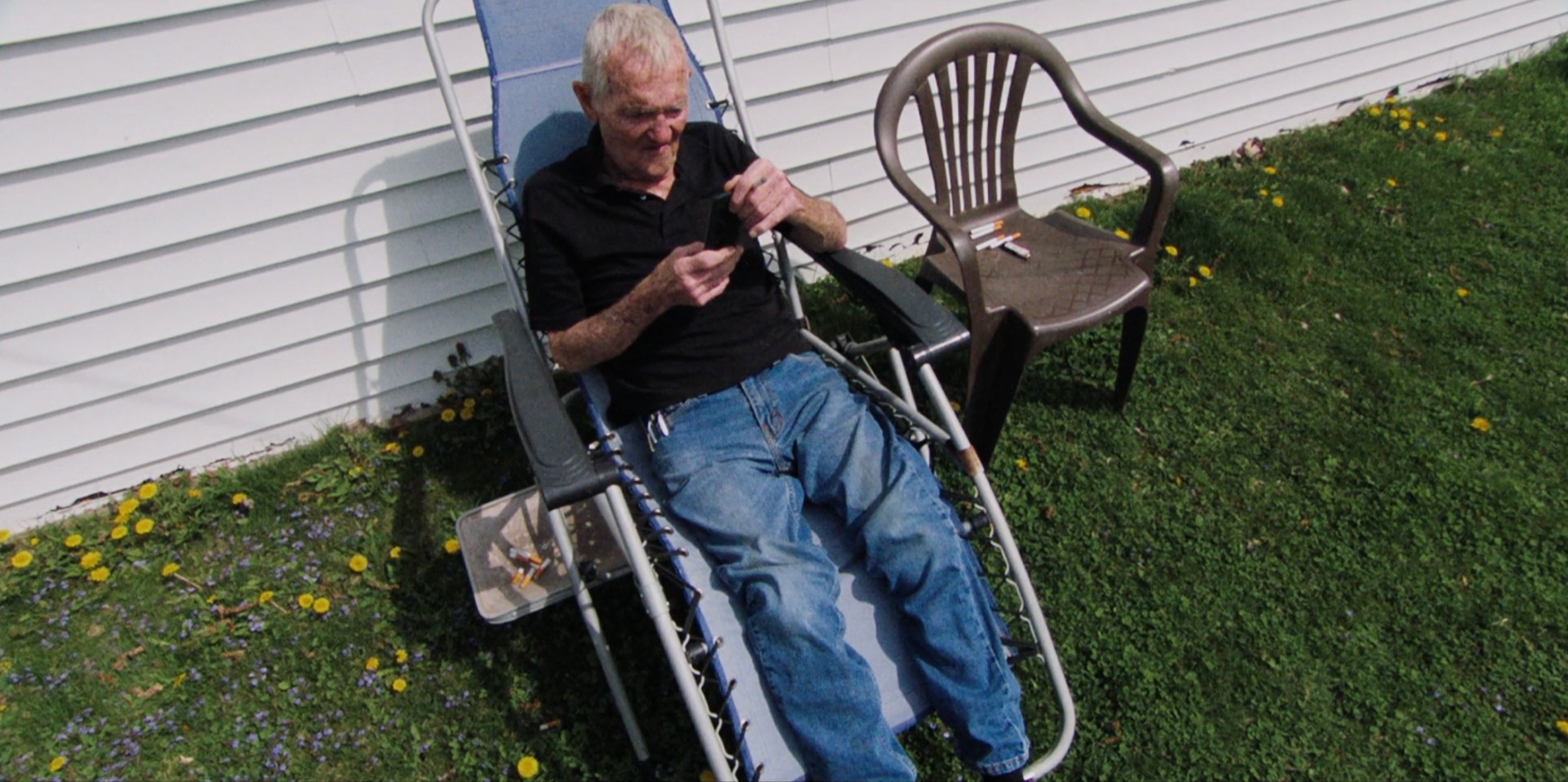
In One Day at a Time, director Luke Jaden invites us into the unassuming sanctuary of Ken Kurkowski, an 87-year-old AA sponsor whose world has gently narrowed to the familiar rhythms of his Michigan garage. Here, surrounded by the hum of old Westerns and the scent of tobacco, Ken’s days unfold with deliberate simplicity, rolling cigarettes, tending to small repairs, and revisiting memories that carry the weight of a life shaped by addiction and recovery.
What emerges is not a portrait of dramatic transformation, but something far more affecting: an intimate meditation on presence, routine, and the quiet perseverance required to remain sober, one day at a time.
What first drew you to Ken’s story, and when did you realise it could become a film?
I’ve known Ken for almost 10 years, and every time I've seen him, I've noticed that sobriety is part of his everyday life. Over the years, he shared more and more about his story, and the more I listened, the more interested I became. I realized that even for people who haven’t experienced addiction themselves, there’s something deeply universal in what he’s lived through. I’m also drawn to people like Ken, people who have lived a lot of life and have experienced just about every emotion along the way. There’s a depth there that can’t be manufactured. So I really began with the idea that Ken himself was the story. I felt I could create a meaningful portrait simply by observing the rhythms of his everyday life.
I’ve always been fascinated by slice-of-life storytelling. Films that operate more on emotion than plot tend to interest me the most because they feel unpredictable and spontaneous. There’s something exciting about that lack of control, where it feels like we have no control and we just go along with the currents of life’s stream. We followed Grandpa’s compass. Because we didn’t really have a plan, it was both thrilling and nerve-wracking to jump in and start filming without an itinerary. We were simply compelled by Ken’s story. We didn’t know exactly where it would lead, and in many ways, that was the most exciting part because we honestly didn’t have a destination in mind. Honestly, I don’t think I fully realized it could become a film until we were well into the edit. That’s when it started to click. Suddenly, it felt like we had all the pieces, and we could begin shaping them into a story.
Ken is part of your extended family through your wife and producer Diane Michelle. How did that personal connection shape the way you approached telling his story?
I was a little nervous about telling Ken’s story because I felt a real responsibility to honor it honestly. In some ways, I still felt like an outsider stepping into his world, and that came with a bit of intimidation. But I think because I was on the outside, I could dive a little deeper, and he felt more comfortable opening up to me. I had my doubts at first. I didn’t know if he would fully open up or allow himself to be vulnerable, and I knew that kind of honesty was essential if the film was going to work. Over time, though, building that trust just by being curious and spending time together really helped shape our relationship. The more I got to know him, the more admiration I had for how far he’s come.
Ken inspires almost everyone he crosses paths with. He’s also just the kind of person you want to sit down with and share a cigarette with. I could sit there for hours listening to him talk. The way he tells a story is pure entertainment. He can stretch five minutes into two hours, and somehow you’re just as captivated at the end as you were at the beginning. He’s a remarkable human being with a huge heart, and there’s a warmth about him that you feel the moment you’re around him. Knowing the darkness he’s faced in his life and seeing the light he now brings into a room is something I find incredibly profound. Because he’s an extended family member, I also felt like a lot was at stake. I wanted to make sure that the people who love him felt proud of the way his story was told. At the same time, I recognize that what we captured is really just one chapter of his life. Ken has lived so many stories, far more than we could ever fit into a single film.
“I really began with the idea that Ken himself was the story.”
Almost the entire film takes place in Ken’s ‘man cave’. When did that space reveal itself as the emotional centre of the film?
We knew from the beginning that Ken’s man cave - his garage - would become the atmosphere of the film. Over time, that space has become a sanctuary for him. It’s where he finds his serenity and where he feels most at ease. He spends his days in there rolling cigarettes, relaxing in his reclining chair, watching Westerns, listening to music, drilling holes into sobriety tokens for new AA members, working on his car or lawn mower, or cleaning his golf clubs. He doesn’t get out to golf as much anymore, but his backyard has become his course, and he still takes pride in cutting the grass himself. These rituals have taken on a quiet meaning in his life.
To an outsider, these moments might seem mundane. But it’s within these quiet, reflective spaces that real strength and resilience begin to reveal themselves. In those still moments, I think you can feel Ken’s spirit shining through. In many ways, the garage becomes a character in the film. It says a lot about who he is. Like Ken, it’s been weathered by time and the elements. But it’s often in that wear and tear where the truth of someone’s story becomes most visible… the raw, honest marks of a life that’s been fully lived.
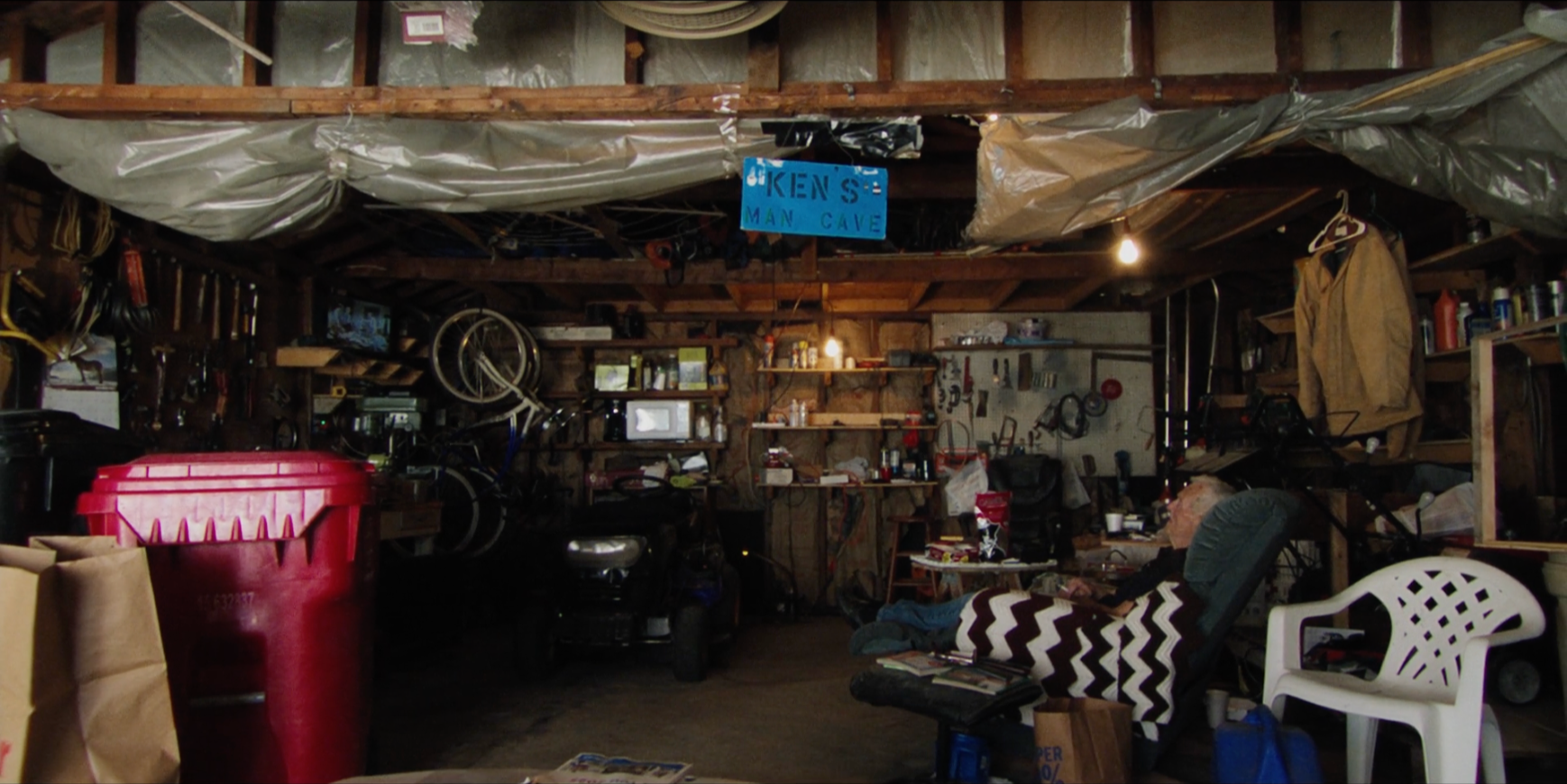
“It’s within these quiet, reflective spaces that real strength and resilience begin to reveal themselves.”
The film focuses on small, everyday rituals like rolling cigarettes, watching Westerns, tending the lawn. Why were those quiet moments so important to capture?
The quiet moments are really what tell Ken’s story. In his resilience and in his commitment to never have another drink after so many years of drinking, you begin to see a life unfold in his eyes. You can sense that he’s lived many stories. For me, the film was simply about sitting with him. I wanted people to experience what it feels like to spend time with someone I respect so deeply. My hope is that audiences feel some comfort in his story.
We live in such a loud world now, and one where we’re constantly looking down at our phones or rushing through the next thing. It’s becoming increasingly rare to simply sit across from another person, another living, breathing soul, and share a quiet moment together. But those are the moments when time seems to slow down, or even briefly disappear. It’s also becoming rarer to just visit your grandparents and spend unhurried time with them. So I really wanted to cherish the time Ken was giving us as an open invitation to come into his world, to sit with him, and simply observe. What does a life like his look like when it’s never been in front of a camera before? To be welcomed into that space felt like a gift. An absolute treat. He even made us some incredible bacon and eggs while we were there. Quiet moments feel increasingly rare these days, and in many ways, this film became an excuse to make something quiet. I believe you can find an extreme sense of comfort and peace in silence if you allow for it. It’s funny because when a room goes quiet, people sometimes feel tense or awkward, like something must be wrong. But there’s a real beauty in sitting in silence, in being present with yourself or with someone else. In that sense, the film became an invitation to slow down, to sit in that quiet moment and feel it, and to experience something we don’t often make space for anymore.
Ken comes across as stubborn, imperfect, but deeply human. How did you strike the balance between portraying him honestly while still honouring him?
I think as human beings we carry so many different traits and contradictions within us. When making this film, my only real goal was to make something truthful. We all have beautiful parts of ourselves, but we also carry regrets, guilt, mistakes, and the weight of our past. I think honesty can only really come through when we accept that none of us is perfect.
We all have our baggage and things we’re constantly working through, and that’s the part of humanity that interests me the most. It’s within that process that we admit we’re human. Ken shared some very heavy moments with us. Some of those made it into the film, and some didn’t. Not because we were afraid to show them or because he wasn’t willing. At the end of the day, he gave us full permission to share his story honestly, but because we were always guided by a simple intention we set from the beginning: to make sure everything served the story we were trying to tell.
From the start, Ken and I both understood that certain things might come up that he wasn’t necessarily proud of or that he could get choked up by. But we also knew that vulnerability was what would make his story feel raw, real, and ultimately universal. So, yes, we both cried at times. In many ways, the experience became a therapy session for both of us. Two men sitting together, talking openly about life and the things we carry. I learned a lot from him that day. It turned out to be cathartic for everyone involved. We all walked away from that day learning something about ourselves. At the end of the day, it’s our flaws that make us relatable. It’s our failures that make us human. Those are the things people face every single day, and that’s the truth I’m most interested in exploring.
The title, One Day at a Time, reflects a key principle of recovery. How did you translate that philosophy into the pacing and structure of the film?
My editor and I were very intentional about the film's pacing. We wanted the rhythm to reflect the title itself, One Day at a Time. The goal was for the film to move patiently, almost meditatively, so the audience could sit with Ken and feel the quiet passage of time alongside him. We wanted the film to slowly invite the viewer in to meet him. I often thought of it like embracing someone you haven’t seen in a long time and simply holding that hug. In many ways, the first act is the approach into that embrace; the second act is the hug itself, staying there, present in the moment; and the third act is the gentle release from it. When you let go and take a step back, you look into the other person’s eyes. That’s why we intentionally end on the final frame of Ken’s portrait as he looks directly back at us. It’s the moment where we release from that embrace after sharing the journey with him, allowing him to carry on with his day. The spirit of that hug really became the engine for how we pieced the film together. At its core, I think we’re all searching for connection and for the feeling of being seen and listened to. It was an honor to be trusted with Ken’s story in that way.
More than anything, I hope the audience feels held while watching the film. The fact that someone would choose to spend this time with Ken means a lot. I know he would appreciate that. And in some small way, the viewer is simply sitting there with him and sharing a quiet moment, maybe even a coffee and a cigarette.
“In that sense, the film became an invitation to slow down, to sit in that quiet moment and feel it.”
After audiences spend time in Ken’s garage, what do you hope stays with them the most?
I hope that after spending time in Ken’s garage, people walk away feeling a little calmer and more at ease with life. Life is fragile, and it’s so incredibly short. Why not cherish the moments we have while we’re here? I hope the film encourages people to appreciate the quiet parts of life and to simply feel comfortable being themselves in the present moment. If someone can take something meaningful from Ken’s story or share it with someone else, then I know that would mean a lot to him. The idea of one day at a time reminds us to stay present and grounded. It encourages us not to rush too far ahead, but to focus on the day ahead. More than anything, I hope the film invites people to be a little kinder to themselves. Maybe even to give themselves a hug after watching it. How often do we do that? How often do we pause and offer ourselves that kind of compassion? It’s a simple question, but maybe it’s worth asking. And maybe it’s worth remembering to be gentle with ourselves along the way.
starring — KEN KURKOWSKI (AKA GRANDPA KEN)
writer/director — LUKE JADEN
production company — OCTAGON HAUS
producer — DIANE MICHELLE
edit house — WHITEHOUSE POST
editor — LIZZY GRAHAM
director of photography — JACKSON CLARK
sound mixer — JUSTIN GREEN
composer — JACOB CONNOR
colourist/finish artist — DAN SWIERENGA
sound designer — MIKE REGAN
title designer — NIKOLAY RADCHENKO