CAESURA
A haunting meditation on isolation, memory, and the fragile line between reality and imagination
Directed by Mynxii White
words by Katie Huelin and Isabella Bazoni
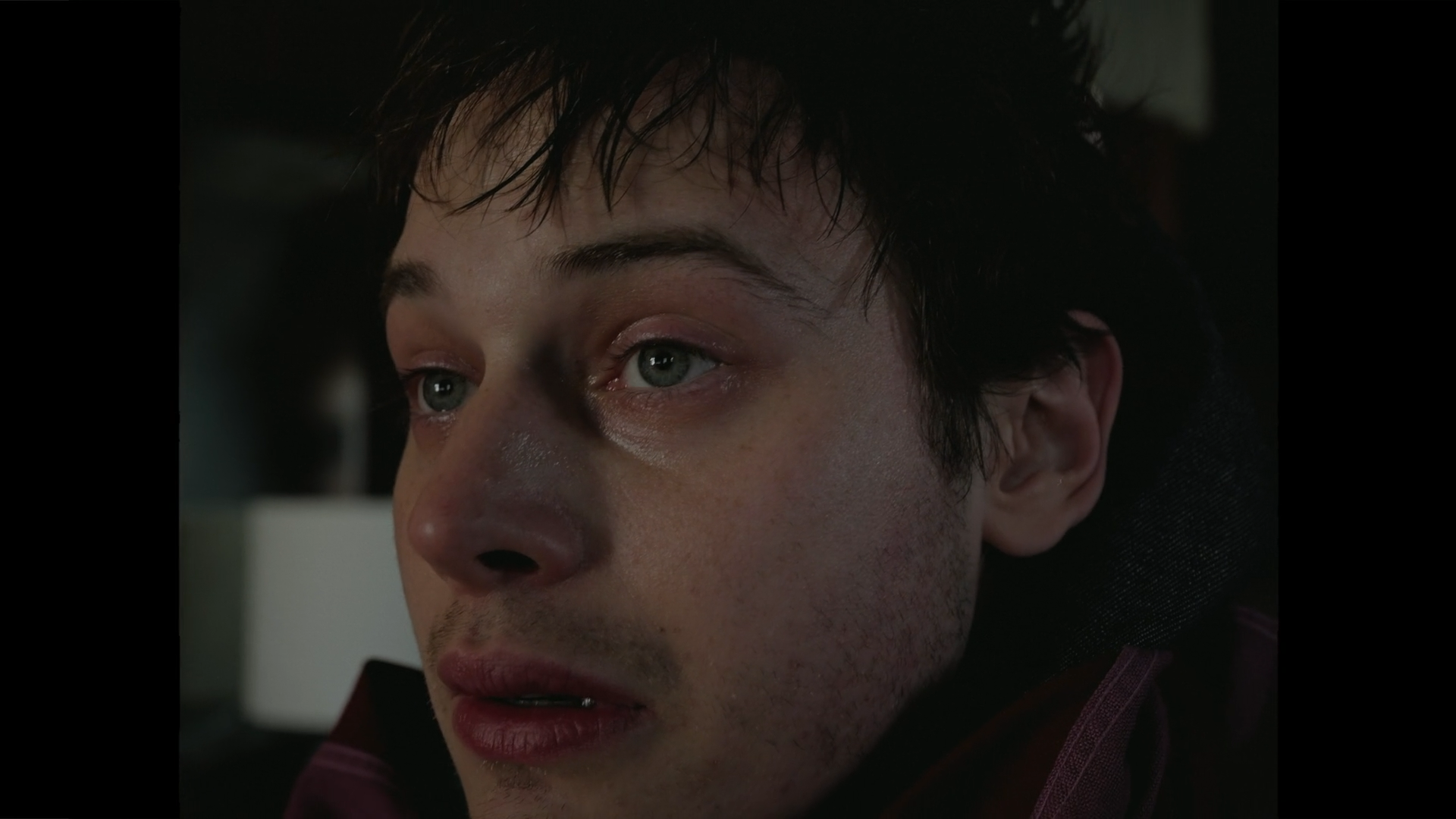
Alone in a sprawling, desolate manor, a man drifts through silence so thick it feels alive. Whether exiled by choice or circumstance, he moves through endless corridors, each step echoing against walls that seem to whisper back. Shadows shift, whispers linger, and stillness weighs heavy, suggesting the manor itself may be stirring—or perhaps unraveling from within.
With a lens attuned to liminal spaces and ritual, director Mynxii White transforms isolation into a poetic, immersive experience, where each frame blurs the boundary between imagination and reality, and the viewer is invited to wander alongside a mind adrift.
Isolation becomes a character in Caesura, not just a circumstance. What first compelled you to explore solitude as something that slowly reshapes the psyche?
Isolation has been present in my life in ways I didn’t fully understand until I began making this film. It wasn’t just the absence of others. It was the way quiet accumulates and alters your sense of self. I think 2020 accelerated that awareness for everyone. Suddenly, the world was forced into a kind of collective interiority, and we all saw how easily solitude can become both a refuge and a distortion. People started craving isolation even as it unraveled them. That duality stayed with me. I became interested in how solitude stretches time, distorts memory, and creates an emotional pressure chamber. Caesura became a way to externalize those internal mechanics, to explore what silence does when it’s given too much room to grow. How it becomes almost sentient. How a person changes when there’s nowhere left to project their inner world except back onto themselves.
How did you conceptualise the house as both a physical space and a subconscious landscape when filming?
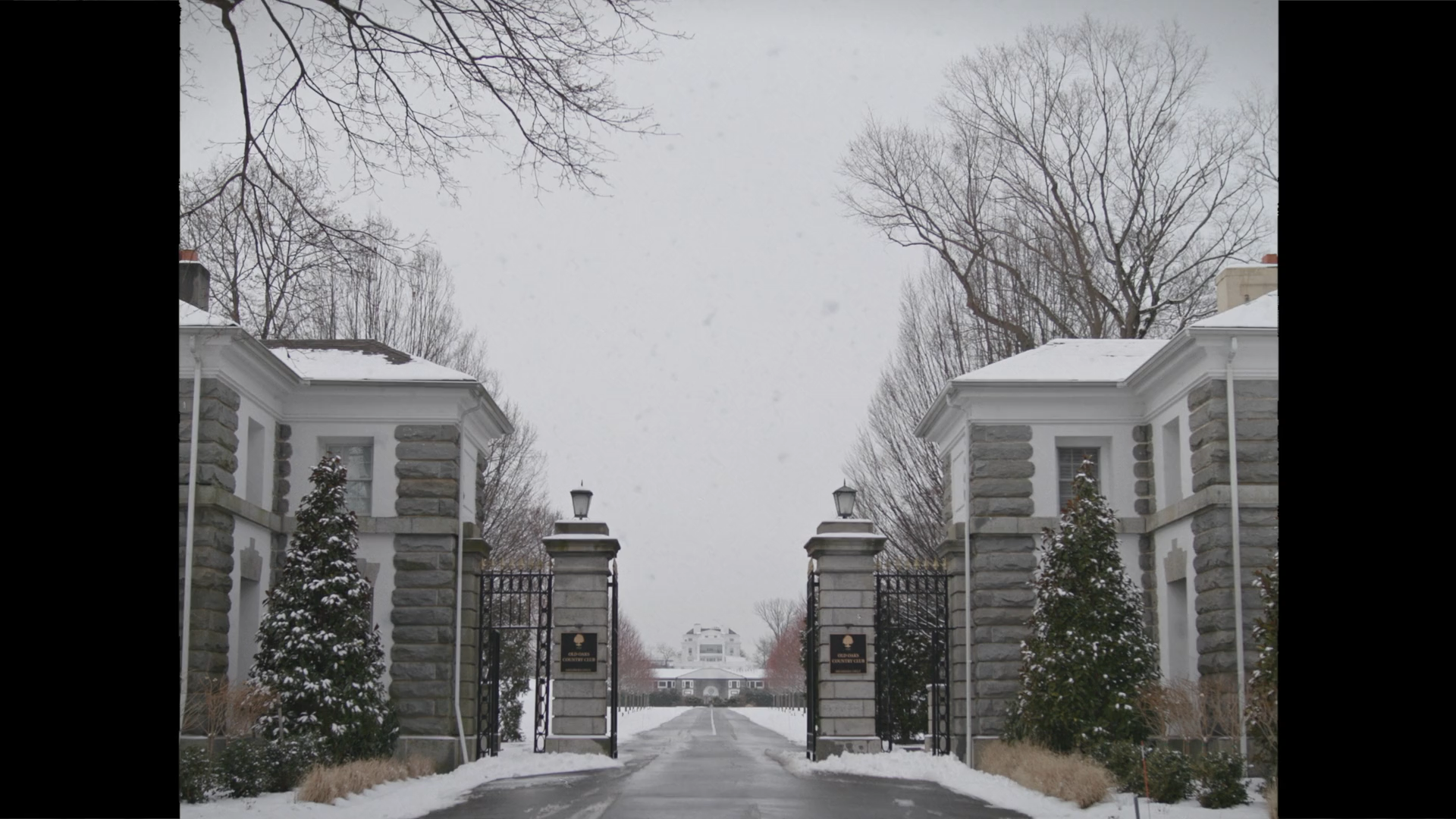
I treated the house as a mind given architecture. Every corridor, threshold, and room echoed some psychological state. Instead of building a traditional narrative logic, I leaned into spatial logic. The layout shifts not because the house changes, but because perception does. The manor is a body. It remembers. It decays. It traps you in loops of thought. The physical location became a container for interior unraveling, and filming it was about capturing that blurring between environment and psyche, where the walls feel complicit in the character’s deterioration.
“I became interested in how solitude stretches time, distorts memory, and creates an emotional pressure chamber. Caesura became a way to externalize those internal mechanics, to explore what silence does when it’s given too much room to grow.”
Your visual language plays on liminality with the doorways, thresholds, and hallways that all feel endless. Where do you think your fascination with the “in-between” comes from?
I grew up drawn to spaces that don’t declare themselves. Hallways, alleys, empty spaces, thresholds, unfinished thoughts, transitions. Liminality feels honest to me because most of life happens in those in between states. Transformation doesn’t happen in climaxes; it happens in the pauses we try to ignore. Caesura is built from those pauses. I’m interested in what emerges when you sit inside uncertainty long enough to see its shape. The in-between is where identity loosens and re-forms, and that tension is the core of my visual language.
How did you approach sound and stillness as narrative tools, rather than absence?
Stillness isn’t empty. It has weight. When you’re alone long enough, the mind starts making its own noise. You begin hearing things that may not be there, or maybe they are, but they belong to a part of you you’d rather not meet. I wanted to work inside that ambiguity. Instead of treating silence as absence, I used it as a pressure point. A held breath, a distant creak, the pulse of a house settling in on itself. These fragments become unreliable narrators. You can’t tell if the sound belongs to the space or to the character’s psyche fraying at the seams. The “choir of voices” moment sits in that tension. The electricity when he blinks his eyes, or something in his eyeline glitches. Is it the house remembering, or is it his mind manufacturing meaning out of decay? That uncertainty is the story. Sound becomes a psychological echo chamber, and stillness becomes the space where everything you’ve tried to avoid finally gets loud.
“I build emotional worlds before I build narrative ones. I’m drawn to stories where the internal becomes external, where atmosphere functions as character, and where tension arises from the unraveling of perception rather than plot mechanics.”
Caesura seems to invite interpretation the way myths do. How do you navigate the balance between clarity and mystery when directing a story rooted in the subconscious?
I wasn’t interested in answers. I was interested in sensation. Myth endures because it leaves room for projection. Caesura operates the same way. The subconscious doesn’t move in straight lines. It moves in fragments, symbols, and echoes, and the film was built to honor that logic rather than impose clarity on it. And no matter how much preparation you bring into a project, some stories decide what they want to be. Caesura was one of those. The film kept shaping itself in ways I couldn’t have forced even if I tried. That organic unraveling felt truer to the emotional landscape I was exploring than anything I could have storyboarded. Because of that, the viewer becomes part of the story’s architecture. Their interpretation completes it. Their reflection becomes narrative. I gave just enough structure to orient them, but not enough to let them stay comfortable. The ambiguity isn’t a puzzle. It’s an invitation into their own subconscious.
What visual details were essential to creating that immersive, perceptual unraveling?
Repetition was essential. Visual cues needed to feel consistent enough to anchor the viewer, but unstable enough to undermine their certainty. The clock and the watch became the spine of that system. Time appears over and over, not as a literal countdown, but as a pressure. He only panics when he realizes it’s past midnight because time is the one thing he was meant to control. The moment he fails at that task, everything fractures. Small shifts destabilize him. A corridor he knows suddenly feels wrong. Footsteps flash across a locked doorway. His outfit changes between scenes. These aren’t glitches. They’re symptoms. His perception is unraveling, and the film mirrors this by allowing visual continuity to slip almost imperceptibly. You can’t tell if he’s dressed for work, or for some version of himself he can’t admit to. What’s real is never fully separated from what’s imagined. The breaker becomes the fulcrum. Resetting it is his only responsibility, the one instruction given to him from the start, and when he forgets, the world seems to reset around him instead. Maybe it’s time collapsing. Maybe it’s memory reordering itself. Maybe it’s his last grip on reality snapping under the weight of solitude. Every visual detail was chosen to create that sense of coherent unreliability. The viewer should feel the world tightening around him, beautiful and suffocating at the same time. The question isn’t what the correct interpretation is. The question is what happens to a person when the environment they trust starts reflecting back the parts of themselves they’ve been trying not to see.
This is your directorial debut, and you are already so confident in mood and identity. What did making Caesura teach you about your own voice as a director, and where do you feel that voice is leading you next?
I’ve made over a hundred micro shorts at this point, tiny narratives under three minutes that all orbit the same gravitational pull. They’re visual autopsies of an internal crack. Liminal states. Minds under pressure. Emotional disturbances that never fully resolve. Caesura was the first time I let that instinct expand into a proper short length, around fourteen minutes, and sustaining that discomfort revealed something important about my voice. It confirmed that my work lives in psychological architecture. I build emotional worlds before I build narrative ones. I’m drawn to stories where the internal becomes external, where atmosphere functions as character, and where tension arises from the unraveling of perception rather than plot mechanics. Extending the runtime didn’t dilute that approach. It intensified it. It forced me to sit inside the fracture long enough to see what actually lived there. Where this leads me next is toward larger worlds with the same precision. Bigger canvases, but still anchored in the intimacy of interior collapse. Haunting, structured, human. Caesura taught me I don’t need to bend toward clarity. I need to keep following the fault lines.
a film by - MYNXII WHITE
written by - JAMES KRISTOFIK
starring - ULI SCHLESINGER
executive producers - JAMES KRISTOFIK, BRAD SIMPSON
producers - DOUGLAS VANLANINGHAM, ROB TIRRELL, MARY-IRENE MAREK, JACK DEVANNA, NICOLE JOHNSON, RAMON DIAZ, and JAVIER SALAZAR
director of photography - MICHAEL MARTIN
camera operator - TED SNOW
first assistant director - JAMES FEDORKO
associate producer - JASON GRIMM
costume designer - DOUGLAS VANLANINGHAM
hair & makeup - ELAINA KARRAS
original score - JAMES KRISTOFIK