THE UNVEILING
A luminous exploration of identity, ritual, and the spaces between tradition and self
Directed by Aaron Zeiss
words by Katie Huelin and Isabella Bazoni
"I do not resist the old path; I simply add brightness and freshness to it."
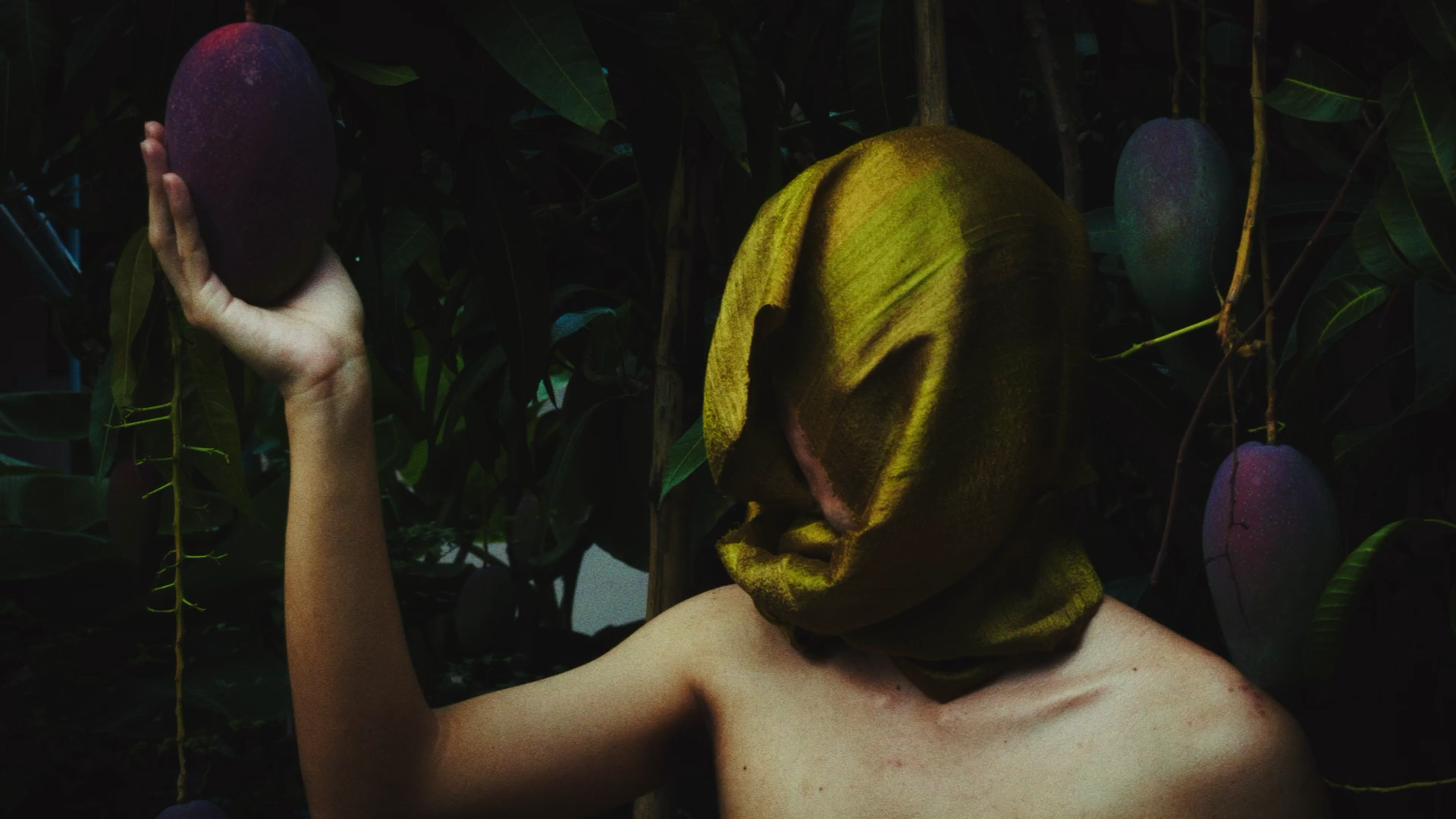
The Unveiling traces a veiled dancer navigating identity, inheritance, and expression through Mor Lam, Thailand’s traditional Isaan storytelling form. Performed in solitude, the dance transforms what is usually a communal ritual into an intimate act of reflection, inviting viewers into the dancer’s inner world. Echoing elements of classical Khon masked drama yet subverting its mythic and moral codes, the film explores fluidity in both tradition and identity, revealing a self that is at once rooted and expansive.
Guided by Aaron Zeiss, a director raised in a multicultural home and shaped by a lifetime of travel, the project reflects a profound respect for people, place, and the natural world—an approach that honors inherited forms while allowing them to evolve.
The Unveiling begins as a private ritual, an intimate Mor Lam performance for no audience except the self. What drew you to reposition something so deeply communal into a space of inner reflection?
I wanted the film to open not with spectacle, but with solitude. Something closer to the act of speaking to oneself rather than to an audience. By framing the Mor Lam from behind with the dancer turned away, the viewer isn’t being performed to, but is instead drawn into a private space almost as if entering the character’s mind. This set the tone for the film, where his inner world and philosophy unfold in an unfiltered and genuine way. I also think this choice reflects who Tor really is. He’s one of those rare, beautiful contradictions. Someone intensely private, almost reclusive in his presence, and yet capable of singing, dancing, and embodying emotion with ease and openness. He’s not guarded or curated. In many ways, this film becomes his own quiet act of unveiling. That duality, being inward yet expressive, hidden yet entirely honest, is exactly what drew me to reposition Mor Lam in this way. Turning a communal performance into a private act reflects Tor’s lived reality: he’s not performing for others, he’s unveiling something truer, for himself and through himself.
Movement, narration, and landscape function like three strands of a single identity. Can you share with us how you approached the choreography and cinematography so that they evolved together as one unfolding story?
A core theme of this project was fluidity. That sensibility came directly from Tor himself: his dance, his voice, and his lived philosophy of selfhood are all deeply non-linear. The choreography grew out of that, it wasn’t rigid or overly structured, weaving traditional Isaan movement with more spontaneous, emotive gestures. That same approach shaped the cinematography. The camera is either completely still or moving with soft precision, making the audience a silent companion, present and immersed but non-intrusive. We wanted it to feel like the viewer was not watching a staged dance, but rather sharing space with him, immersed in his world. Natural light was crucial, I avoided artificial setups to maintain the integrity of the environments and the emotional honesty of each scene. But in contrast, the post-production is where I allowed myself to shift into something more heightened: the colour grading is dramatic, sometimes surreal, because for me, Tor’s presence in these quiet rural spaces is powerful, almost dissonant. He moves constantly between dream and reality, and the visual treatment reflects that.
“Turning a communal performance into a private act reflects Tor’s lived reality: he’s not performing for others, he’s unveiling something truer, for himself and through himself.”
How did you navigate the line between reverence and reinvention, honouring tradition while daring to reshape it?
That negotiation between reverence and reinvention is one the character lives, and one that Tor as both performer and writer brought to the project from the start. For me as director, the work was more about holding space for that tension to unfold honestly on screen. I wasn’t trying to reinterpret tradition in an abstract way, but rather to stay close to how Tor himself carries it: intimately, critically, and creatively. Visually and narratively, we honoured traditional forms, but allowed them to evolve. This is something we’re all confronted with, in different ways. We inherit rituals, expectations, and identities, and we each have to decide: What do we keep? What do we reimagine? How do we honour the past without becoming confined by it? The film doesn’t try to answer those questions neatly. It simply traces one person’s philosophy and attempt to live inside that in-between space.
Identity in the film is fluid. What conversations did you and Torpong explore around gender expression as a shifting, liberated state?
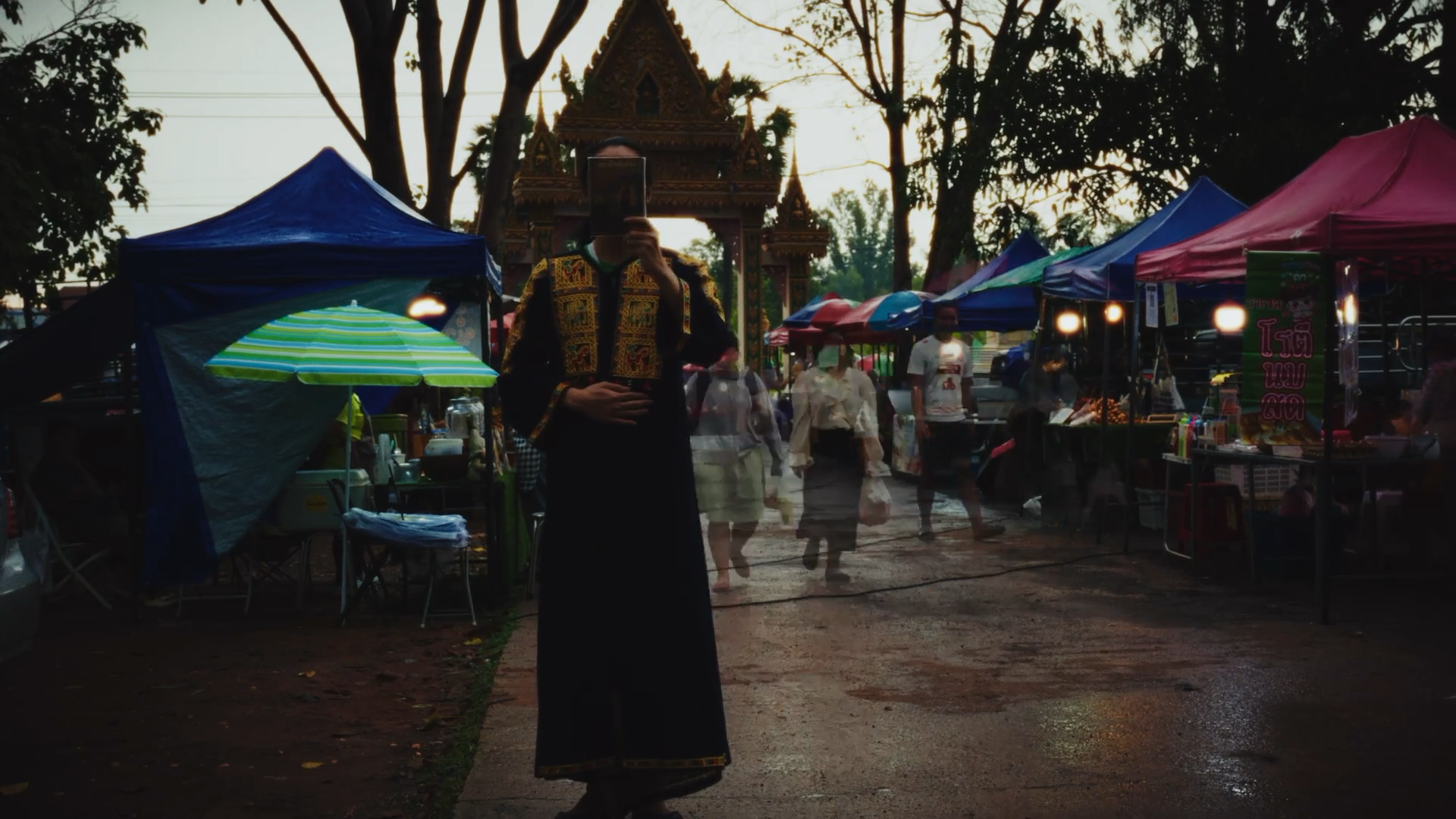
It was important to both of us that the character’s gender expression remain fluid. Unfixed, self-defined, and unconcerned with binaries. That philosophy informed everything, from wardrobe to movement to language. Thai is a deeply gendered language, yet it holds its own nuances. In the film, Tor chooses a traditionally feminine first-person pronoun, one often found in poetry and song. This choice signals intentional fluidity. Our conversations often returned to this idea of freedom, not as defiance, but as a calm assertion of self and freedom to express oneself outside of inherited categories. Tor’s philosophy of gender isn’t about rejecting one side or the other, it’s about stepping outside the frame entirely. The character doesn’t “perform” gender as a statement. It simply flows through them, shifting depending on the context, the feeling, the scene. That became central to how we approached the piece: the focus is never on defining identity, but on being, on allowing a complex, poetic self to exist without reduction, without needing to explain itself. In that sense, the film doesn't seek to answer questions about gender. It offers a space where such questions don’t need to be asked.
“The focus is never on defining identity, but on being, on allowing a complex, poetic self to exist without reduction, without needing to explain itself.”
You mention “the power of limited freedom.” How do you see constraint, whether cultural, personal, or cinematic, becoming a creative force rather than a barrier?
This presents a deeply Buddhist and existential idea: that freedom does not lie in infinite possibility, but in conscious limitation. In living within the world, with others, with the body, with constraints, and still finding presence, agency, and grace. The humble man does not seek liberation in the afterlife or in some imagined transcendence. He chooses to live “in this world for this world”, rejecting escapism. The poem suggests that choosing to stay small, to live in modesty, in a grounded life, can paradoxically contain a kind of moral or spiritual greatness that even the universe cannot outshine. “Limited freedom” in the poem means choosing presence over escape, humility over spectacle, and shaping meaning within the limits of tradition, form, and self. It is a quiet philosophy of liberation.
How did your connection to people and place shape the environments we’re invited into?
Rural Thailand is deeply meaningful to me through my wife’s family, and a place I’ve come to know intimately over time. But it’s not just a location, it’s a rhythm and a way of being. The landscape is quiet, slow, steeped in tradition. Tor’s presence somehow both belongs to it and disrupts it entirely. It’s his connection which shape the environments chosen. What initially drew me to him was this striking duality: a mind so vast and poetic, held within the stillness of a small village. He’s an academic, a deep thinker, a performer of complex ideas. That tension, between the grounded and the expansive, the visible and the interior, shaped how I chose each environment in the film. The temple, the farm, the empty roads at night… these aren’t just locations. They’re thresholds between worlds: the one Tor lives in physically, and the one he inhabits inwardly. His connection to place is layered. Immersed yet isolated, intimate yet fragmented by his difference. The cinematography embraces that too: spaces feel open but distant, familiar yet slightly abstracted.
What do you hope global audiences will take away from this act of redefining inheritance?
At its core, this piece is Tor unveiling himself. His face may be hidden, but nothing else is. The work lays bare his thoughts, his contradictions, his truth. Tor lives by the idea that what you see is what you get, and through this film, what we’re seeing is not performance but presence. I think that kind of honesty is disarming, and maybe even contagious.
While the film is deeply grounded in Thai cultural forms, the act of redefining inheritance isn’t unique to Thailand. It’s something that feels deeply generational. There’s a freedom emerging now, a space for young people, all over the world, to explore their identities in ways that previous generations couldn’t. But even that freedom comes with boundaries. We’re never fully detached from what came before us, from our language, our rituals, our families, our cultural weight. What we can do is reshape how those things live inside us.
I hope audiences walk away feeling like the veiled figure could be anyone. That they, too, are shaped by lineage but not defined by it. That transformation doesn’t require erasure, just the courage to step into your own version of truth.
What's next for you?
I'm continuing to focus on documenting and creating art in collaboration with cultures that are often underrepresented, especially subcultures and minority communities. That’s where my heart is right now. I live in Northern Canada, in a Cree community, and being immersed in that environment has shaped the way I listen, observe, and tell stories. I hope to keep meeting people whose lives and philosophies challenge me, characters whose stories deserve to be seen. I want to keep pursuing filmmaking, both in the North, and in other parts of the world where culture runs deep.
starring - TORPLENG CHUAOON
written by TORPLENG CHUAOON
composed by NICK BABIC
directed by AARON FZ
produced by LAKSHMI BOSE