ESCAPE
An invitation to slow down, fuelled by imagination
Directed by Trevor McMahan
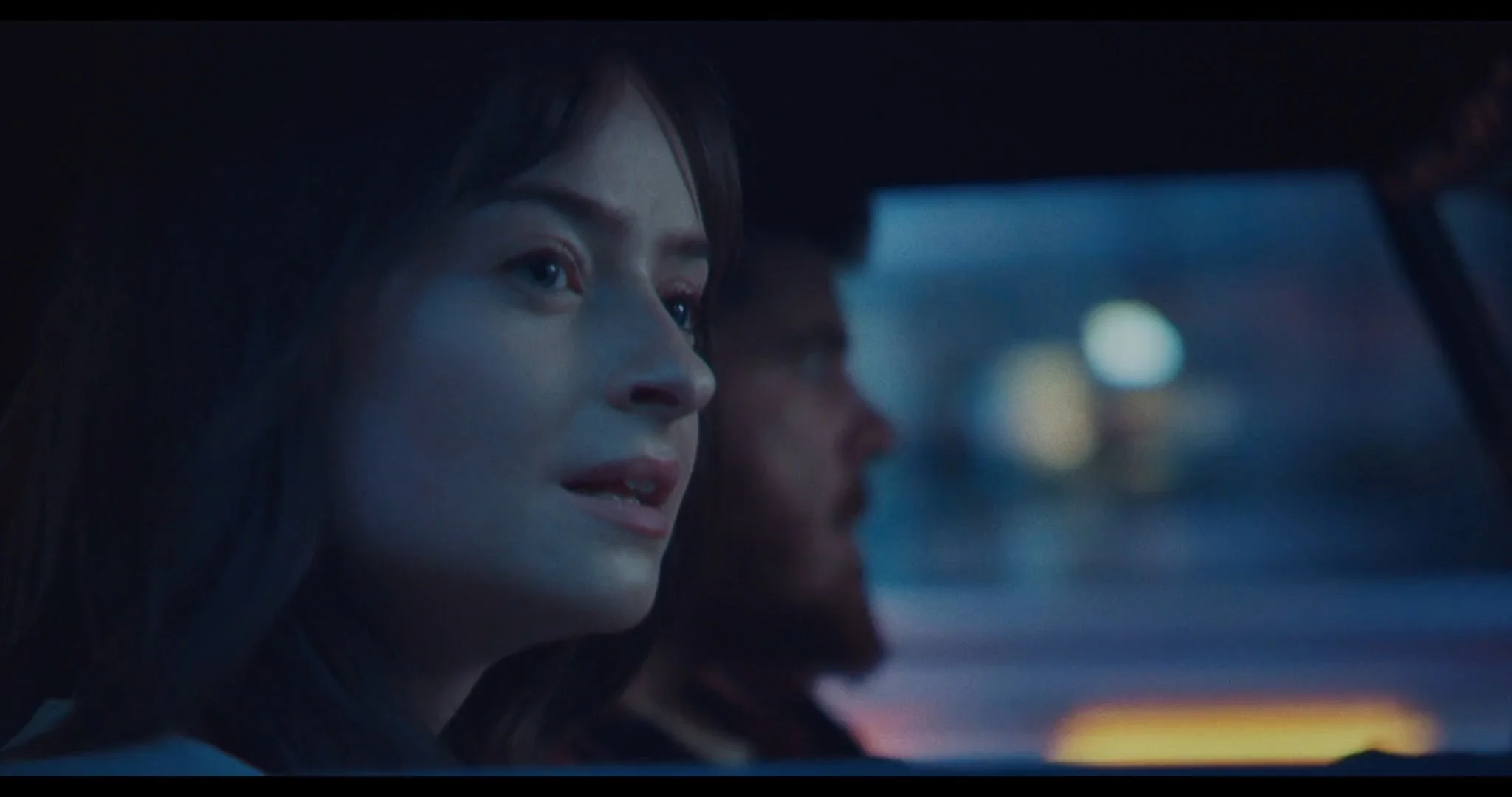
words by Katie Huelin and Isabella Bazoni
Filmed entirely on a 12×5m LED volume stage in Geneva, Escape transforms a single controlled space into a cascade of shifting realities. Produced by Geneva LED Studio, the film began as a technical demo and evolved into an intimate, darkly funny meditation on digital burnout—where seamless world-building serves character, not spectacle.
Directed by Trevor McMahan, whose background spans Smuggler and collaborations with leading commercial directors, Escape follows a woman whose fantasies of starting over spiral into increasingly absurd alternate lives. Each transition unfolds in real time within the volume, blurring the line between physical and virtual while quietly asking what happens when the urge to disconnect becomes overwhelming.
Rather than showcasing technology for its own sake, McMahan uses it to slow things down—turning cutting-edge virtual production into a vessel for vulnerability, humor, and reflection. In this controlled yet limitless environment, imagination takes the lead and the result is an immersive meditation on presence, perception, and the subtle power of slowing down.
You originally started this project as a test for a volume wall in Geneva. When did you realise it had the potential to become a full short film?
From the very beginning. The team that invited me to direct this LED volume demo had a crew, a car, and an Unreal Engine team dedicated to the project - which was a dream scenario. But I wanted to give ourselves something to dig our teeth into – something more than just demo shots or a technical exploration. So the script evolved from there - knowing the ingredients, and wanting to tell a story that might help them feel meaningful.
Escape was shot entirely on an LED volume stage. How did that technology let you capture intimate emotions and small character moments in ways a traditional set might not?
The LED volume means you can get out on the road (or anywhere else you want to go) without actually going anywhere. While I do love the authenticity you get shooting on location, for those times when just can’t, this technology is an incredible tool. It felt so much more engaging than filming on green screen. I’m not sure how much it changed for the actors - it’s still pretending to be somewhere else - but we were able to do things like shoot through layers of glass, peek in mirrors, and focus on catching the little human moments without worrying about how the post team would key out green in post. It all happens in camera and is the sort of thing I think can let producers and clients rest at ease knowing we got it in the can.
“I wanted to give ourselves something to dig our teeth into – something more than just demo shots or a technical exploration.”
What surprised you the most, or proved tricky, when using LED volume tech for a quiet, character-driven story instead of a big action piece?
The first few scenes were shot against 2D driving plates, but the desert was built in 3D and processed through Unreal Engine. That meant it was fully flexible. We were tweaking the number of cacti and choosing the sun position, live, on set. Even the scene where the car takes off - that was an unscripted idea the Unreal team at Le Truc came up with right there on set. Within minutes, they reprogrammed the animation so it appeared like our couple would take off from the road. And what’s a love story without a little nod to Grease?!
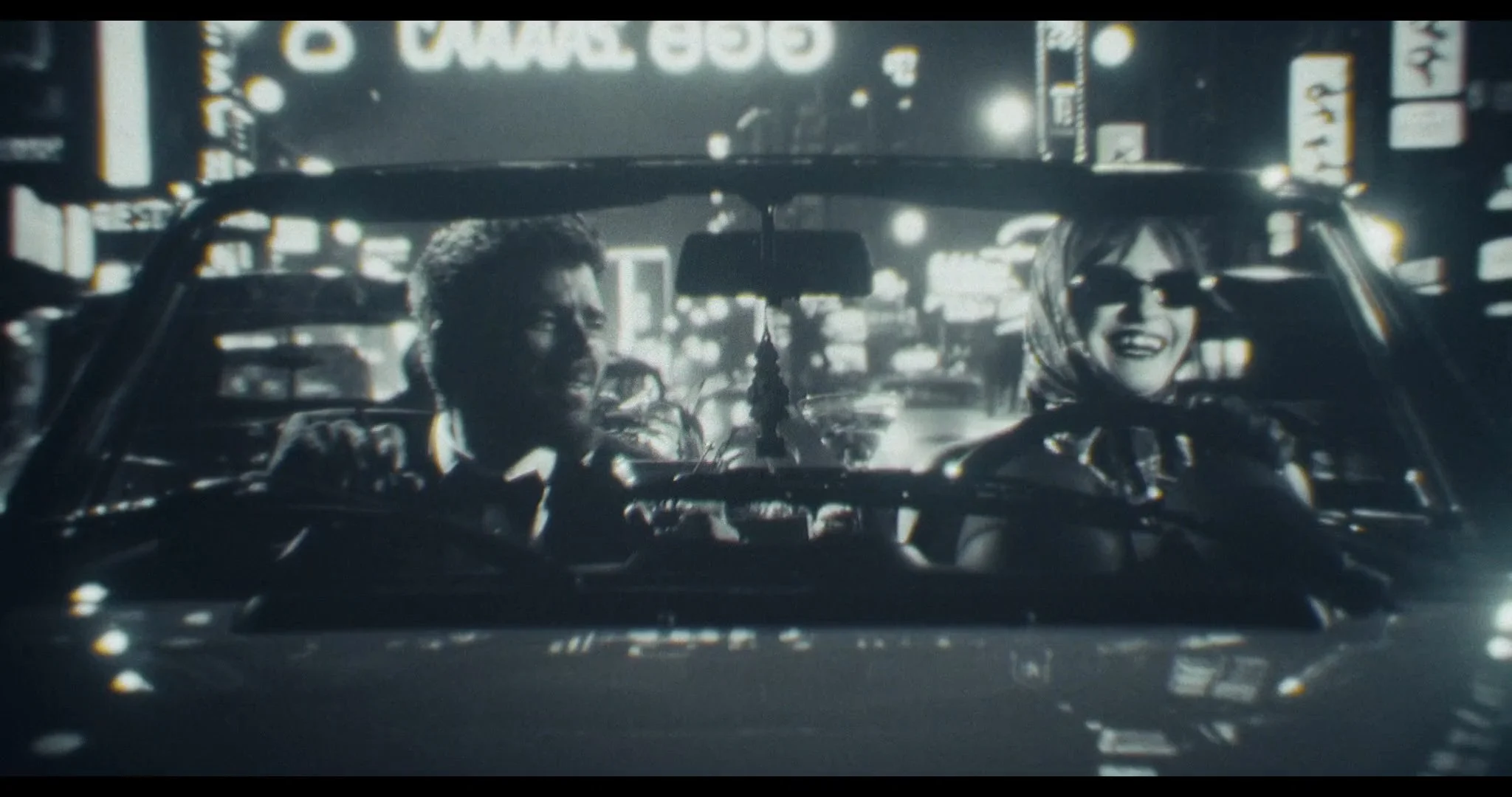
“Virtual production is not a magic wand. It’s only one piece of a larger puzzle.”
How did you and your team work together to make the LED environments feel natural and emotionally engaging?
Good backgrounds go a long way. And beyond the main LED wall, we had additional LED panels in front and on top of the actors to cast reflections. Though you still have to light the set, because the LEDs don’t actually cast a ton of light. But what really helped were the little things. Shooting past foreground elements to create a sense of depth around the actors - so they’re not just floating against a screen. And the wind in the hair, the subtle movement of the car, even the dangling air freshener and plant blowing in the breeze. Those little things helped bring to life what would be happening if we’d have been shooting in the real world.
With AI tools becoming more common, do you see them as a way to support filmmakers, helping with things like pre-visualisation or effects, without taking over the creative heart of a story? Could AI serve smaller, personal stories as well as big blockbusters?
AI’s potential in bigger blockbusters is obvious. But I do think it can be helpful for more human-scale filmmaking. I’ve found it super useful for organizing, note taking, pre-vis, and creating things otherwise out of reach. For instance, the LED background footage in the “black and white movie” scene is AI-generated. Because we simply couldn’t find any old rear-projection footage without the car/actors in it.
Looking ahead, how do you think virtual production will change the types of stories directors can tell?
You can now shoot wherever and whenever you want. You can shoot on Mars. You can shoot at twilight all day long. And now with virtual production, you can hold onto so much more intimacy that you tend to lose when keying out green. I’m excited to see what filmmakers dream up, because it really does feel like a blue sky moment.
If someone wanted to experiment with LED volumes for the first time, what advice would you give them to make the most of these tools creatively?
Virtual production is not a magic wand. It’s got limitations. You have to figure out your backgrounds ahead of the shoot and it it takes time to test and work with the screens. But I think my main takeaway is that the LED screen is only one piece of a larger puzzle. Don’t forget about a great lighting plan, try to build as much set on stage in the foreground as you can, and dream big!!
written, directed & edited by — TREVOR MCMAHAN
executive producers — PATRICK MORRIS, JEAN-PAUL CARDINAUX, FABRICE RABHI
starring — ANNA BRADLEY, WILL FIHN RAMSAY
director of photography — JULIEN BOURDEILLE
additional photography — GREG PEDAT
camera department — GABRIEL ENGELBERTS, ARNAUD PORTALIER
lighting department — GABRIEL BRAUN, AXEL BOVE, PACO BUIL
virtual production — APPIA AGENCY
vp supervisor — PATRICK MORRIS
vp operator — IRINE FIGUERES
2D street backgrounds — DRIVINGPLATES.COM, IAN SHARPLES
motion control — MOCOLOCO LAB, CHRISTOPHE PERSOZ, JEAN-PAUL CARDINAUX
kino flo / dedotec schweiz — ANDRÉ KURTZ
spin light rig — MACHINOS.CH
media server — DISGUISE
studio manager — SYLVIE PETRININ
3D / unreal engine team — LE TRUC STUDIO, FABRICE RABHI, SAFRAN JUILLARD, HUGO CHENIN, THOMAS HUBERT
post-production producer — JOY CORTHESY
post-production team — LE TRUC STUDIO, CYRIL MULLER, ROMAIN DELAUNAY, ALBIN MERLE, ROMARIC VIVIER, NOÉ MARCO NAVARRO
title design — AMALIA LUYET-MCMAHAN
script consultant — BLAINE KNEECE
colorist — RÉMY DE VLIEGER
sound team — MASÉ STUDIOS
sound designer — VALENTIN DUPANLOUP
re-recording mixer — VALENTIN DUPANLOUP
coordinator — IVAN RUET
“Sleepwalker” performed by ARCADE FIRE & OWEN PALLETT
published by ARCADE FIRE MUSIC LLC & DOMINO PUBLISHING COMPANY
courtesy of MILAN RECORDS & SONY MUSIC MASTERWORKS
special thanks — VISUALS SWITZERLAND (camera/lighting partner), STUDIO IMAGES, CARUGATI AUTOMOBILES — TIZIANO CARUGATI, MARC SEYNAVE
© MMXXVI ROCKET SURGERY