WIND SNOW HEAT
A post-apocalyptic journey through memory and ruin
Directed by Evgenii Bakirov
words by Isabella Bazoni
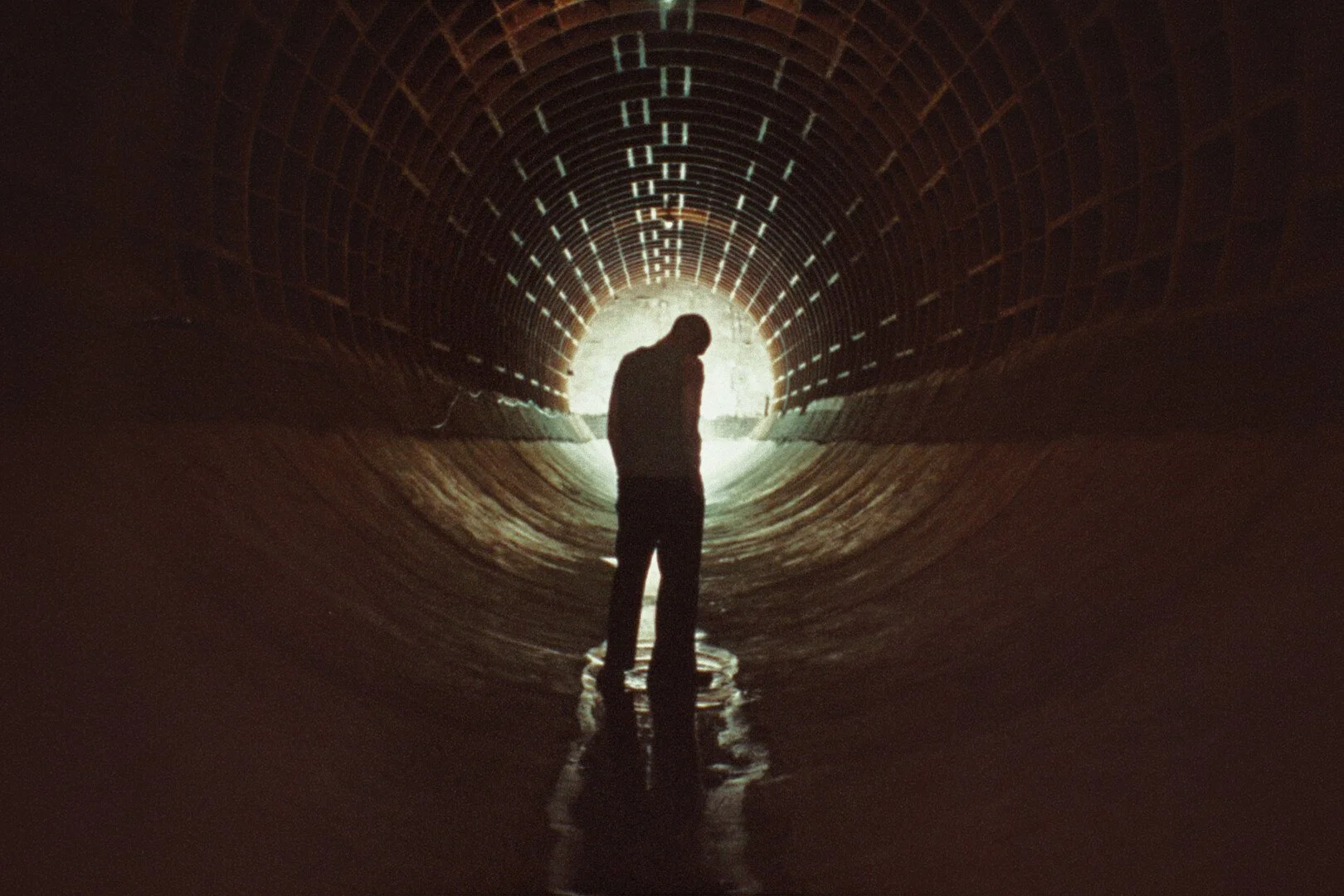
For Husky’s Wind Snow Heat, director Evgenii Bakirov crafts a bleak and poetic vision of a world left in the wake of nuclear catastrophe. The music video follows a lone survivor who sends a homemade RC car across an abandoned landscape, hoping it might lead him back to signs of life — or to the family he has lost. As the small machine travels through empty terrain, the man records a message for whoever might one day find it, reading fragments of a letter like a final testament.
Structured across two timelines, a colour-washed past and a stark black-and-white future, the film unfolds as both a search for connection and a meditation on absence, memory and the persistence of hope.
Wind, Snow, and Heat follows a survivor of a nuclear disaster searching for his family using a self-made RC car. What drew you to this small, personal gesture within such a large and devastated world?
We are now going through an unstable period of history. Unfortunately, it has become more common that countries refuse to listen to each other and choose weapons instead of words (and talk with guns).
In this story I wanted to reflect the possible consequences of war. War destroys all life and beaty. It leaves behind lifeless ruins that cannot be undone. Both Humanity and nature suffer. I wanted to reveal the complete deficiency of life in a post-war world. And the big- scale catastrophe through a small hero.
The video moves between two timelines: the past in colour and the future in black and white. Why did you choose this visual structure, and what does each timeline represent?
I wanted to make the plot understandable and comprehensible from the first, or at least the second, viewing. Usually, a similar color segmentation is shown where the past is in black and white. But in this case I used the opposite approach as It was really important that the entire journey through the post-catastrophe world could be seen in color.
At the same time, it created an interesting interpretation of the hero’s experience during the search for his family. As long as there is a ray of hope to find his loved ones with the help of a remote-controlled car, the story is filled with color. As soon as the car battery dies, the story gradually loses its saturation and becomes black and white.
The scene where the present-day line transitions into the future is when the car's headlights turn off.
“The initial challenge was to tell a story about a huge catastrophe using a small hero.”
As he travels, the protagonist maps out areas of his world with no signs of life. What does this act of mapping mean to you?
We were pursuing a fairly straightforward connotation here. The hero uses a map to cross off areas with no signs of life, to structure his search and not to get confused while exploring the territory. When writing the story, I tried to put myself in his shoes and realized that making such notes would be important to me.
The lyrics repeat the idea of returning as wind, snow, and heat. How did you translate this idea of transformation into the visuals?
The song has lines about different weather conditions: heat, rain, snow. Of course, just as in the video's plot I wanted to show, that not only the time of day, but the elements alternate each other as well. Given the restrictions and limitations, it seemed that it wouldn't be possible to shoot everything at once, as it would have meant traveling to different cities and locations. And of course, we didn't even dream of finding snow! On top of that, the shooting area had to be deserted. We chose Kazakhstan because it had the most favorable combination of locations: a desert and a training ground for rescuers (with a real train and cars).
But! It was December at the time. Everything around was about to be covered in snow, and we took a risk and went to shoot, hoping we'd get lucky and at least capture the desert without snow. As a result, we hit a perfect transition point. During the two shooting days in Kazakhstan, we managed to film both the desert with it’s bright sun on the first day and the training grounds covered in snow on the second day. It's hard to believe we were so lucky. But it really happened.
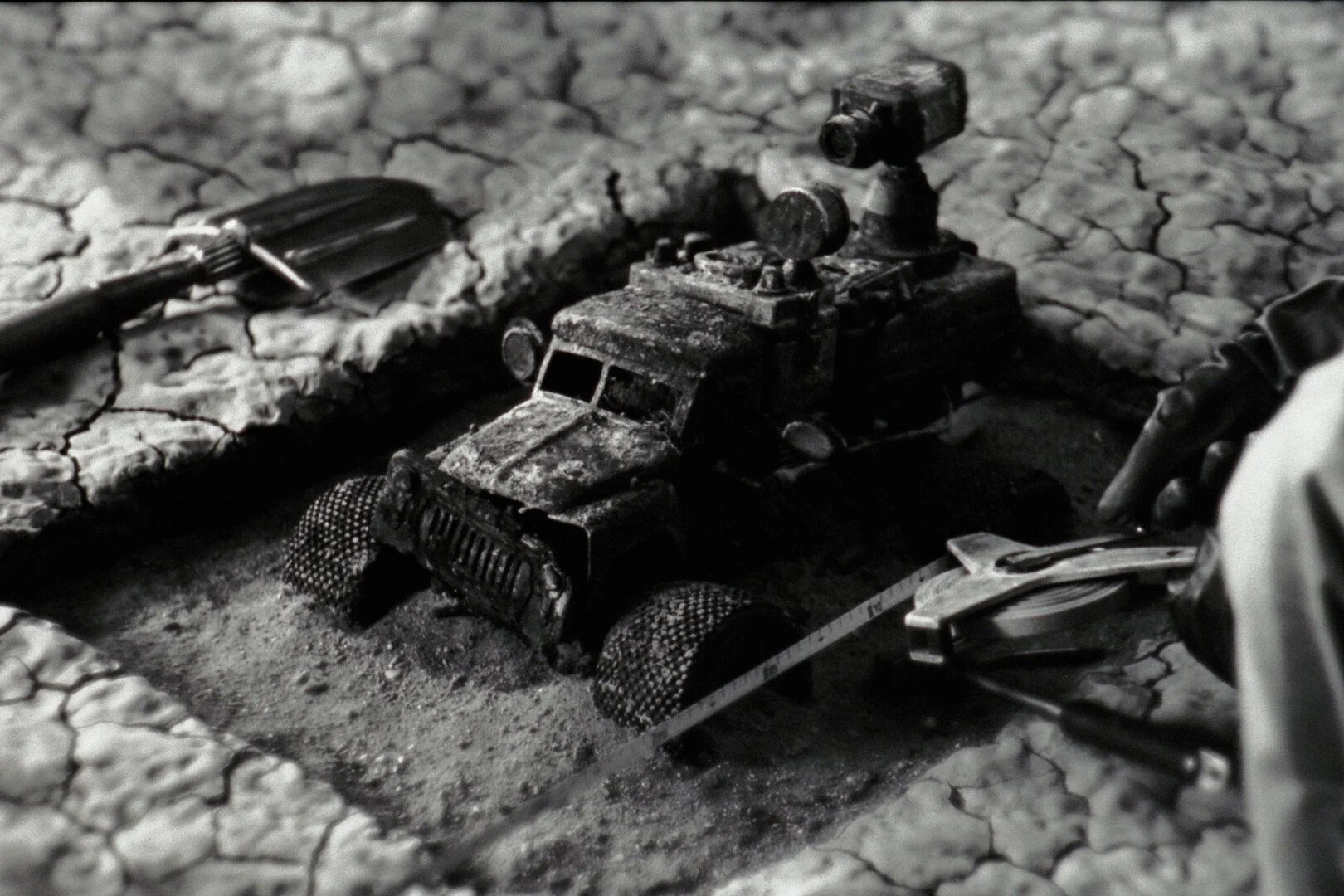
“As long as there is a ray of hope to find his loved ones with the help of a remote-controlled car, the story is filled with color. As soon as the car battery dies, the story gradually loses its saturation and becomes black and white.”
The film feels quiet and restrained, even though it deals with catastrophe. How did you avoid turning the disaster into spectacle?
The initial challenge was to tell a story about a huge catastrophe using a small hero.This approach seemed interesting because the big scale of the catastrophe is fragmentarily revealed through a small character.
You’ve spoken about wanting to have an honest conversation with the viewer. What conversation were you hoping to start with this film?
We live in a turbulent world that is on the brink of escalating into a major catastrophe. And there are different points of view on the conflicts that are braking out. This why I expected to receive different kinds of feedback on the clip: both positive and negative, as its message is quite clear-cut.
History shows that any conflict resolved by jackboot tactics results in nothing but pain, destruction, and loss. There were no disputes or contradictions. If you read the comments, it becomes clear that whatever our political views may be, we all need peace.
director — EVGENII BAKIROV
writer — EVGENII BAKIROV
producer — MICHAEL NOVITSKIY
producer — EVGENII SADOVOY
director of photography — KIRILL GROSHEV
director of photography — ANDREY MAICA
art director — VASYA IVANOV