LIMINAL SPACE
Navigating transformation through the pulse of rave culture
Directed by Zhaodong Zeng
words by Katie Huelin and Isabella Bazoni
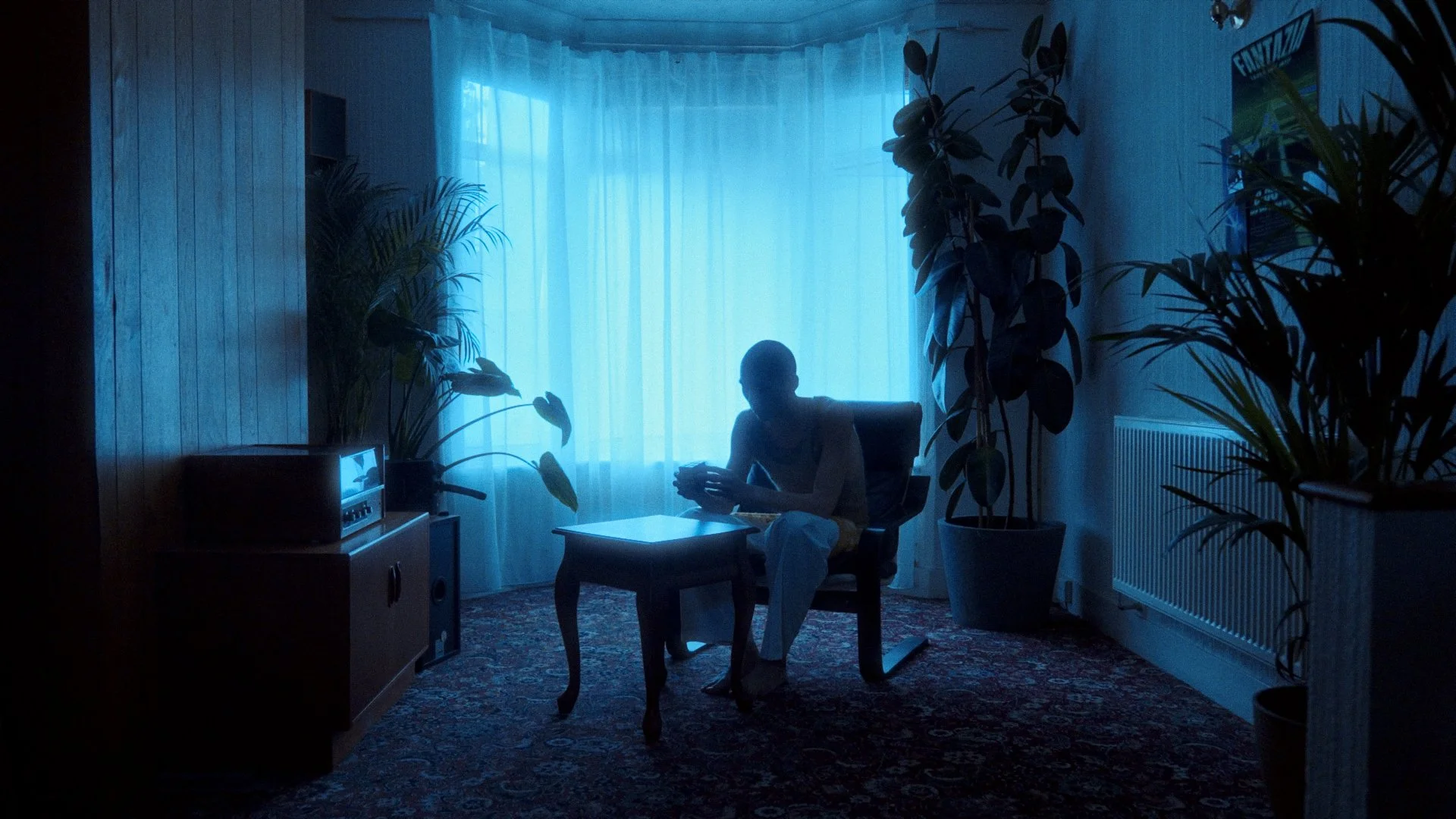
Liminal Space unfolds in the electrified spaces of the city’s nightlife, where identity, alienation, and self-discovery converge. Facing the uncertainties of a postmodern society, the film follows a young individual navigating the fluid, immersive world of rave culture — a space both chaotic and precise, where societal expectations dissolve and transformation becomes possible. Amidst kaleidoscopic lights, throbbing beats, and ephemeral movement, the characters encounter the tension between fragmentation and coherence, exploring the spaces between belonging and isolation, confusion and clarity.
Directed by Zhaodong Zeng, a young filmmaker and cinematographer, Liminal Space is both a continuation of his exploration of hybrid storytelling and a meditation on the ways visual form can capture personal and collective metamorphosis. With international experience across artist films, music videos, fashion shorts, and dance films, Zeng brings a keen eye for texture, rhythm, and emotional resonance, shaping a world where the boundaries between reality, ritual, and imagination blur.
Liminal Space sits between chaos and clarity. What first pulled you toward rave culture as a way to explore fragmentation and personal rebirth?
Rave culture pulled me in because it holds contradiction so naturally: it looks chaotic, but underneath there’s a strange clarity—an emotional order. In an ever-evolving urban landscape, identity gets stretched between tradition and modernity, and I wanted a space that could honestly hold that tension. For me, the rave isn’t just a scene—it’s a liminal zone, a temporary autonomous space where mainstream judgment and hierarchies soften. That suspension of “normal rules” allows people to explore who they are without needing to be coherent all the time. That’s where fragmentation can become rebirth: not by forcing wholeness, but by moving through the break.
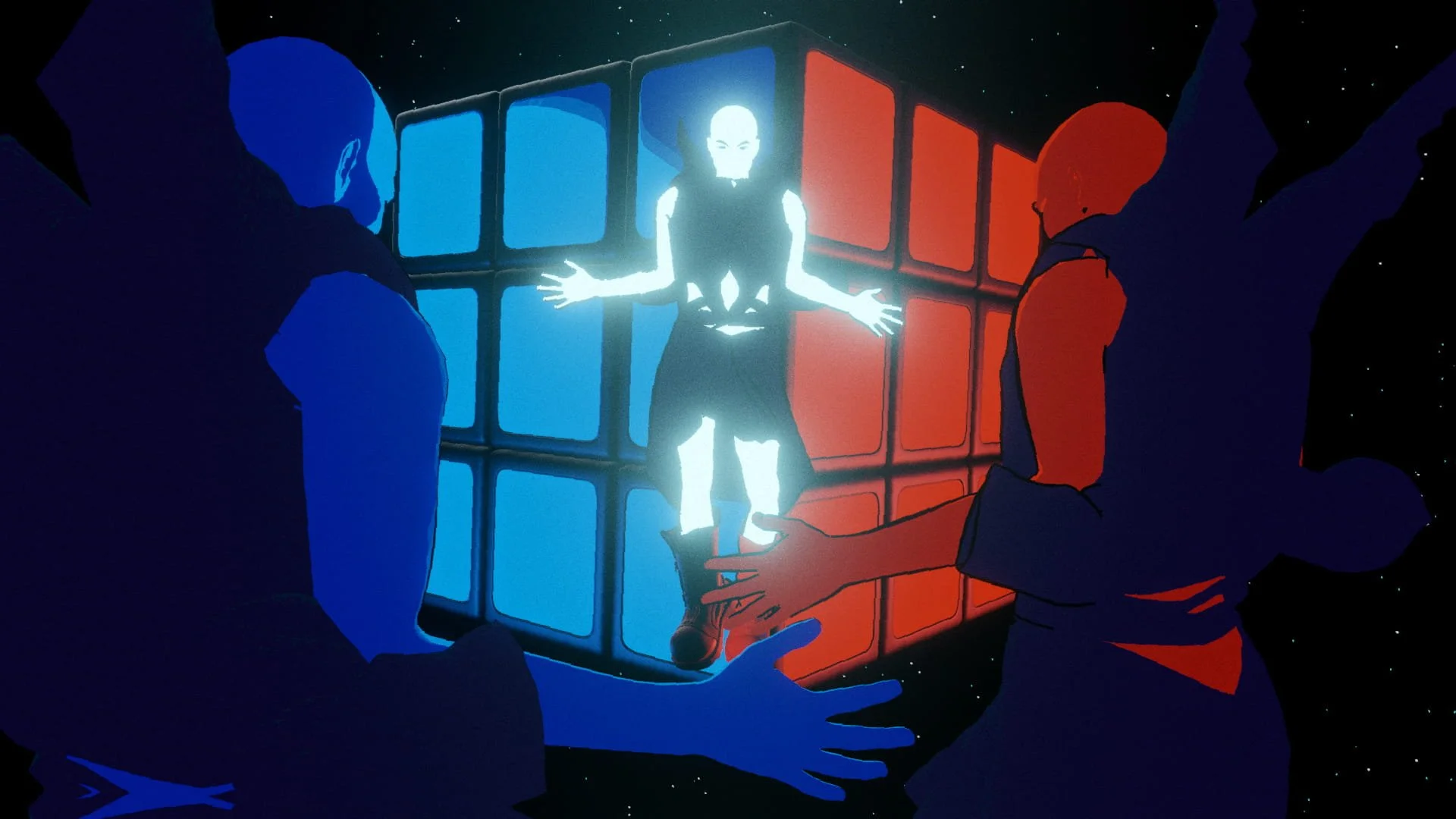
How did the Rubik’s Cube motif become a symbol for the shifting identities you wanted to explore in the film?
The Rubik’s Cube became a recurring symbol because identity rarely feels like one stable surface—it’s multiple faces, multiple colors, constantly rotating under pressure. In the film, each face and color block represents a different facet of the protagonist, and the “scramble” becomes a language for inner conflict. What matters to me is that the cube isn’t about perfection—it’s about process. The gradual reassembling mirrors the transformation I wanted to explore: identity doesn’t “resolve” in one moment; it reshapes through time, and we’re always redefining ourselves.
“The rave isn’t just a scene—it’s a liminal zone, a temporary autonomous space where mainstream judgment and hierarchies soften.”
Your visual world mixes subculture, archive references, and very contemporary digital craft. How did you and DOP Ziyue Yu, and your movement director, build the film’s physical and emotional energy together?
From the start, I wanted the film to be felt physically—to resonate on a visceral level rather than only through explanation. That meant the creative process had to be deeply collaborative, because the transformation we’re filming isn’t just narrative; it’s rhythm, breath, pressure, release. With Ziyue and Nadine our movement director, we constantly moved between two poles: intimate introspection and ecstatic release. We treated the dance floor as an emotional engine—where the body speaks when language fails—and built an energy arc that could carry the protagonist from alienation into belonging.
There’s an almost dream-logic interiority to the camera work, as if we’re drifting through someone’s inner world. How did you think about framing and pacing to make the audience feel “inside” the transformation rather than just watching it?
I thought of the rave as a psychological architecture—less a “place” and more a state of being. The characters enter as drifters, carrying alienation and loss, and the space gradually dissolves the hard edges of their everyday identities. So the camera had to feel participatory: close enough to sense hesitation, intimacy, and inner vibration—then willing to surrender to the collective pulse when the transformation takes over. Pacing became a way of breathing with the character, so the audience isn’t observing change from a distance, but drifting inside the metamorphosis as it unfolds.
“We treated the dance floor as an emotional engine—where the body speaks when language fails.”
How did the score and rave-inspired sound design help shape the sense of release and metamorphosis?
Sound is the engine of this world. In these spaces, music and movement don’t sit side-by-side—they merge into one transformative force, and that fusion was central to the film’s emotional logic. I wanted the sound design to do what the space does: suspend the rigidity of everyday life, soften the borders of the self, and create a collective intensity where personal identity can dissolve and reform. The “release” isn’t decoration—it’s the ritual of becoming.
Liminal Space being a finalist at Fashionclash places it inside a broader conversation about fashion, performance, and identity. What did being part of this festival mean to you?
For me, being part of Fashionclash represents more than festival recognition—it signals that fashion film can step into a larger cultural stage, and be read as a serious language for identity, performance, and transformation. The story of fragmentation I’m exploring isn’t separate from fashion—it’s deeply connected to how we construct the self in contemporary life. I see Liminal Space as a small contribution to that shift: a fashion film can carry emotional density, subcultural energy, and a cinematic experience that goes beyond “style” into lived psychology. My hope is that works like this help widen the frame—so fashion film isn’t treated as a niche format, but as a form that belongs in bigger conversations and bigger platforms.
Your work already spans fashion, dance, narrative, and more experimental forms. As you keep evolving your practice, what are you curious to explore next?
I’m increasingly curious about how spaces reshape identity—how certain environments become catalysts for transformation, and how film can translate invisible pressures into something the audience can feel. I want to keep exploring liminal spaces as refuges where identity can be re-formed, especially against the fragmentation of postmodern urban life. Formally, I want to keep pushing hybrid storytelling across artist films, music videos, fashion shorts, and dance films—expanding visual innovation while staying emotionally direct.
director - ZHAODONG ZENG
creative director & art director - ROBIN CHEN
producer - JESSIE ZHAI
talent - WEI DU
1st ad - TIANYUN ZHAO
crowd ad - YANZ WANG
movement director - NADINE ELISE MUNCEY
copy writer - TWAY
font designer - TEDDY
production assistant - HANNAH XIAO
d.o.p - ZIYUE YU
1st ac - FELIX ZHANG
gaffer - DI WU
spark - ZERONG CHEN
spark - JINGSONG JI
spark - SITONG CHEN
fpv drone operator - KALITO NELSON
production set associate & prop - HAIBING ZHANG (HELEN)
production design associate - GISELLE
stylist - KIM CHOW
styling assistant - MONICA PEI CHIEH KUO
hair & make up - GANGGANG
sound recordist - HANNAH XIAO
photographer - MANCHENG MA
photographer assistant - WWENEN LUSA
editor - B1N999
colour grading - B1N999
animation director - NING WEI
animation associate - ZHAODONG ZENG
animation environment artist - GOLDEN SU / NING WEI / ZHAODONG ZENG
digital fashion designer - JIACHENG CHEN
sound designer - WJENKIN / KORGY
composer - KORGY
sound mixer - KORGY
extras -
YOUSSEF SALEH
JANICE HUANG
ZHARU HANG
CAROLINA BORGIA
DIANE SU
kit - GENESIS
fashion / special thanks -
VICKY MATHER
DAVID CUMMING
ANQI ZHANG
BEN KIM
EDEN SHERRY
FIONA SCHURTER
MAVIS GU
MIN-JI KIM
NURI HWANG
PINNY YAOWARATANA