OPAL FEVER
Heat, isolation, and obsession linger beneath the surface of Australia’s opal frontier
Directed by Lucy Knox
words by Isabella Bazoni
In Opal Fever, director Lucy Knox takes us deep into the Australian outback, introducing us to the people who continue to orbit around the country’s once-thriving opal mining towns. Set between Kupa Piti (Coober Pedy) and Andamooka, the film drifts through scorched landscapes, underground homes, and isolated communities shaped by heat, labour, and a shared fixation on what might still be buried beneath the surface.
Rather than approaching these places through exposition or nostalgia, Knox focuses on atmosphere and presence. The film lingers on colours, textures, and fragments of conversation, gradually building a portrait of people drawn to lives that exist slightly outside of conventional structures. There’s a tension running throughout between harshness and intimacy—the brutality of the landscape sitting alongside moments of routine.
Known for moving fluidly between documentary and narrative work, Knox brings a restrained observational approach to this film, allowing the environment and the people within it to shape its rhythm naturally. Working with cinematographer Max Walter, she captures the outback with a sense of scale that never overwhelms the individuals at its centre. Dust, light, machinery, and empty space become part of the emotional texture of the film, alongside a soundscape that emphasises the isolation and strange magnetism of these towns.
What emerges is a portrait of obsession; of people chasing something uncertain, even as the world around them slowly changes. Opal Fever sits with that contradiction, tracing the fragile line between freedom and entrapment, myth and survival.
Opal Fever feels deeply atmospheric, almost suspended between documentary observation and something more mythic and liminal. What first drew you to these opal towns and the people living within them?
Thank you - I like that description. Honestly, I think Australia's identity often feels known for its deserts and barren plains - but the reality is that the majority of people live on the edges, on the coastline. I'm one of those people - who have always been interested in the centre - so it was really a pull to visit these places that are iconic, but I didn’t know. Then learning more about opal - it’s fascinating because it’s essentially an object of beauty (with no function) and people build entire lives around searching for it. I was interested in meeting the people who dedicate their lives to finding it.
There’s a strong sense of isolation running through the film, but also a strange intimacy with the landscape. How did you approach capturing the Australian outback in a way that felt so emotionally connected to the people inhabiting it?
It’s a very vast place, and visually I just really wanted wide frames with no arteface. I think the intimacy that runs through is probably from people being so generous - to let us into their homes, workplaces, and let us observe their daily lives; allowing us to capture moments of candidness.
“Opal is fascinating because it’s essentially an object of beauty with no function, and people build entire lives around searching for it.”
The film touches on obsession, endurance, and the idea of people being unable to leave these places behind. What conversations or encounters during production stayed with you the most?
Mostly conversations with Angel, who’s one of the few full-time female opal miners (maybe the only!?) - she’s incredibly dedicated. You can see more of her on the show Outback Opal Hunters. Seeing her work on the opal fields, often at night because it can reach over 50 degrees in the day - it was so remote, so quiet, so dark. We had to follow her car closely, or we'd risk driving into a mine shaft. They can become covered by dirt that blows in, so they're hard to spot. A lot of people have been lost on the opal fields. And Angel, who's a very practical person, talked about the spirits she's felt out there, guarding mine sites. It's eerie and beautiful - one of those moments where you feel very small against the scale of everything around you.
Visually, the piece balances harshness and beauty in a really striking way. Could you talk about developing the visual language with cinematographer Max Walter and how you approached texture, light, and space?
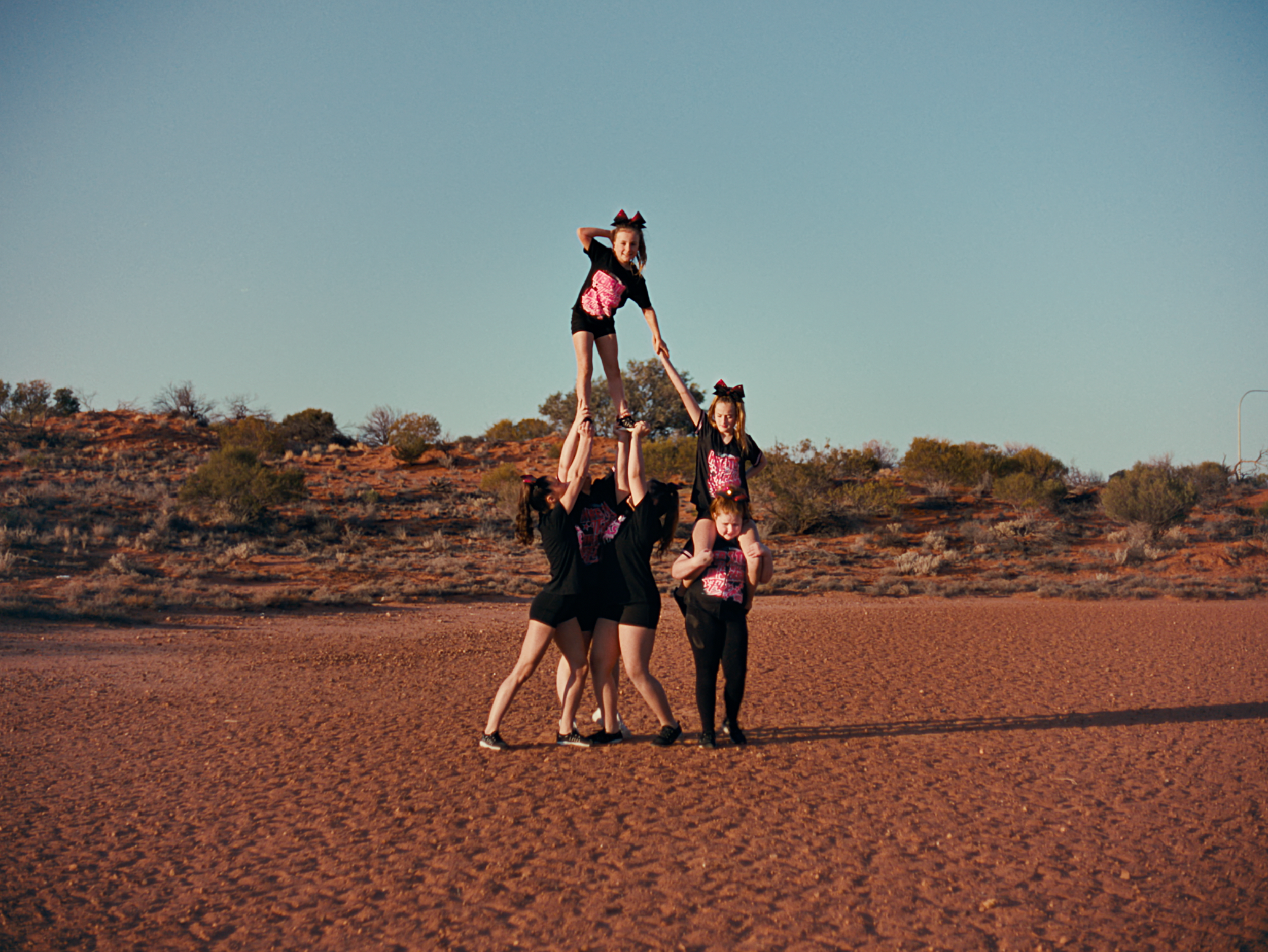
I wanted really wide frames - kind of honest and brutal. I remember talking to Max a lot about contrasts: beauty and brutality, femininity and harshness. It was constantly looking for feminine things amidst stark things.
I asked Max to share his perspective too, this is what he said: “We chose the Cooke Panchro Classics with the Alexa35 - a format and combination we’ve used before. Lucy wanted to lean into wide, simple, and static frames that had an honesty to them. The Panchros are a deeper stop wide open - so without filters or any fancy manipulation, they have a gentle warmth and softness that doesn’t draw attention to itself. The visual approach - while understated - should celebrate the subjects. Considering how tough the conditions might be out in the desert, and how often we would have little control, the latitude and reliability of the Alexa35 was an easy decision.
Our lighting package consisted of some LED tubes, a single LED panel, three Aputure MC Pro bricks, and a selfie ring light! We had a mixed bag of diffusion and washing, but it was all very minimal. It was just enough to add some surrealism when we required, which we did in a handful of key scenes.”
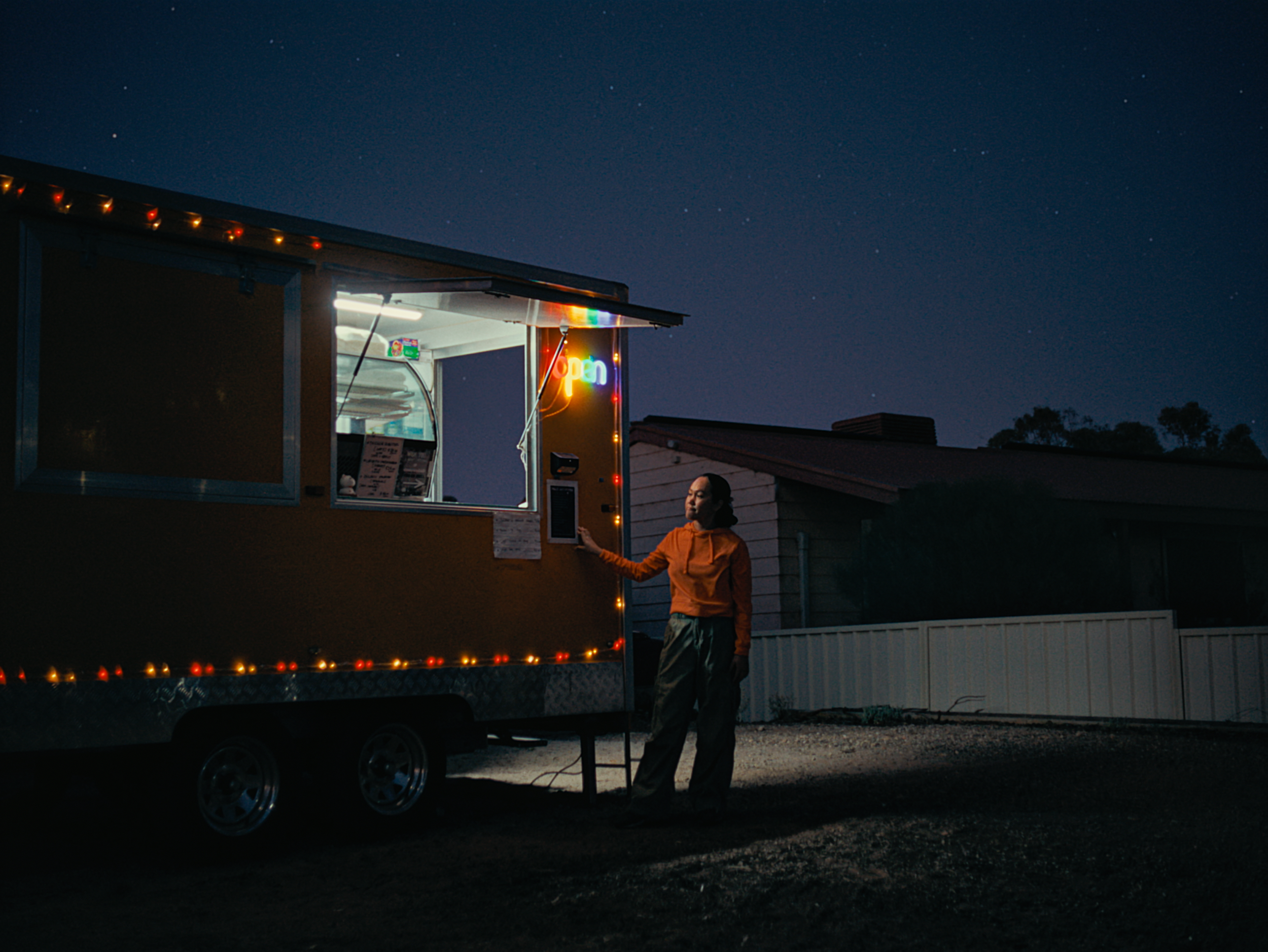
“I wanted it to feel more like a visual portrait or a day in the life, approached cinematically rather than journalistically.”
Sound plays a huge role in shaping the mood of the film, especially in creating that feeling of heat, emptiness, and distance. How closely were image and sound evolving together throughout the process?
Picture locked before sound. Then, Liam Annert at Rumble did an amazing job of the sound design. A lot of the sound design is built around space and silence, drone and wind - the things you actually hear out there - and Liam found ways to incorporate that without ever crowding it.
For the score I was able to collaborate again with IXYXI, who I love working with for their intuitive and original approach. They were also interested in the idea of the sound reverberating beneath the earth and spreading throughout the fields as the ground is disturbed - almost like a lingering curse attached to this promise of beauty.
Your work often moves between documentary and narrative storytelling. Did making Opal Fever shift the way you think about that relationship, or about where truth and fiction begin to overlap on screen?
Honestly, I studied video art, so partly I’d been missing making more formal, non-narrative work. I didn’t want to make a classical documentary - enough Australian TV has covered these towns already. I wanted it to feel more like a visual portrait or a day in the life, approached cinematically rather than journalistically.
There’s only one scene in the film that’s slightly heightened beyond observation, and even that was just taking someone’s real, everyday actions and placing them in a different context. But I do love allowing documentary to unfold naturally, then using cinematic language - framing, lensing, finding a new angle on the background - to elevate the emotional experience of it.
director — LUCY KNOX
producer — ALEXANDRA GALLOWAY
production company — UPPERFAST GMBH
executive producers — SARAH BRANNAN, TRUST
cinematographer — MAX WALTER
editor — SHANNON MICHAELAS
post-producer — ISABELLA KEY
post facility — THE EDITORS
colourist — SAM MCCARTHY
music composition — IXYXI
audio post production — RUMBLE STUDIOS
sound designer — RENEE PARK
sound mix — SEAN WILKINSON