OBSESSION
A hypnotic visual meditation on ambition and transcendence inspired by the myth of Icarus
Directed by Ben Miethke
words by Isabella Bazoni
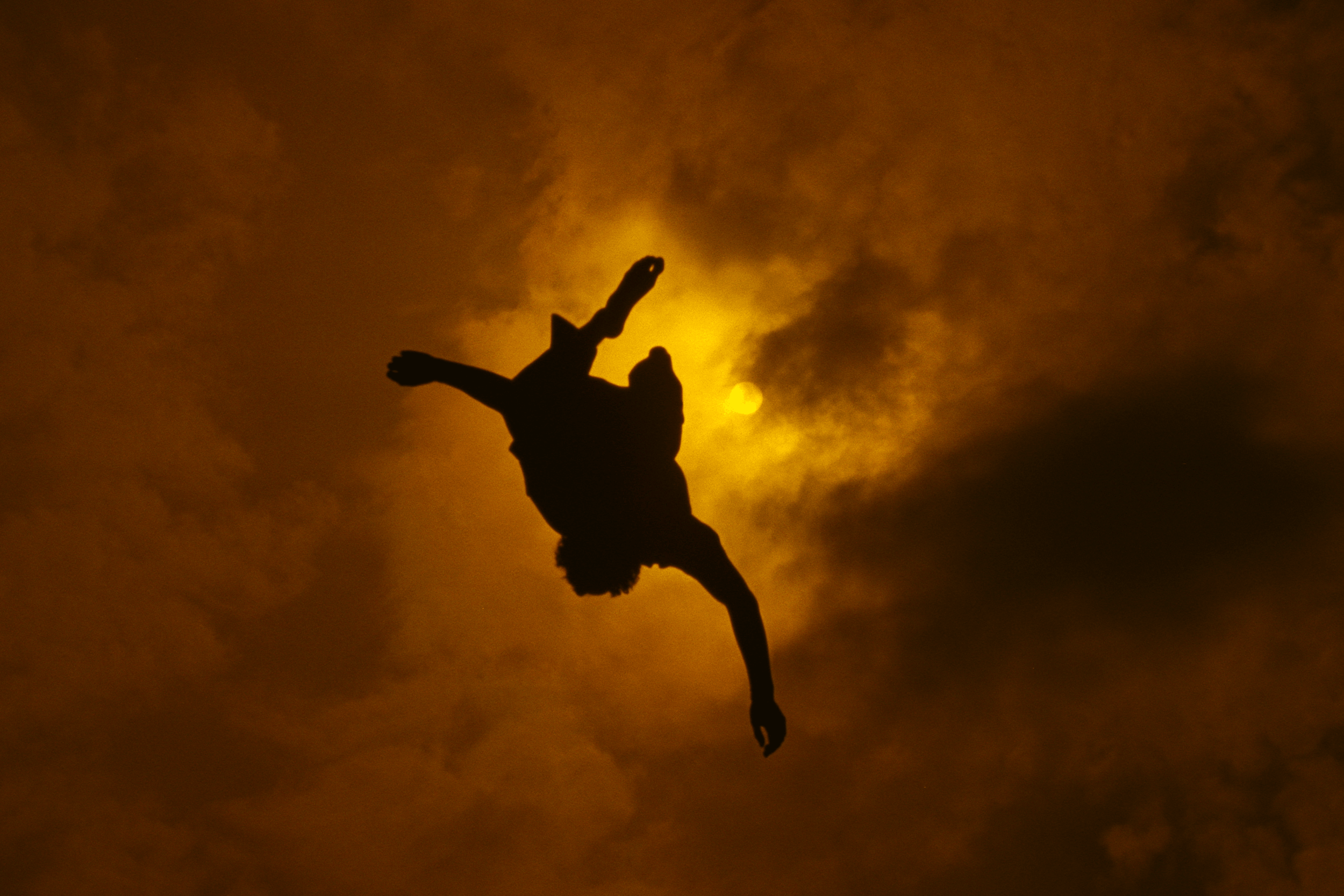
In Obsession, director Ben Miethke crafts a dreamlike visual counterpart to Superpoze’s music, transforming the ancient myth of Icarus into a hypnotic meditation on ambition, downfall and transcendence. Bodies rise and collapse through shifting light and distortion, watched by silent crowds as horizons dissolve into fluid, almost cosmic landscapes.
Drawing inspiration from the luminous colour fields of Mark Rothko, the video unfolds like a moving painting — a space where music, image and emotion merge into a surreal reverie. Currently based in Berlin, Miethke is known for exploring the essence of human experience through visually poetic storytelling, a sensibility that finds a particularly striking expression in this atmospheric work.
What initially sparked your interest in translating the myth of Icarus into this contemporary, dreamlike language of movement and light?
Every time I am in London the first thing I do is head to the Tate Modern to go see Mark Rothko's Seagram Murals. The first time I saw them was like an awakening. What I never fully understood from books and displays now fully struck me: I felt warm, at home, yet scared and meek. The paintings seemed to suck me into the spaces, like a void. It’s a feeling I can’t describe clearly until this day, and to be honest there are no words to do so properly. An ineffable moment. It’s the motif of levitation that I see in both Rothko’s work and the myth.
You’ve described your work as a quest for purity, capturing subtle human sensations. How did this philosophy shape your approach to directing the music video?
I try to create images that allow space for feeling rather than explanation. Instead of telling a linear story, I focused on movement, rhythm, and light. The idea was to strip things down so the emotional meaning emerges between the images.
“I try to create images that allow space for feeling rather than explanation. Instead of telling a linear story, I focused on movement, rhythm, and light.”
Colour carries a strong emotional charge throughout the film. How did you use colour to reflect the protagonist’s psychological state?
Color was central. I was inspired by Rothko’s color field paintings, where large blocks of color create emotional atmospheres rather than literal images. As the protagonist moves through the film, the world gradually dissolves into intense reds, blues, and light. These shifts mirror his emotional journey - between awe, fear, and surrender.
I’m also fascinated by the physical nature of light. At sunset, sunlight travels through more of the atmosphere before reaching us, scattering blue wavelengths and leaving behind those intense reds and oranges. Understanding this helped me approach color not just as symbolism but as a natural phenomenon -something rooted in physics yet capable of producing an almost spiritual emotional response.
The film’s world feels fluid, shifting between sky, skin, water, and abstraction. Could you tell us more about that interplay?
Rothko’s work often feels like a threshold - something between presence and absence. I also wanted the boundaries between elements to dissolve - sky and sea merging, bodies becoming weightless, textures drifting toward abstraction. The physical world is still present, but more painterly and unstable. That tension between the real and the metaphysical reflects the inner state of the protagonist.
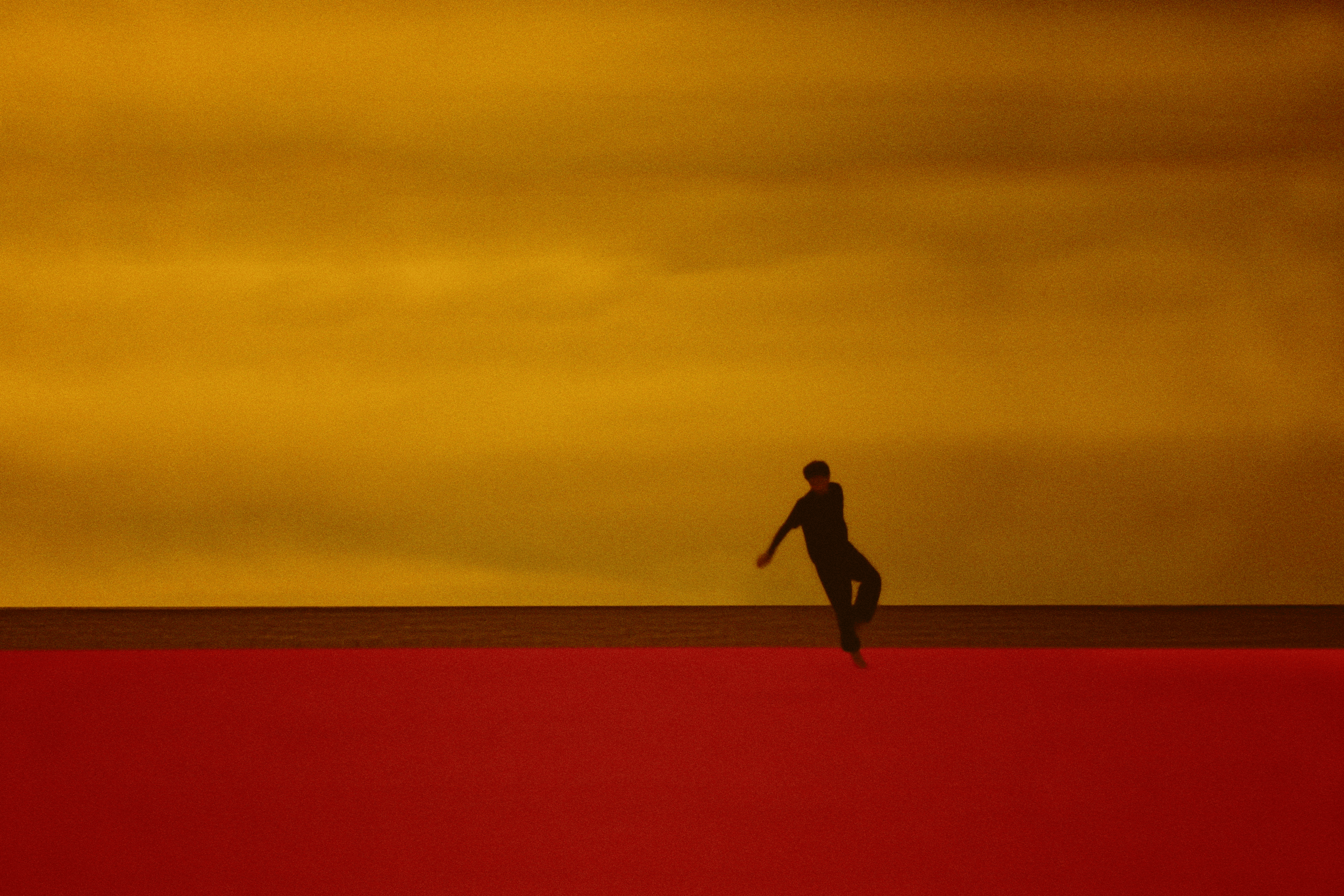
“The first time I saw Rothko’s Seagram Murals was like an awakening — I felt warm, at home, yet scared and meek, as if the paintings were pulling me into their space.”
Superpoze’s music feels inseparable from the imagery. What was the collaboration like?
Superpoze’s music has a very hypnotic quality. The repetition and gradual evolution of the track really shaped the visual rhythm. Rather than illustrating the music, I tried to let the images move with it - creating a kind of sensory experience where sound and image feel inseparable.
There’s a strong sense of disorientation in the film. How did you create that effect?
We treated the camera almost like another body in the scene. Sometimes it follows the protagonist closely, sometimes it drifts away into wide landscapes. Slow motion, aerial perspectives, and shifting edits might have helped to create the feeling that gravity itself is unstable - that we’re experiencing the fall from inside the character’s perception.
The VFX are subtle but striking. How did you approach them?
I wanted the effects to feel almost invisible. They’re not meant as spectacle but as a gentle distortion of reality. In that sense, VFX became a poetic tool rather than a technical one.
What’s next for you?
Getting these projects off the ground is always quite an undertaking. The next concept I’m exploring revolves around how to shine a light on beings that exist outside the radar. Let’s see how long it takes this one to come to life.
director — BEN MIETHKE
producer — PHANTASM
director of photography — JAMES BEATTIE
starring — TITOUAN CROZIER (BALLET NATIONAL DE MARSEILLE)
production — PHANTASM
co-production — LE BERG
co-production — BANVILLE
ep & cofounder — OLIVIER MULLER
ep — SARAH GABAY-REHEL
line producer — ILONA TRAN
line producer — SUZON THOMMEN
production coordinator — VICTOIRE BOUCHAYER
production coordinator — MANON CABOTIN
production assistant — SOLAL ROUX
production assistant — SAMUEL MARTIN
first ad — ANOUK BARRERE
unit manager — GIULIA CHAUVIN
pa — truck driver — KATHLEEN MONOT
pa — GABRIEL THEVENIN
1st ac — ANNE AYLIES
1st ac — RICHARD DUCROS
2nd ac — CYPRIEN JEANCOLAS
3rd ac — LISE ADRIEN
key grip — MAXIME VASSARD
key light — LOUIS TRIMAILLE
electrician / grip support — LAURA BONNEAU
set designer — JULIAN KNAACK
head constructor — MAHATSANGA LE DANTEC
ripper — GRÉGOIRE CVIKLINSKI
ripper — JÉRÉMY SOLARI
stunt coordinator — MICHEL POIROT
rigger — MATHIEU BOULANGER
rigger — FRED TOLAINI
rigger — CHRISTIAN BERGNER
rigger — JULIEN LIONS
movement coordinator — SOPHIE ORTIZ
stylist — EMMANUELLE RAMOS
stylist agent — LILA SOEN
stylist assistant — SIMON LEXTRAIT
groomer — ROMINA ALLIO
casting — LAURA GESNYS
casting — CHOUCOURATI CHANFI
casting — ROCHDI GHALEM
casting — MAXIME CROYAL
casting — LILY NAUDY
catering — JULIEN PAPALARDO
pa — truck driver — THOMAS BRODEVAN
pa — van driver — DIANE RIGOU
pa — van driver — NEAL FARINES
pa — rush transportation — LÉA DESMIDTS
scouting — CALYPSO LOPEZ
1st ac shoot — RICHARD DUCROS
1st ac essais — CYPRIEN JEANCOLAS
2nd ac — JEREMY SURACE
3rd ac — GARANCE LEBRAS
key grip — TITOUAN GALLO
grip — THOMAS BIERO
grip intern — MOUHAMED DIAKITÉ
key light — LOUIS TRIMAILLE
electrician / grip support — LOUISIANE AMOURETTI
head constructor — MAHATSANGA LE DANTEC
ripper — NICOLAS KAPLAN
ripper — VICTOR COSTE
ripper — GRÉGOIRE CVIKLINSKI
ripper — JÉRÉMY SOLARI
ripper — JOCELAIN FOURNIER
stylist — EMMANUELLE RAMOS
stylist agent — LILA SOEN
stylist assistant — SIMON LEXTRAIT
groomer — MAËLLE SAUVE
casting — MATEO GARNIER
casting — MARGOT GUIGUET
casting — CAMILLE HOLZER
casting — MIO FUSHO
casting — DIANA KAZE
parking pa — MOMO
facilities — LIONEL
editor — EDOUARD MAILAENDER
color grading studio — KEEPGRADING
colorist — FLORIAN MARTINY
vfx house — VHS ENTERTAINMENT
vfx producer — MICHAËL ZARIFIAN
flame lead — SÉBASTIEN AUBERT
flame artist — ANAÏS POUJOL
flame artist — CLÉMENT PAPIN
flame artist — ANTON DUCOS
online — SORA SCHAEFFTER
online — TIMO GROSSMANN
special thanks — OLIVIER MULLER
special thanks — GARY FARKAS
special thanks — NOÉ BARUCHEL DOMINATI
special thanks — YANNICK FAUTH
special thanks — GABRIEL WALDVOGEL
music written & produced by — GABRIEL LEGELEUX
arrangement — LEONARDO ORTEGA
co-producer & mix — SYLVAIN DE BARBEYRAC
mastering — ALEX GOPHER
performed by — GABRIEL LEGELEUX, GUILLAUME ROGER, ALICE BOURLIER, BARBARA LE LIEPVRE, CAMILLE BORSARELLO, DANIEL GARLITSKY, LISON FAVARD, ELODIE MICHALAKAKOS, ANNE CAMILLO, MAHOLY SAHOLIARILIVA, CARJEZ GERRETSEN, and SÉBASTIEN MITTERAND