THE TREE IN THE WIND SHOULDN’T THINK IT IS DANCING
An abstract meditation on childhood, grief, and the moment innocence gives way to self-awareness
Directed by Sybren Ypma
words by Isabella Bazoni
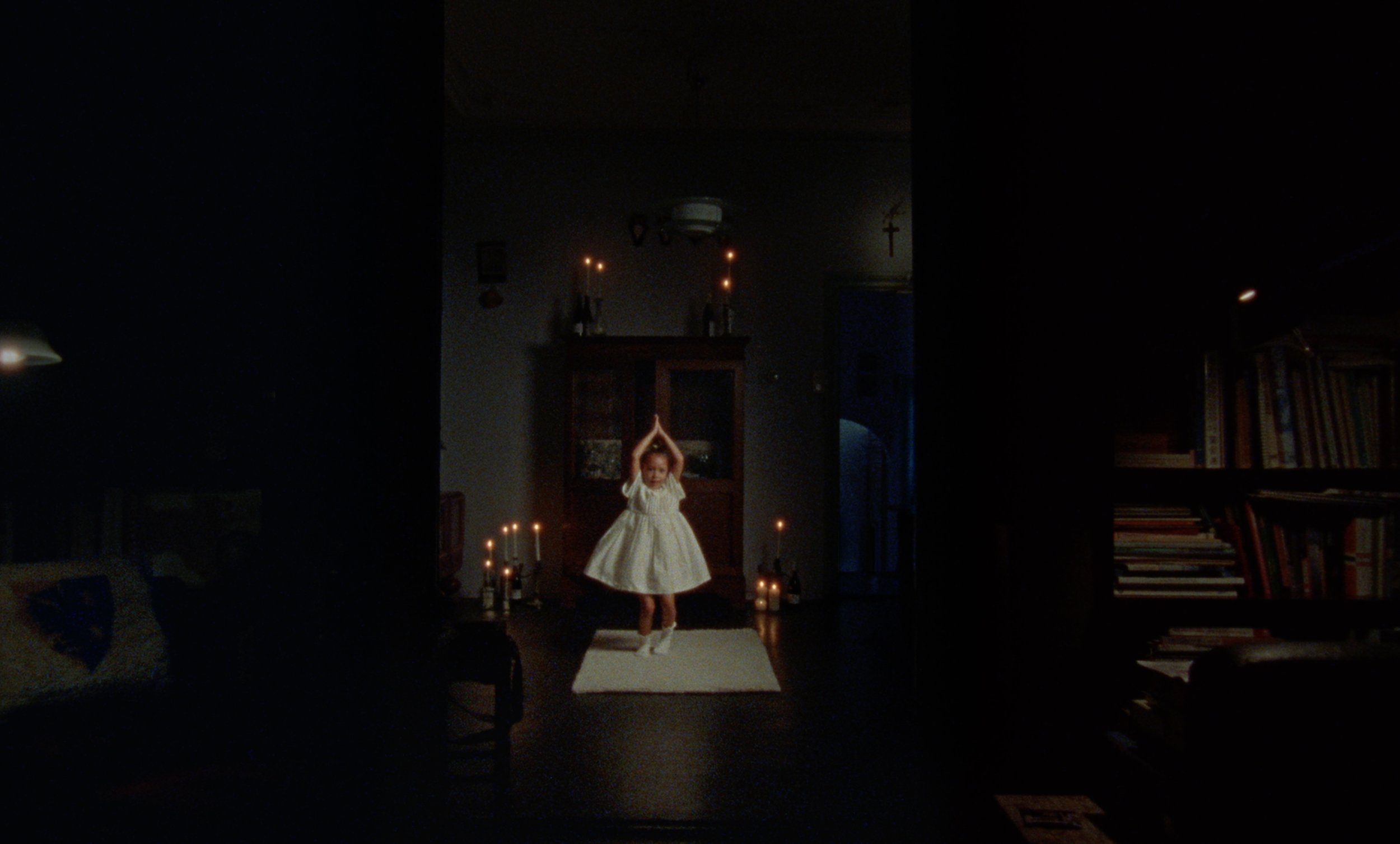
For many filmmakers, abstraction is a way of asking questions. For Dutch creative collective papar, it's a way of feeling them first. Their latest short, The Tree In The Wind Shouldn't Think It Is Dancing, unfolds less like a conventional narrative than a procession of memories, dreams and symbols. Moving between childhood innocence and the self-awareness that comes with growing older, the film explores how grief, knowledge and memory shape the way we experience the world. Rather than offering fixed interpretations, it invites viewers to surrender to intuition, allowing emotion to guide them through its images.
For writer and director Sybren Ypma, that instinctive approach is deeply personal. The film draws from memories of his late mother, whose own artistic practice and outlook on life continue to shape his work today. "Things don't have to be understood to be beautiful," she often told him—a philosophy that has become both the emotional foundation of the film and the guiding principle behind papar's creative process.
Founded by Ypma alongside producer Lucas Valk, cinematographer Wrister Meiresonne, and composer Lukas Amer, papar was born from a shared desire to create work where feeling comes before explanation. That philosophy extends through every stage of the filmmaking process, from the development of individual images to the relationship between sound, editing and performance. As Ypma explains, the collective isn't interested in forcing meaning onto an audience; if an image resonates emotionally, it has already succeeded.
We spoke with Sybren about the origins of the film, the memories that shaped its imagery, and why mystery remains one of cinema's most powerful creative tools.
The title itself, The Tree In The Wind Shouldn't Think It Is Dancing, feels almost like a riddle or a philosophical proposition. What was the origin of that phrase, and how did it become the starting point for the film?
I came across the phrase while reading Prometheus by Carry van Bruggen. The passage explored the impossibility of being "freely created," arguing that whatever is created will always remain connected to the roots of its creator. To me, it felt almost like a reassurance for the film's main character, who wanders through an unrooted limbo of contemplation, surrounded by the grief of losing his mother.
The film is deeply inspired by my own experiences after my mother's death. She was an artist herself, and the idea of roots was a guiding principle throughout her work. The opening shot of the film is one of her installations, which explores the disappearance of roots. She believed that, like trees, people need roots in order to grow. Without them, we become perpetual travelers: uprooted, unbound, adrift. Coming across that passage in Prometheus felt as though death was not going to stand in the way of my mother continuing to teach me life lessons.
The film explores that moment when childhood wonder begins to give way to self-awareness and understanding. What first drew you to that transition, and why did it feel important to explore now?
papar was born out of the contradictory feelings of intense loneliness and freedom I experienced after my mother's passing. I found myself in a period of distance, reflection, and growing self-awareness. In fact, the name papar is inspired by the Irish Papar monks, a group who left the mainland in search of social isolation. That tension, that first search for self-discovery, is where both Papar and this film found their foundation.
The transition from wonder to self-consciousness is something that has always fascinated me. As a child, I could spend hours alone in a sandbox, entertaining myself with nothing but my fantasies. I would watch adults and never understand why they took everything so seriously, why they always seemed so burdened and so stressed. It felt as they’d been told a secret that nobody had shared with me yet, one that had made playfulness disappear for good. I suppose that, for me, that secret was whispered by the death of my mother.
From a broader social perspective, I've always found it fascinating that life has never been more self-aware than it has in human beings. That is the curse we carry, and now, in the age of social media, it only seems to grow deeper and more inescapable. So on both a personal and societal level, that made this film feel urgent to make.
There's a tension running through the piece between knowledge and innocence — the suggestion that the more we understand the world, the harder it can become to experience it with openness. Was that tension something you were consciously building the film around from the beginning?
Yes, I think so. The film was built around the way my mother taught me to look at the world: 'Things don't have to be understood to be beautiful.' For me, the highest form of experiencing beauty, and love, are those moments where an immense feeling of unity is evoked. Where life can suddenly humble you by the goosebumps on the back of your neck. When you're struck by something beyond understanding, something divine. It feels like you're understood by beauty.
I think it is human nature to control our surroundings, and that makes it hard not to make this process too rigid and dogmatic through our understandings. I think that's where the conflict lies, because in the end, love is liberating.
“The artist’s job, in my mind, is neither to teach nor to give answers. It is to evoke: emotion, ideas, fantasies.”
The film feels highly symbolic, but never locked into a single interpretation. How did you approach creating images that could remain emotionally intuitive while still carrying conceptual weight?
A lot of these scenes came from memory. The amazing thing about memories is that they are images already steeped in emotion, otherwise I think we would have forgotten them. So within every image the emotion was already there.
Take the pistachio scene. A childhood friend of mine had a mother with a pistachio addiction. When we came running into the TV room as five year olds, the entire couch was covered in shells. That image has never left me: the melancholic stillness of empty husks, a broken unity. It was the only way for me to describe that feeling.
In contrast to this image there is the memory of my mother in the car, which I had around the same age. Her behind the wheel of an old Mercedes taxi inherited from her father, talking with passion, cold sweaty hands, large rings. And me watching her with my lazy eye, full of wonder. The moment she started the engine and began to shift gears, I would fall asleep instantly. It was the safest place on earth, and in complete opposite of the pistachios, the greatest sense of unity I have ever felt. So these primal emotions were all that carried these pictures, and all the symbolism around it was there to paint the details and the depth.
When the character grows older and begins living more in his head, the surroundings of the symbolism shift more out of the details and become more primal, because he is searching for answers. So even there, the character came first. The symbolism followed him, not the other way around.
papar describe themselves as a collective where emotion comes first and meaning follows. How did that philosophy shape the creative process on this project, particularly when balancing instinct, narrative, and abstraction?
It almost always starts with an intuitive image that carries some sort of emotion, an atmosphere. You want to capture it on film, and in that process you have to communicate it. What I love about papar is that the team doesn't focus too much on the meaning of an image; if it resonates, it's doing its job.
Together with Wrister Meiresonne, our DOP, editor and colorist (and overall technical saint), we guide this throughout the entire creative process. Within papar I tend to focus more on the motivation behind an image, he's more on how it communicates with the audience.
With this film it was important to stay close to the world that evoked beauty for me personally. Trying to make it too logical would have undermined the whole premise: 'Things don't have to be understood to be beautiful.' As long as the emotional thread remained clear, the images could stay abstract. For me, that's what kept the film from becoming inaccessible.
“I need to see the beauty in something before I can understand it. And through that, I try to make myself understood.”
The voiceover acts like an internal dialogue or philosophical reflection. How did the relationship between text and image evolve throughout development and editing?
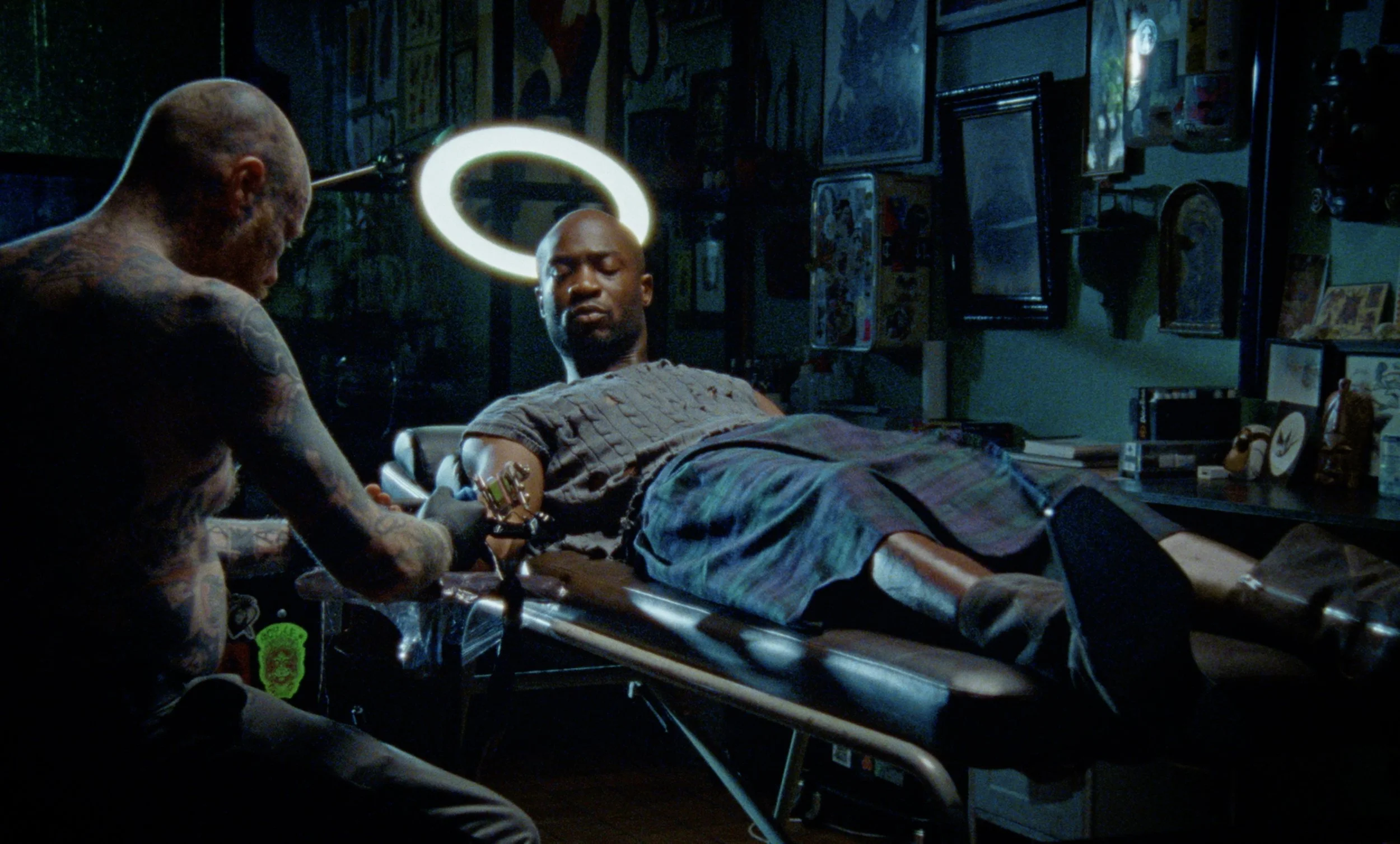
It changed everything. The version you see now was completely different from the one in the script. Initially the text was far more clinical and theoretical, delivered almost like a museum guide. A close friend encouraged me to lean into the emotional rather than the theoretical, reminding me that this is a film about grief, not an abstract philosophical concept. So in rewriting the voiceover, and with it the edit, I wanted something rawer. The museum guide had to be in an existential crisis, taking you with him on a tour of moving paintings, each one resonating with his grief. His grief matters more than his knowledge of the paintings.
We changed not only the words, but also the voice and the music. In this version, the incredible score by Lukas Amer, our composer, truly came together. He drew inspiration from the music of Arvo Pärt, a composer my mother always deeply admired. The cello also became a central element, as it was the first instrument I played as a child, chosen because my mother believed it was the most beautiful instrument. For the voiceover, I asked our Irish friend Ryan Flynn to lend his voice, with the idea that the story would be told by a modern Papar monk.
Like most of the changes we made in the second version, it felt like we were returning even closer to the roots of the project.
The film leaves the viewer with questions rather than answers. Was it important for you to preserve a sense of mystery, and what do you hope audiences carry with them after watching it?
Today we are surrounded by a lot of anaesthesia. Simple entertainment that pacifies the viewer instead of electrifying them, and with it, mystery is disappearing rapidly. I wanted people to experience this film the way I walked through museum galleries as a kid. Looking at Caravaggio paintings I could never fully understand, but whose mystery was so powerful it evoked fantasy, ideas, and within that, a sense of meaning.
I'm not a philosopher, an anthropologist, or a psychologist, and I think it's important to distinguish art from science. The artist's job, in my mind, is neither to teach nor to give answers. It is to evoke: emotion, ideas, fantasies. That is where the essence lies. That is what I hope people carry with them after watching this film: not an answer, but a new fantasy, a new feeling, a new idea they didn't have before they watched it.
The Tree In The Wind Shouldn't Think It Is Dancing feels like a strong statement of intent for papar as a collective, both creatively and philosophically. Now that this first film is out in the world, what's next for papar, and where do you see the collective heading from here?
Lucas Valk (Producer), Lukas Amer (Music Composer), Wrister Meiresonne (DOP, Editor, Colorist) and I will always search for new ways, visually, sonically, thematically, to stimulate our audience. The end goal is a feature film but until then we want to pursue this across both creative and commercial work, in the narrative as much as the intuitive way of working with images. We want to create a realm where the themes will always be existential, the imagery always stylistic, but the kind of projects, the genres, the contexts, those will always be reinvented. We started in film, but the four of us are also very curious to explore different audiovisual art forms. And of course the premise stays: emotion first, meaning follows.
created by — PAPAR
writer & director — SYBREN YPMA, PAPAR
producer — LUCAS VALK, PAPAR
dop & colourist — WRISTER MEIRESONNE, PAPAR
editor — SYBREN YPMA, PAPAR & WRISTER MEIRESONNE, PAPAR
music composer & score — LUKAS AMER, PAPAR
sound design — LAURENS LAMMERS
vfx — PAUL JONKER
voice over — RYAN BENNETT FLYNN
cello — FREDERIK DEALEMANS
art & styling — ARJA DE VOOGD
styling assistant — DAVINE VAESSEN
gaffer & camera assistant — JURRE VOS
light assistant — AURO FUMAGALLI
production assistant / child supervisor — JOY VAN DER SCHEER
talent — MADELIEF VELDHUISEN, NAOUFAL TAHIRI, ZAYN TAHIRI, JONATHAN PLUGGE, JOLANDA YDEMA, SOPHIA FRANCOISE BRIENEN, WEI WEI LESEMAN, MICHIEL MUTSAERTS, ISAÏ REIZIGER, LOES VAN DER VEEKE, MEES VULLINGS, DICK SCHWERING