BZNS
An uncompromising portrait of brotherhood, masculinity and vulnerability
Directed by Ahmed Razeek
words by Isabella Bazoni
French-Egyptian filmmaker and creative director Ahmed Razeek’s BZNS, directed for Egyptian artist MOND, has had an impressive awards run, winning Best Director at the London Music Video Awards, Gold for Cinematography and Bronze for Direction at the CICLOPE Awards, and recognition for Cinematography at the Berlin Commercial Awards. The film marks a collaboration between two artists looking to push beyond established identities, building a visual world that feels rooted in its cultural context while reaching beyond it.
Moving through a series of charged encounters between a group of young men, BZNS explores the contradictions of brotherhood and masculinity, where aggression and tenderness exist side by side. Shot in just 23 hours with around 50 performers, the film combines tightly choreographed movement with moments of spontaneous physical exchange, using gesture, proximity and collective energy to reveal the vulnerability beneath the surface of strength.
How did you develop the visual world of BZNS, and what were your initial conversations with MOND about the direction of the video?
BZNS actually came from a much bigger world we had been imagining. There were already different characters, stories and relationships within that universe, but I didn't want to reveal everything straight away. I liked the idea of taking one small story from that larger world, almost like a spin-off, and using it as a first introduction. Giving the audience just enough to become curious, without necessarily understanding everything.
When MOND and I first started talking, we both felt it was time to do something different. He had already established a strong identity in the Middle East, and we wanted to explore a more mature side of him, something that could connect with an international audience while still feeling true to where he comes from.
Personally, I was more interested in creating a feeling than explaining a story. I wanted the world to feel like it existed long before we started filming. The people, the way they move together, the tension between them, the little gestures you might not notice at first. Those details were really important to me. I also didn't want it to feel like we were trying too hard to make something international. For me, the more specific and honest you are about where you come from, the more universal the work can become. So BZNS was really our way of opening the door to that universe. You only see a small part of it, but hopefully you feel there's a lot more happening beyond the frame.
“For me, the more specific and honest you are about where you come from, the more universal the work can become.”
BZNS explores brotherhood and masculinity through moments of aggression and tension, but also tenderness and vulnerability. How did you approach directing these relationships and finding a balance between those different emotions?
I've always been fascinated by the way people behave when they're part of a group, especially young men. There's this strange contradiction where you can feel completely protected by the people around you, but at the same time feel the pressure to prove yourself to them. I think there's something very human in that.
With BZNS, I was interested in exploring the hidden softness within masculinity. The tenderness that exists beneath all that toughness, but doesn't always know how to express itself. Sometimes aggression is a way of hiding fear, affection comes through physical confrontation, and vulnerability appears in the smallest gestures. I find those contradictions much more interesting than trying to define what masculinity should look like.
Growing up between different cultures, I've always been sensitive to the ways people communicate without necessarily saying what they feel. A look, a movement, the way someone reacts when another person enters the room. There's so much emotion in those little things, especially in environments where expressing vulnerability openly isn't always easy.
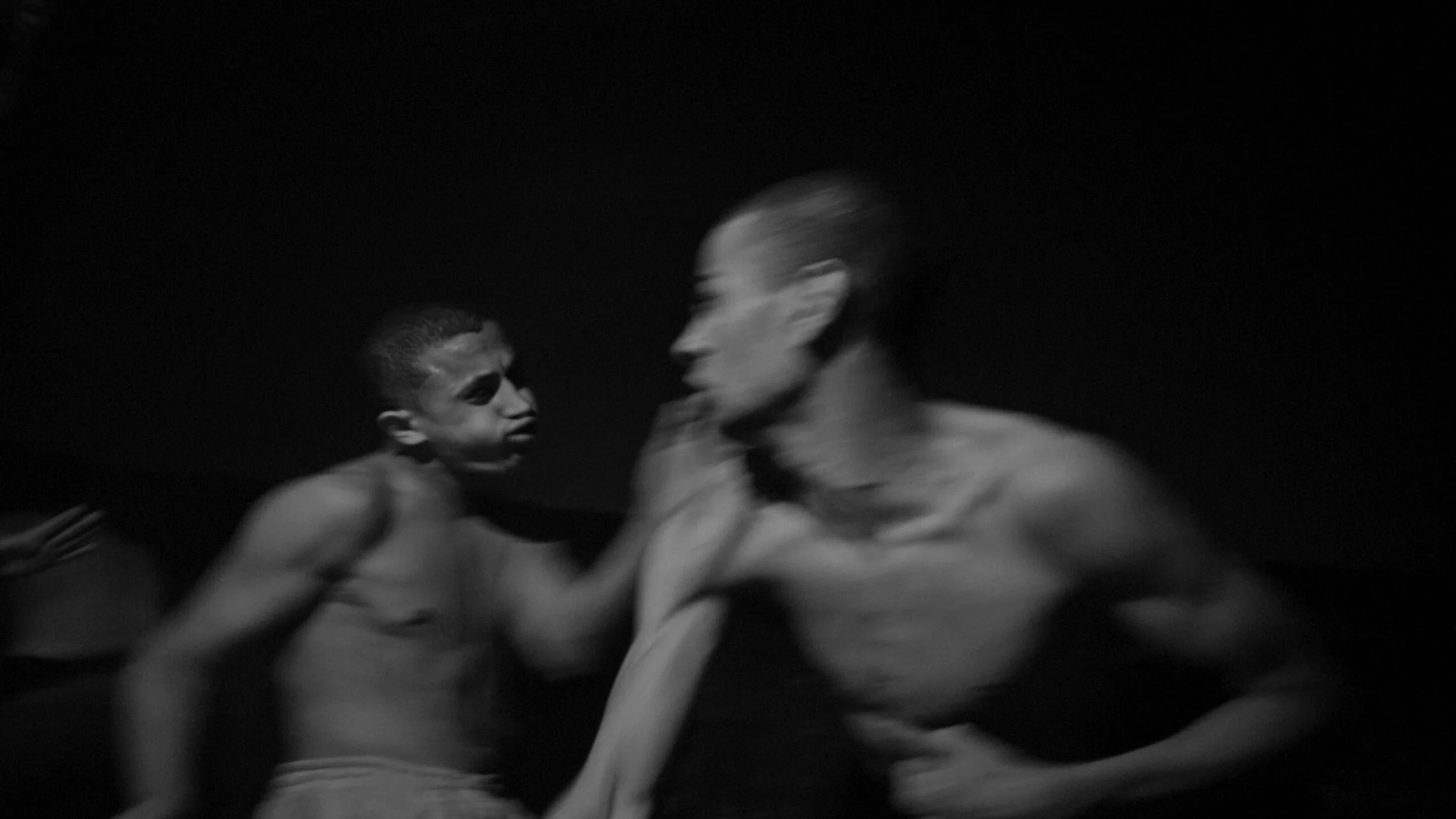
I wanted the relationships to exist physically before anything else. Sometimes the boys moved almost like a single body, and other times I wanted to find those small individual reactions within the collective. The camera needed to feel close to them, almost like another person inside the group, so we could discover those exchanges rather than observe them from a distance. The group hug under the rain is probably the clearest expression of that hidden softness. After all the aggression and tension, everyone suddenly comes together and holds each other. I love how the same physicality that carried so much intensity throughout the film becomes an expression of tenderness and belonging. For a moment, nobody needs to prove anything. They can simply be there for each other. I wanted to stay with that embrace because there's something moving about watching a group of young men finally let their guard down, allowing themselves to be vulnerable without feeling any less strong.
For me, that was the balance I wanted to find. Not treating strength and vulnerability as opposites, but showing how naturally they can exist within the same person, and within the same group.
You worked with around 50 performers, many of whom were non-professional actors. How did you approach casting and directing such a large group, and how did you make them feel like a real community rather than a collection of individual characters?
I was actually very specific about the people I wanted to cast. I wasn't necessarily looking for actors. I wanted people who already had a strong relationship with their bodies, people coming from physical disciplines like boxing, MMA, parkour and other forms of movement. We even had boxing and MMA champions in the cast.
For me, there was something interesting about working with people who already carried that physical confidence and discipline in their everyday lives. You can teach someone a movement, but there's a certain instinct, a way of standing, reacting or occupying space, that's much harder to reproduce. I wanted that to come naturally from the people themselves.
We spent several weeks finding the right individuals. Once we had the cast together, we dedicated several days to rehearsals and physical training. We worked on everything from the fight choreography to the way they ran, moved together and reacted to one another. Even something as simple as running needed to have a particular energy and rhythm. But beyond getting the movements right, those rehearsals were also about building trust. I didn't want 50 individuals arriving on set and simply following instructions. I wanted them to become comfortable with each other, to understand each other's physicality and develop a collective energy.
The challenge was finding the balance between control and freedom. We were very precise about the choreography, the framing and the movement, but I never wanted the result to feel overly rehearsed. Once the performers understood the structure, I wanted to leave space for their own instincts to take over. Rather than asking them to perform a particular emotion, I tried to create situations where they could react to one another naturally. Sometimes the most interesting moments came from something small and unexpected within a carefully constructed scene. By the time we started shooting, they weren't just 50 individuals following a choreography. They had begun developing their own relationships and ways of communicating. I wanted the camera to capture that energy rather than manufacture it.
“Not treating strength and vulnerability as opposites, but showing how naturally they can exist within the same person, and within the same group.”
Gestures, silence and body language play such an important role in BZNS. How did you approach using physical performance to tell the story and communicate emotions without relying on dialogue?
I've always been drawn to the idea that people reveal much more about themselves through what they do than what they say. Sometimes a gesture, a hesitation or the way someone looks at another person can tell you something that dialogue would never quite capture. I find that fascinating, both in cinema and in everyday life.
With BZNS, I wanted the body to become its own language. These characters aren't necessarily people who explain what they're feeling, so their emotions had to exist through their movements, their reactions and the way they interacted with each other. I was particularly interested in the contrast between individual and collective behaviour. How someone can act completely differently when they're alone versus when they're surrounded by a group. A person might hesitate for a second, but the energy of everyone around them pushes them forward. Or someone might appear incredibly confident, yet a small reaction reveals something more fragile underneath.
Visually, I wanted to give those moments space. Not every emotion needed a close-up, and not every action needed to be explained. Sometimes the most interesting thing was happening at the edge of the frame, or in the reaction of someone who wasn't at the centre of the scene. I wanted the audience to discover those details for themselves.
There's also something I love about the ambiguity of physical expression. The same gesture can mean different things depending on the context. A hand on someone's shoulder can be comforting or threatening. A group running together can feel like freedom or danger. I wanted to play with that uncertainty throughout the film. That's also why I didn't want to introduce any external dialogue. I wanted the images and the music to complete each other. The characters express themselves through their bodies, while MOND's voice and the song bring another emotional layer to what we're watching. Sometimes the music tells you something the characters can't express, and sometimes the images give the lyrics a completely different meaning.
I like when you leave a film with an emotion you can't quite put into words, but that stays with you afterwards.
BZNS was shot in just 23 hours. What were the biggest challenges of working within such a tight timeframe, and how did you balance the precision of your choreography and visual direction with the spontaneity and unpredictability of the performances?
We were very well prepared. Weeks of casting, rehearsals, choreography and planning had gone into every aspect of the shoot. But even with that preparation, shooting something of this scale in just 23 hours meant we had to be ready to adapt.
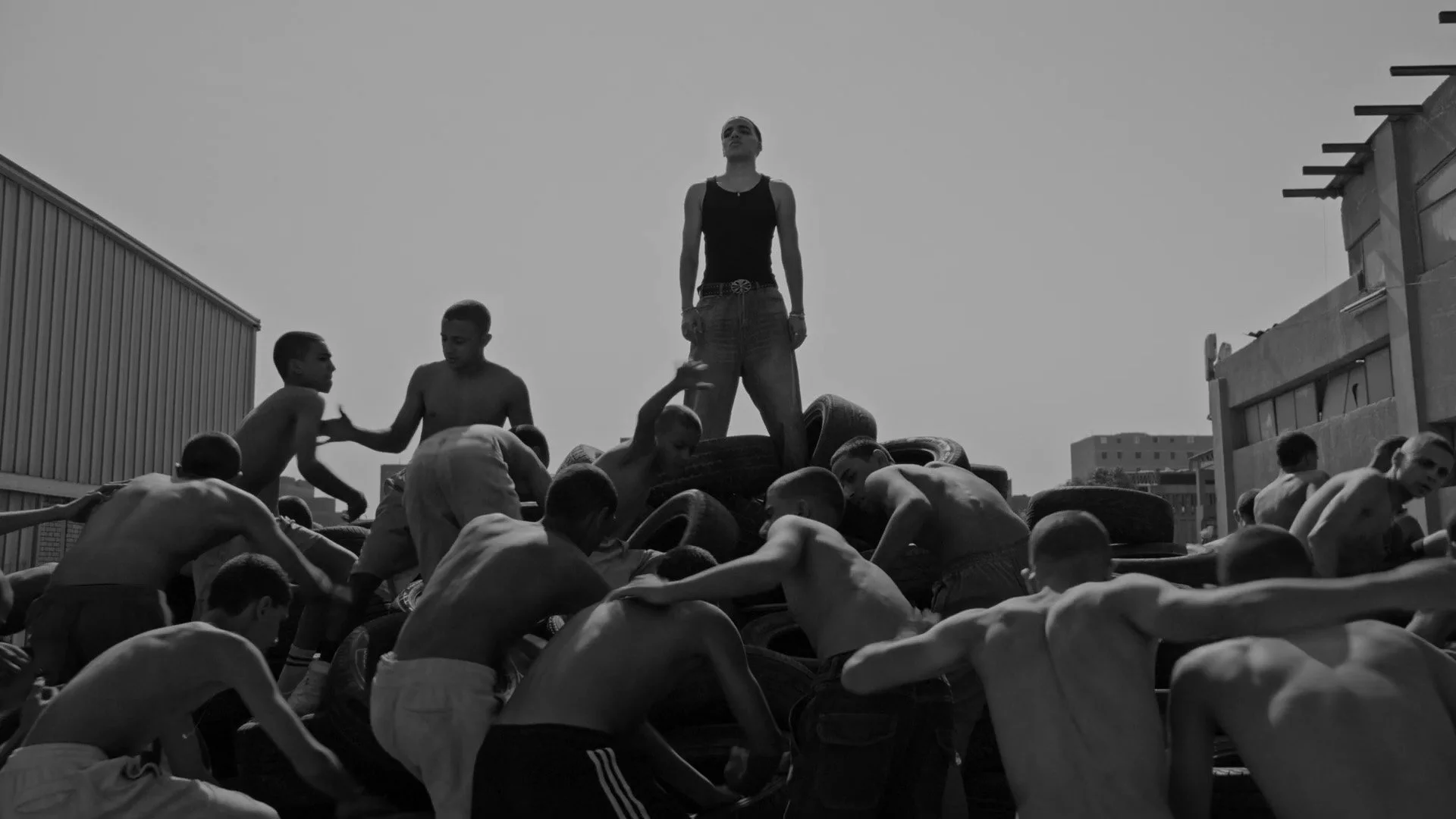
Early in the day, we ran into a problem with the tyre pyramid. The structure wasn't holding together the way we needed it to, and we quickly realised we couldn't force the sequence. Rather than lose time trying to make it work, we decided to move on to another scene and return to the pyramid later. With such a tight schedule, you have to know when to insist on something and when to let it go for a moment. Interestingly, that change worked in our favour. The scene we shot instead brought a different energy to that moment in the day and gave the performers an opportunity to warm up together in a way we hadn't anticipated.
What I remember most, though, is how much everyone genuinely loved what we were creating. There was an incredible sense of commitment from the entire cast and crew. Even when something didn't go according to plan, nobody lost momentum. We simply found another way forward. Everyone was so absorbed in getting the best out of every scene that we barely noticed the hours passing.
You can prepare every shot and rehearse every movement, but you can't manufacture that kind of collective dedication. On BZNS, we were lucky to have it.
written & performed by Mond
arrangement by Mond Music
produced by Evo, Mond
mixed and mastered by nader soliman
director — AHMED RAZEEK
cinematographer — MOSTAFA ELKASHEF
creative studio — RUE CREATIVE
creative director — ERIC RAKOTONIRINA
production house — BUTTER FILMS
steadicam operator — STEVEN SAMY
stunt coordinator — AHMED KAZOMY
editor — SIMON TRISTANT
colourist — NADIA KHAIRAT GOMEZ
sound design — CHENG ZHUANG
graphic design — PAUL-ANTOINE BERNARDIN