An intimate portrait of artist, writer and curator Phong Bui
Directed by Kalum Ko
words by Isabella Bazoni
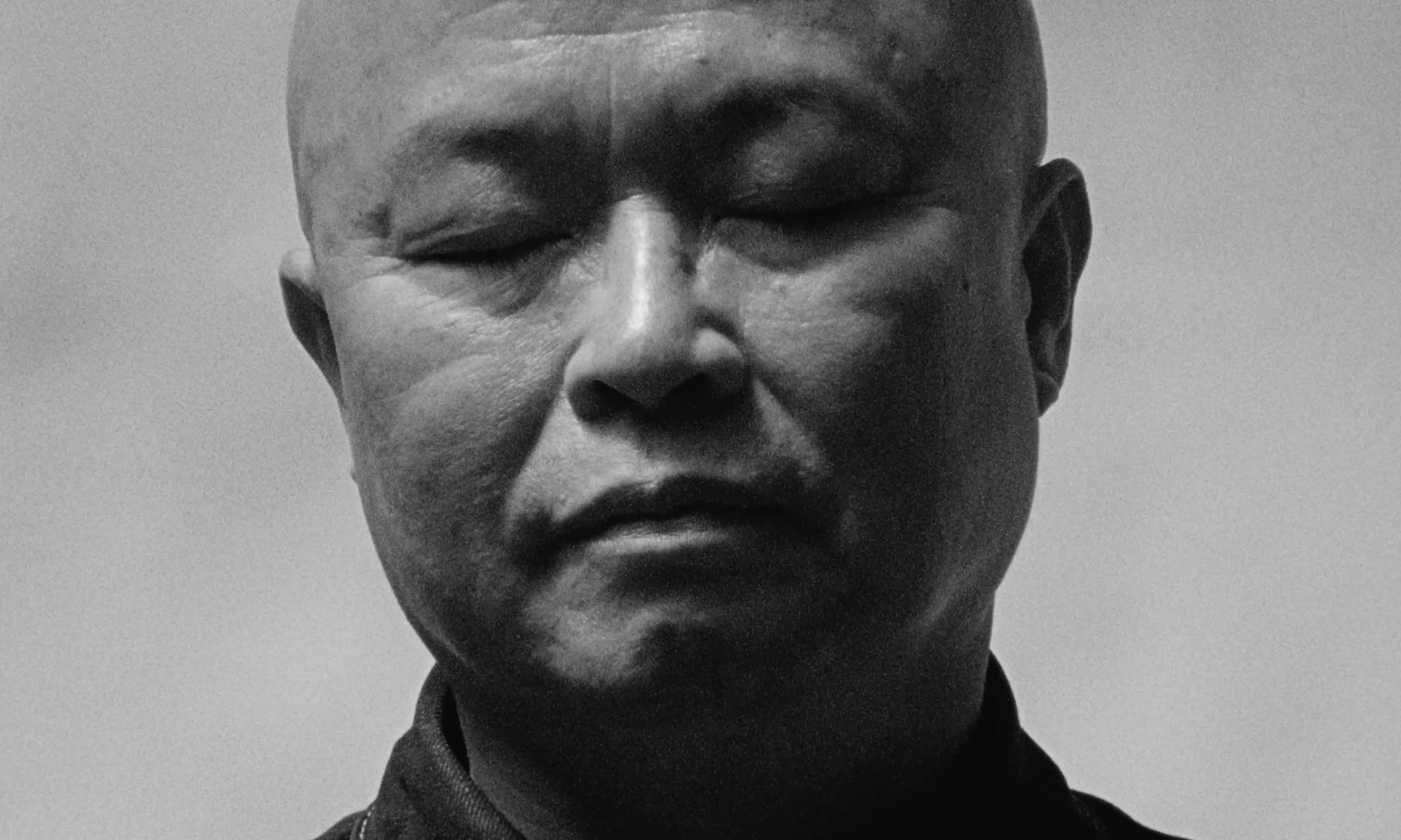
Based in Brooklyn, The Brooklyn Rail co-founder Phong Bui moves between the worlds of art, writing and curating with a remarkable sense of energy and attentiveness. Directed by Kalum Ko, About Now with Phong Bui offers a glimpse into his life and working environment, set within his home and studio in a former glass factory. Against a backdrop of concrete, steel and metal grates, the film looks beyond the familiar conventions of an artist profile, finding its focus instead in the small gestures, passing conversations and moments of stillness that reveal something of Bui’s presence.
Ko’s approach is shaped by the experience of spending time with his subject. Drawn to the contrast between Bui’s demanding schedule and his ability to remain entirely present, the director was particularly struck by his meditation drawings, in which each pencil stroke represents a breath. Rather than explaining the artist through biography or achievements, the film attempts to capture something more elusive: the feeling of being in his company, and the attention he brings to both his work and everyday life. In About Now with Phong Bui, the portrait becomes an exercise in observation, inviting us to consider how creativity, concentration and a sense of groundedness might coexist.
“The film became less about defining him and more about staying open to whatever emerged in his presence.”
You’ve said you didn’t want About Now to become a traditional artist profile, but instead to capture something closer to the feeling of being in Phong’s presence. What did that distinction mean for you when you began thinking about the film, and how did it shape the way you approached him with the camera?
I still can’t fully summarize why meeting Phong affected me the way it did. He has such depth and presence in the way he speaks. A conversation could move from one subject to another, sometimes quite abruptly, but the feeling underneath it remained the same. I loved that.
That became important in thinking about the film. I didn’t want to explain Phong or make something that neatly accounted for who he is. I wanted the film to have some of the same freedom I felt in conversation with him. We didn’t need every thought to resolve, or every image to lead to an answer. That also shaped how we approached him with the camera. Evan Ciniello, the cinematographer, and I had a rule that when something unexpected happened, we would try to embrace it rather than immediately correct it. At one point, we had Phong in front of a white seamless and these huge gusts of wind kept catching the paper. Initially, we tried to control it. Eventually, we stopped fighting it and let it become part of the image. It ended up producing some of my favorite footage in the film. That felt very connected to Phong himself. The film became less about defining him and more about staying open to whatever emerged in his presence.
There’s an interesting contrast between Phong’s extraordinarily busy creative life and the sense of presence and stillness you experienced around him. How did you try to translate that tension into the rhythm and visual language of the film?
The black-and-white space represented something more liminal and internal, while the colour material felt rooted in the real world. I wanted that white space to feel like a kind of internal balance that could weave in and out of his everyday life.
Outside of that space, we used handheld camera work and the crash-zooms to match some of the frenetic energy around him. There’s always movement, people, conversation, work. But when we entered the white cycle, we did almost the opposite. The camera became static and we allowed much more space to breathe.
I wanted the film to constantly move between those two states rather than choose one over the other. Eventually, Phong brings the black-and-white world into the real world himself, which feels important. The stillness isn’t separate from the chaos. It exists inside it.
“Phong showed me another possibility: that depth can come from (...) slowing down enough to actually be where you are.”
Phong’s meditation drawings turn something as fleeting as a breath into a physical mark on paper. What drew you to that practice, and did the way he approaches time, repetition and attention influence the way you thought about filmmaking here?
I find it incredibly difficult to stand still, so when Phong told me he could spend twelve hours in a day making these meditation drawings, it almost felt superhuman to me.
It also made me think about my own relationship to filmmaking. There was a time when I would barely take my eye away from the monitor because I was worried I might miss something. Over time, I’ve realized that constantly searching for the moment can sometimes stop you from actually seeing what’s in front of you.
Phong’s practice reminded me that attention can also come from repetition and stillness. Sometimes taking a moment to pause reveals something more interesting than the thing you were so determined to capture.
Phong’s studio occupies an old glass factory, with this industrial architecture of concrete, steel and metal grates, yet you describe experiencing the space as incredibly warm. How did the character of that environment influence the way you and cinematographer Evan Ciniello chose to photograph him?
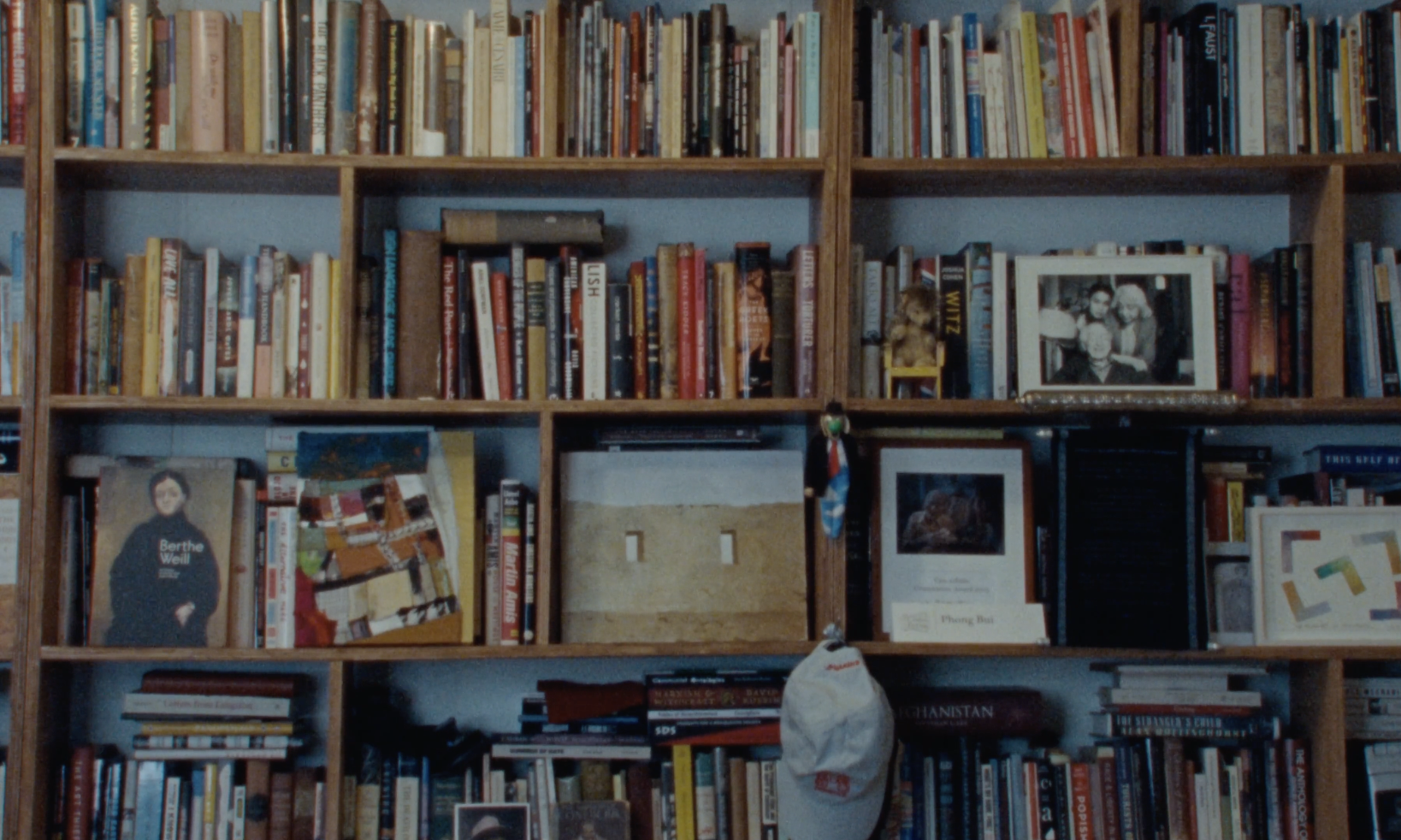
Phong has filled the space with wood, books and objects that feel deeply personal. A lot of the furniture was made by friends. There are books in every nook and cranny. He once said there were enough books in there for a small town. Evan and I actually rented more lighting equipment and a few additional tools, thinking we might shape the space more aggressively. Quite often, though, we found that the best thing we could do was leave it alone. The environment already had so much character, and altering it too much started to work against what was interesting about being there.
Ultimately, I think the warmth of the studio comes from Phong himself. His presence is everywhere. So rather than trying to make the architecture the subject, we kept him as the focus and paid attention to the details where he had clearly left a mark. Things like the shortened pencils, the books, the handmade furniture. Those details told us more about the space than trying to photograph it as an impressive industrial location.
The film is built around fragments, gestures, conversations and small moments rather than a straightforward biographical narrative. When you reached the edit with Alex Pieterse, how did you decide which fragments carried something essential about Phong, and how did you find a structure without over-explaining him?
The moment where Phong teaches us to breathe felt like the core. It’s such a simple gesture, but for me it summarizes so much about him and the curiosity I have around the way he moves through the world. There’s something about bringing care and intention to an almost mindless act like breathing. If you can be that present with something so automatic, you start to feel how that attention might carry into everything else.
The breath also connected naturally to the other material. There’s a moment where the wind catches the white seamless, and Alex found this transition where the gust almost seems to carry through the cut. I remember seeing it and thinking, oh shit, this is working. It suddenly felt like the fragments were beginning to speak to each other without us having to explain why.
It was one of the best editing experiences I’ve had with Alex. I initially made selects because I thought there was simply too much material for him to sort through, but to his credit, he went through everything. He wanted to understand Phong as fully as he could before deciding what belonged.
We never really had a checklist for what made a moment essential. Sometimes we’d try something and immediately say, “That feels predictable.” We were trying to build something where you could absorb all this information about Phong without feeling like the film was telling you exactly what to think about him. A lot of it came down to feeling. We knew when a fragment belonged, and we knew when something was over-explaining. The structure emerged from that.
You describe Phong’s ability to remain entirely present as something you hope to learn from yourself. Did making the film change anything about the way you think about attention—either in your own life or in the way you want to work as a filmmaker?
Even as I write this, I’m about to run to the airport for another project that’s wedged between two others. Especially in this business, it can feel like being constantly reactive is just the way you’re supposed to live.
What struck me was that when he chose to give something his time, he was completely there. There was no sense that his attention was split between five other things.
I think I’ve sometimes assumed that to survive in this industry you have to be constantly moving, constantly available, constantly balancing. Phong showed me another possibility: that depth can come from doing the opposite. From slowing down enough to actually be where you are.
director — KALUM KO
cinematographer — EVAN CINIELLO
gaffer & swing — JOHN MACKAY
editor — ALEX PIETERSE
edit house — CHURCH EDIT
colourist — NIELSAN BOHL
colour house — SELECTED WORKS
producer — HANNAH GEORGE
sound & mix — MICHAEL LE
sound studio — PAST TENSE STUDIO
created with the support of — THE BROOKLYN RAIL, PHONG BUI, CAL MCKEEVER, GREENPOINT PICTURES, MICHAEL KUHN, TATIANA RUDZINSKI, BETHANY MACMILLAN, CHAMPION REPS, PATRICK MCELROY
special thanks — DONNA SALEK AND VALERIE MESSERSI, RORY WAGNER AND CAROLINE KILBANE