GLEAM
A study of light, stillness and the moving image
Directed by Louisiane Trotobas
words by Isabella Bazoni
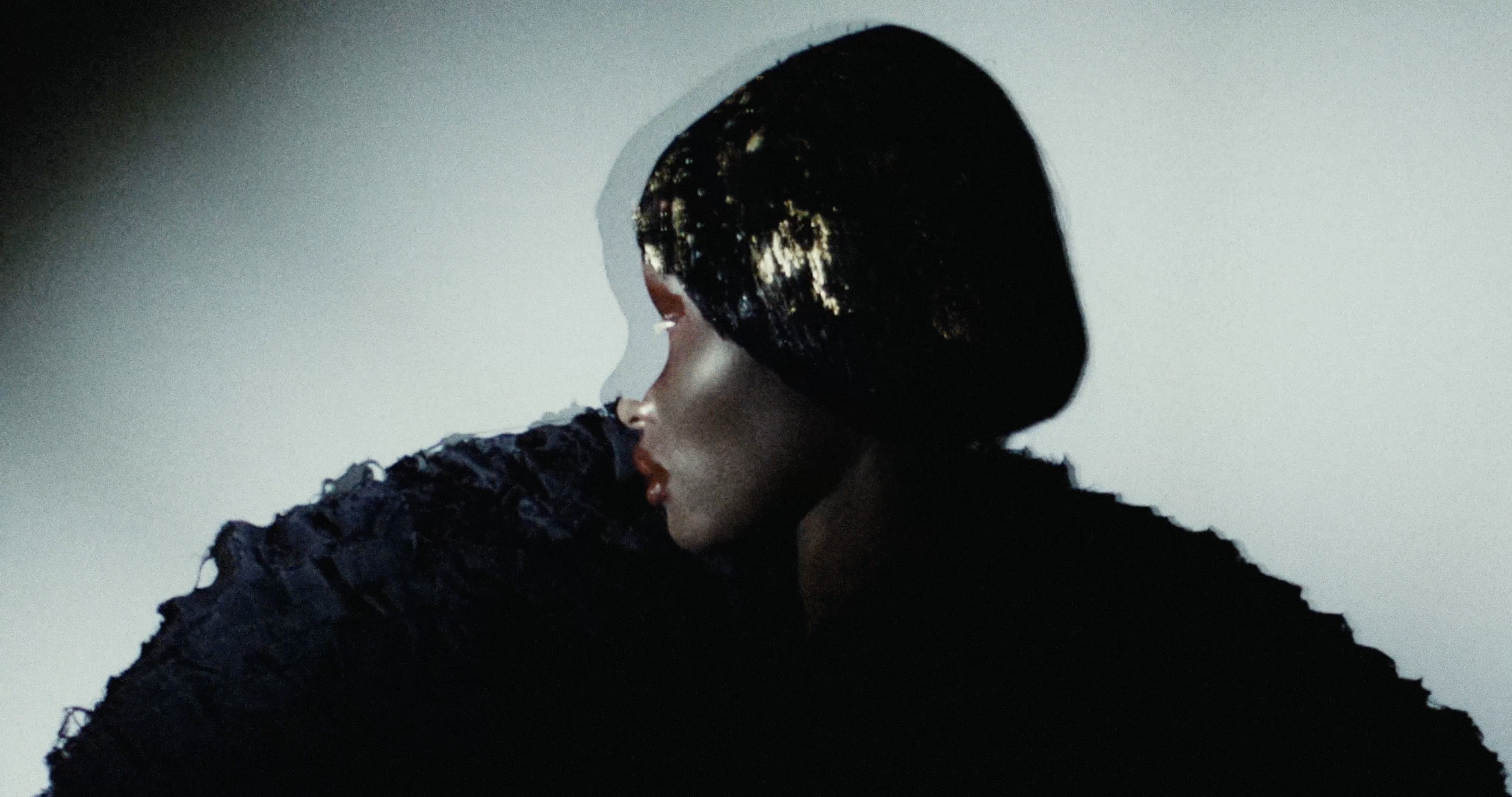
In Gleam, movement doesn't come from the body or the camera. Instead, it emerges through light. Directed by Louisiane Trotobas, the film builds a sense of motion from still images, using fractured illumination, shifting colour and layered exposures to make static silhouettes feel as though they are constantly changing. The result is a study in how little physical movement an image actually needs to feel alive.
For Trotobas, whose practice has grown out of years working as an editor and VFX artist, post-production is not a final stage but part of the image-making itself. Developed with Studio Private, Gleam began as an exploration of light and beauty, with sculptural wigs by Moe Mukai providing the starting point for the film's visual language. Makeup by Laura Yard and styling by Caleb Dring developed from those forms, while multiple torchlight passes were layered into the footage to create movement where the model remains completely still.
Following her work with SHOWstudio and Nick Knight, Trotobas' approach sits within a generation of image-makers for whom editing, compositing and digital manipulation are as fundamental to the photograph or film as the camera itself.
“I tend to think very intuitively through technique rather than narrative.”
Watching Gleam, the image feels almost sculpted rather than captured. The model remains almost entirely still, yet the work feels constantly in motion. What first drew you to exploring light itself as the driving force behind the film, rather than movement or narrative?
The idea emerged from a technique that's widely explored: long exposure photography. I'd always wanted to experiment with bringing that language into motion. I was fascinated by the idea that movement could come from light itself rather than from the subject or the camera. It felt like a new approach to fashion and beauty film, something more painterly. I've always been drawn to images that feel handcrafted, and this technique allowed me to explore that in motion.
Having spent so much of your career working in editing and visual effects, it feels as though you're approaching directing from a very different place than someone coming through cinematography, writing, or production. How has your background in post-production shaped the way you develop ideas, and did Gleam feel like a natural extension of that way of thinking?
I tend to think very intuitively through technique rather than narrative. That's usually where I find the initial spark, whereas more conventionally it might begin with a story. I also come from a design background, so I naturally approach filmmaking from a visual and graphic perspective rather than from a script. Rather than asking what story do I want to tell?, I often ask what visual language do I want to create? Gleam grew out of previous experiments with light and visual effects, and became another way for me to push that technique further and discover where it could lead creatively.
The project treats post-production as part of the creative language rather than simply a finishing stage. At what point did the film really come to life for you? Was there a moment during the edit or VFX process where you realised the images were becoming something beyond what had been captured in-camera?
There were a few key shots that I started working on before I'd even looked at the full edit. I developed the visual effects for those first, and they became the foundation for everything else. From there, I built the rhythm and structure of the film around them. Those images acted as anchors, allowing me to gradually transform what we'd captured on set into the final vision. For me, post-production isn't about enhancing footage; it's another stage of directing, where the final language of the film really takes shape.
“I like the idea of slowing everything down and exploring what could almost feel like a moving photograph.”
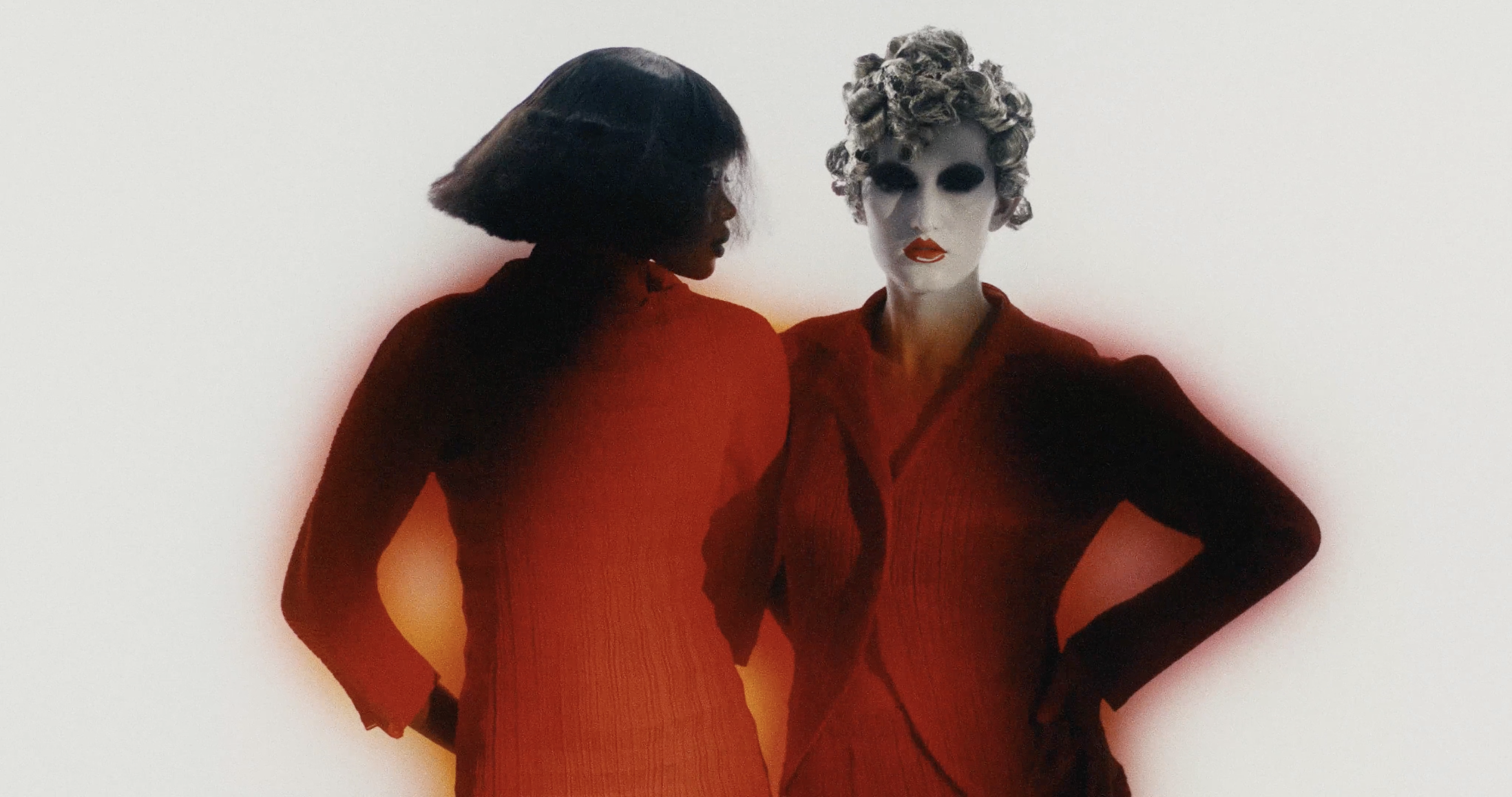
Post-production, beauty, hair, styling, and lighting all feel equally responsible for constructing the final image. What did that collaborative process look like, and how did those different creative disciplines begin influencing one another as the project evolved?
It was a very collaborative process from the beginning. I worked closely with Moe Mukai to develop the five wigs, which became the starting point for each look. Laura Yard then responded to those with the makeup, and Caleb Dring built the styling around them. Every department informed the next, so rather than existing independently, each creative decision became part of the same visual language. That dialogue between disciplines was essential, because the final image depended on every element working together.
Fashion films often rely on performance, camera movement, or narrative to create momentum. Gleam strips almost all of that away, yet it never feels static. Was it important for you to challenge those conventions, and what did you discover by working with such a restrained visual language?
That was very much the intention. In my directing work, I'm interested in exploring the idea of motion within stillness. Fashion films today often rely on rapid editing, with shots lasting a few frames, and I wanted to move in the opposite direction. I like the idea of slowing everything down and exploring what could almost feel like a moving photograph. I found that by removing obvious movement, it gave space for the subtleties of light to become the focus.
This marks your second project as a director, but it already feels like a very distinct visual statement. Looking ahead, how do you see your directing practice evolving, and are there ideas or forms you're excited to explore next?
I'd like to continue challenging the way visual effects are conventionally used in fashion and beauty film, and I see my directing practice as the ideal space to explore that. I'm interested in using VFX as a subtle creative language that quietly shifts the way an audience experiences an image without announcing itself. I want to work that sits between the familiar and the unexpected, images that feel rooted in reality but hold a sense of transformation or ambiguity.
director / art direction — LOUISIANE TROTOBAS
photographer / lighting director — GRACE HODGSON
director of photography — DANIEL KELLY
editor / VFX — LOUISIANE TROTOBAS
grade — NATHANIEL SKEELS
producer — STUDIO PRIVATE, CHARLOTTE LINDSEY COOK
hair stylist — MOE MUKAI
makeup artist — LAURA YARD
stylist — CALEB DRING
casting — THEO SPENCER CASTING
models — YACINE (THE HIVE MODELS), SKYLAR BANKS (PRM AGENCY), FATOU (PREMIER MODELS)