CHOREOSCOPE The Visual Grammar of Movement
Festival Director Loránd János on the universal language of movement, the evolution of dance film, and the ideas shaping this year’s edition of the festival.
By Curation Hour
Movement is at the centre of everything Choreoscope does. Founded in Barcelona around the belief that the body can communicate beyond the limits of spoken language, the Dance Film Festival brings together filmmakers, dancers and choreographers working at the intersection of movement and cinema. But for Festival Director and curator Loránd János, dance film is not simply about documenting choreography. It is a cinematic form in its own right, where the camera, edit and sound can move in dialogue with the body.
That distinction has become increasingly important as the medium has expanded, with more filmmakers experimenting with movement as a way of exploring identity, memory, politics and the body itself. Choreoscope's programme reflects that breadth, bringing dance film to audiences beyond the traditional dance world while creating a space for emerging artists to experiment with the form. For this year's edition, that curatorial conversation turns towards colonialism and decolonising processes, with a programme centred on women, migrants and minorities and the ways movement can become a form of resistance, memory and healing.
We spoke with Loránd about where Choreoscope came from, what makes a dance film more than a recording of movement, how the medium is changing, and what he hopes audiences will feel when they leave the festival this year.
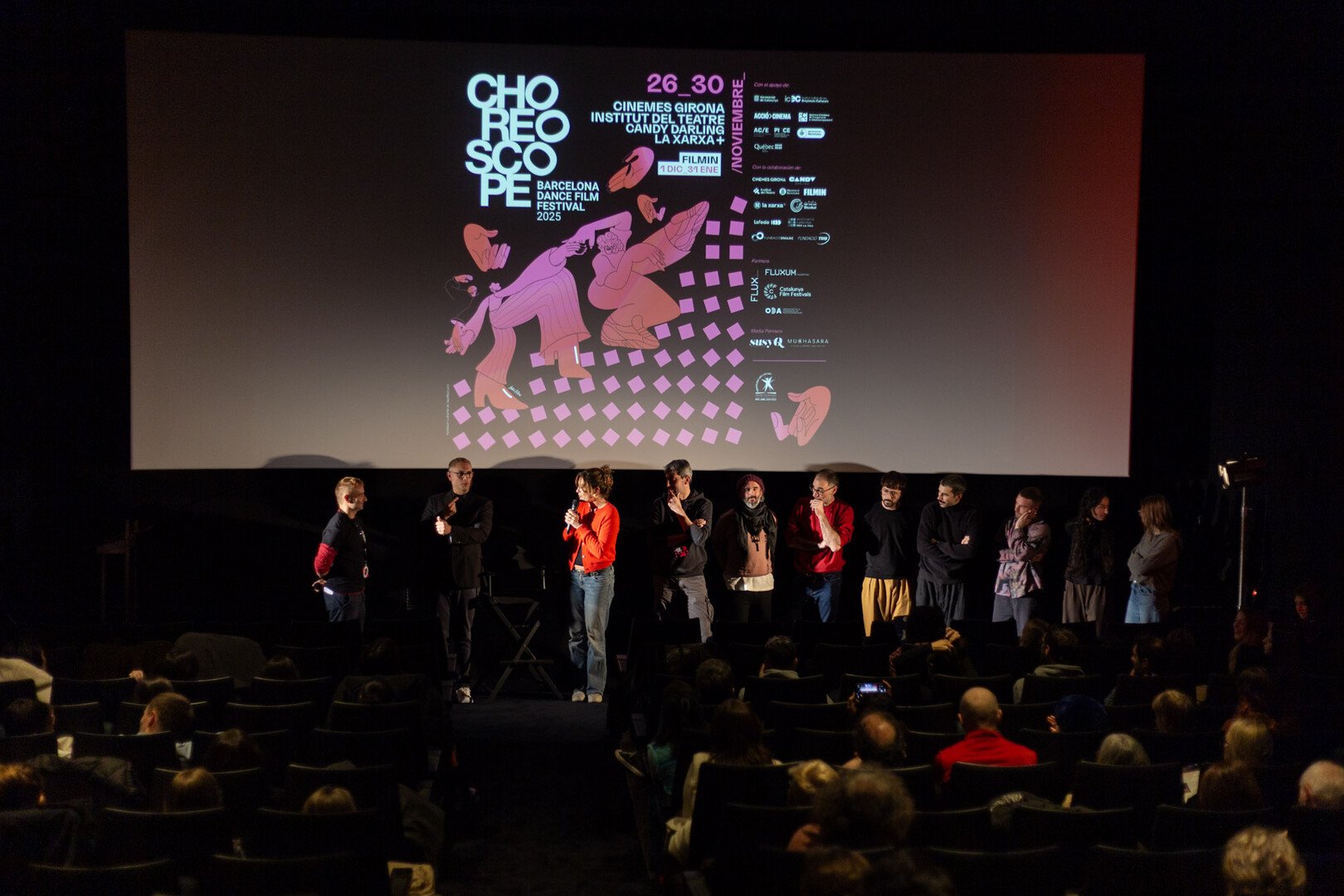
Choreoscope describes movement as a universal language that exists beyond words. In an increasingly image-saturated world, what do you think dance film is uniquely able to communicate that other forms of film can't?
Dance film communicates beyond words and conventional narratives. It is a universal language that reaches something within our core DNA, something that is part of our evolution as human beings: when we hear a rhythm, we instantly start moving. When we are unable to use words to communicate, we use our bodies. In an image-saturated world, dance film offers not just something to look at, but something to feel.
Dance film sits between two disciplines, yet it often feels like it occupies its own cinematic language altogether. What qualities do you look for when programming a film that make it feel unmistakably like a dance film, rather than simply a film about dance?
For me, a dance film is not a film about dance, but a film that uses movement — in general, and dance in particular — to tell a story. I look for works where the camera doesn't simply record the body, but dialogues with it, where editing, framing and sound are as choreographed as the dancers themselves.
When we talk about dance film, cinematographic narrative is fundamental. It is about using the different tools of the seventh art properly in order to tell a story through the body. What do you want to tell us — the world, your audience? Why is this story so important to you as a filmmaker? If there is form, if there is hollow beauty, but no context and no narrative, it falls short. Especially in today's socio-political and economic climate.
Since founding Choreoscope in 2013, how have you seen the medium evolve? Have there been any shifts in the way filmmakers are approaching movement, choreography, or the relationship between the body and the camera?
Without any doubt. There is a growing number of filmmakers, dancers and choreographers who understand how interesting, valuable and different it is to make dance films. It is a great way not only to promote yourself, but also to stand out among the hundreds, or thousands, of audiovisual productions being made every year.
I also believe there is a growing awareness of the body as a political and social territory, so dance film is not just an aesthetic form, but a space for resistance, memory and healing. From a technological perspective, the accessibility of high-quality cameras and editing tools has also opened the field to many more creators.
A festival programme is, in many ways, a form of curation. Beyond the individual films, how do you approach building a programme that creates a dialogue between different voices, styles, and approaches to movement?
The artists tell their stories, which are like beautiful threads, and the curator weaves them together into a tapestry. For me, curatorial work involves several layers.
The first layer is holistic: what is the current social, political or economic situation in the world? The second layer is specific: what are the artists telling us in the films they have sent us? What concerns them? What do they want to communicate to us? In this case, we look for — and find — common threads and recurring themes.
And then there is the internal layer, the festival's commitment: what do we need to talk about, using the festival as a platform to generate dialogue and constructive debate, to educate ourselves and the audience, or rather, to learn together in order to build a better present and future?
For instance, this year we are focusing on colonialism and decolonising processes. As Andreina Aveledo, our 2026 curator, said:
“tired of hearing irrelevant stories that only serve to reproduce stereotypes that fill the pockets of white men, I decided to create a program that highlights the transgression of those who are less represented: women, migrants, and minorities. This edition of Choreoscope is for you, for us, and for those resilient communities that draw inspiration from their roots to empower themselves and reclaim their stories. To decolonize is to stop following the rules that favor the powerful; it is to offer spaces to transform, heal, and reaffirm oneself. To rebel through movement is to challenge history to create a healed present of freedom.”
For filmmakers who may be discovering dance film for the first time through Choreoscope, what do you hope they take away from the festival—not only as audiences, but as image-makers themselves?
I hope that they leave feeling more challenged, inspired, curious and hungry for more. Our goal is to move the world: change only happens when we move.
I hope they see that dance film is not a niche, but a space of freedom, where stories can be told using a universal language, without words. I hope they leave understanding that the most powerful films not only show us something, but make us feel something in our own bodies.
“In an image-saturated world, dance film offers not just something to look at, but something to feel.”
The 2026 edition of Choreoscope takes place from 1–4 October in Barcelona, bringing together four days of dance film, live performance and experimental work. Explore the full programme here.