A 16mm portrait of an artist navigating creativity, displacement and belonging
Directed by Veronika Bolotina
words by Isabella Bazoni
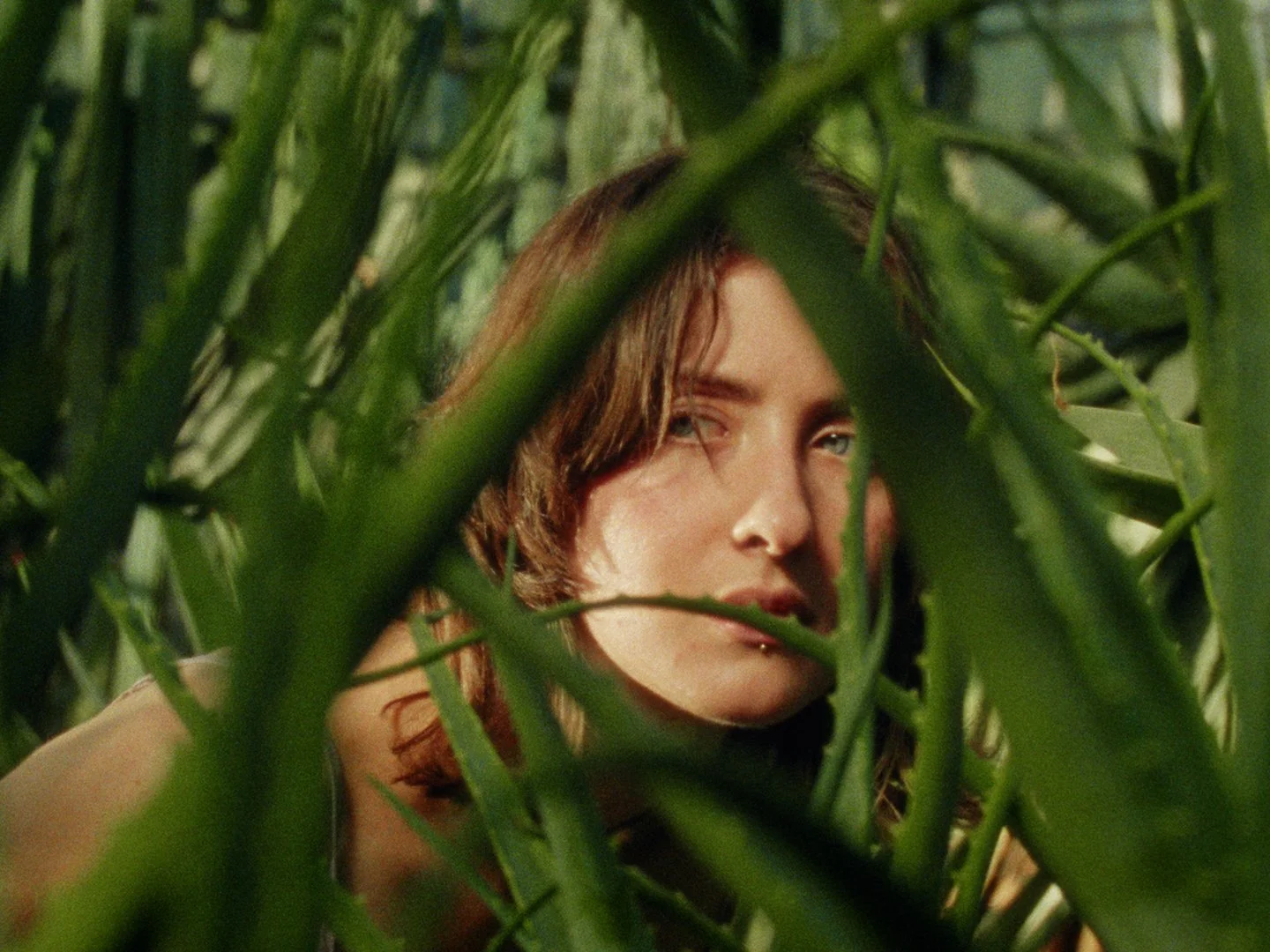
For Belarusian filmmaker and writer Veronika Bolotina, questions of identity, displacement and artistic freedom are closely connected to her own experience. Born in Belarus and later moving to Germany, before continuing her studies in London, her work often explores the complexities of migration and the ways women are represented within society. Her short film It’s Not For Me brings these concerns into focus through the life of painter Lera Dubitskaya, a 27-year-old Belarusian-Polish artist living in Poland.
Shot on 16mm, the film follows Dubitskaya through her artistic journey, considering the challenges of sustaining a creative practice while navigating life as a foreigner. Rather than separating the personal from the political, Bolotina uses the intimacy of the portrait to explore how place, identity and the experience of being an outsider can shape an artist’s relationship with her work. Through Dubitskaya’s perspective, It’s Not For Me reflects on the tensions between where we come from, where we find ourselves and the lives we try to build in between.
It’s Not For Me follows Lera Dubitskaya not only as a painter, but as a Belarusian-Polish artist negotiating what it means to build a creative life somewhere that isn't quite home. What first drew you to Lera and her story, and what did you want to understand through spending time with her?
I have known Lera since school. We emigrated at roughly the same time, and by sixteen it was already clear to both of us that Belarus was too small for what we wanted. We were hungry for artistic freedom. Since then, she has been through a lot: changing apartments, language barriers, starting over more than once. And somehow we always stayed in touch.
I remember those late-night Skype calls, back before Zoom existed, when she was in her student dorm and I was in some sublet, both of us finishing work for exams, making fun of everything and working until the night ran out. Over the years we met sporadically, whenever I made it to Warsaw or she came to Berlin, and every time we caught each other at a completely different stage of life. That always fascinated me.
Then we didn't speak for two years. She reached out, we met, and it was exactly the moment she had started putting her work online and getting attention. I was developing a script, financially secure for once, and eager to expand my skills. I had been dreaming of shooting on 35mm one day, and the idea of working in an analogue form felt like the right challenge. Seeing the value analogue craft has in Lera's painting gave me the push. I felt this was the moment. I had to catch her.
The film looks at the experience of being a foreigner through the very personal lens of an artist: her work, routines, ambitions and frustrations. How did you approach finding the balance between telling Lera's individual story and reflecting on the wider experience of migration?
I can't deny it, it was tough. We disagreed a lot. I had a vision, but it was her life and her portrait, and she needed to recognise herself in it. We had endless calls and discussions, and I thought that if I laid out my vision clearly enough, everything would fall into place. But when you are shooting with a real person, the process is alive and changes constantly. You have to accept that some of your ideas will be considered dull, or simply not good.
Lera is very straightforward, with strong opinions and a strong character. She doesn't shy away from saying "I don't like it." That is challenging, but also very refreshing.
In the end, we have both migrated, and we both know how exhausting it is, as a migrant and as a woman, to constantly prove who you are and to be questioned about whether you have any worth and whether you "can deliver." That helped. We spoke honestly, put our egos aside, and I told her: "Look, I love your work. You are great. All I am doing is making your talent visible. But I also want to show it through my lens, in a way you might not have seen yourself." I think that is where we found common ground. But we have also known each other for so long that I couldn't help feeling under pressure not to fuck up. She knows me and all my quirks, and I guess I wanted to show her a new side of me, different from the girl she knew at school.
“Displacement makes you ready for whatever comes. It makes you stress-resistant, adaptive, diplomatic and creative with solutions, because you simply don’t have another option. And it teaches you that you can survive a lot, as long as the right people are around.”
There's something quite intimate about the decision to shoot the film on 16mm. What drew you to the format for this project, and how did its texture and limitations shape the way you approached filming Lera?
Analogue is simply different in so many ways. Painting with brushes is a completely different act from making digital art, and film is the same. It demands discipline. There is no "let's do another take," because you only have money for so many rolls. So you are stressed, concentrated, and you plan every shoot and every Plan B shoot. I found that incredibly liberating. I love a challenge. It makes me creatively hungry. I told myself: if you can't make a good film on film, why on earth do you think you can do it on digital?
I see the same thing in music and painting. People reach for digital without realising it isn't only about a look you can imitate. It is a whole other process. Shooting on 16mm comes with a massive responsibility, and since doing it, I approach my work and my workflow very differently.
Your work often brings together social and political subjects with humour and an interest in the absurd. Was there something about Lera's story that led you towards that particular tone, and how did you approach moments that could otherwise become quite heavy?
Lera and I grew up in a tough post-Soviet environment, but we always approached things with humour and irony. She might not come across that way, but she can be hilarious, with a very sharp wit. I love that she looks like this deeply serious artist, while I know her comedic spirit. I think it shows in her work too.
We also never wanted to whine about migration. Our approach was more: suck it up and work hard. Lera was very strict about that during the shoot. She didn't want to be portrayed as a victim or someone to pity. She wanted an observational tone, showing day-to-day life and letting the art do the talking, so the audience could feel everything through it. I did try to show a more vulnerable side and more of the struggles that are really there. But in the end, I decided it was just not my call to make. Of course, the difficulties still surface. But we wanted the balance to show that despite everything, we keep making art and we don't give up. That is what will hopefully inspire others. Watching Lera earn recognition and build a network certainly inspired me. It made me realise I need to fight harder.
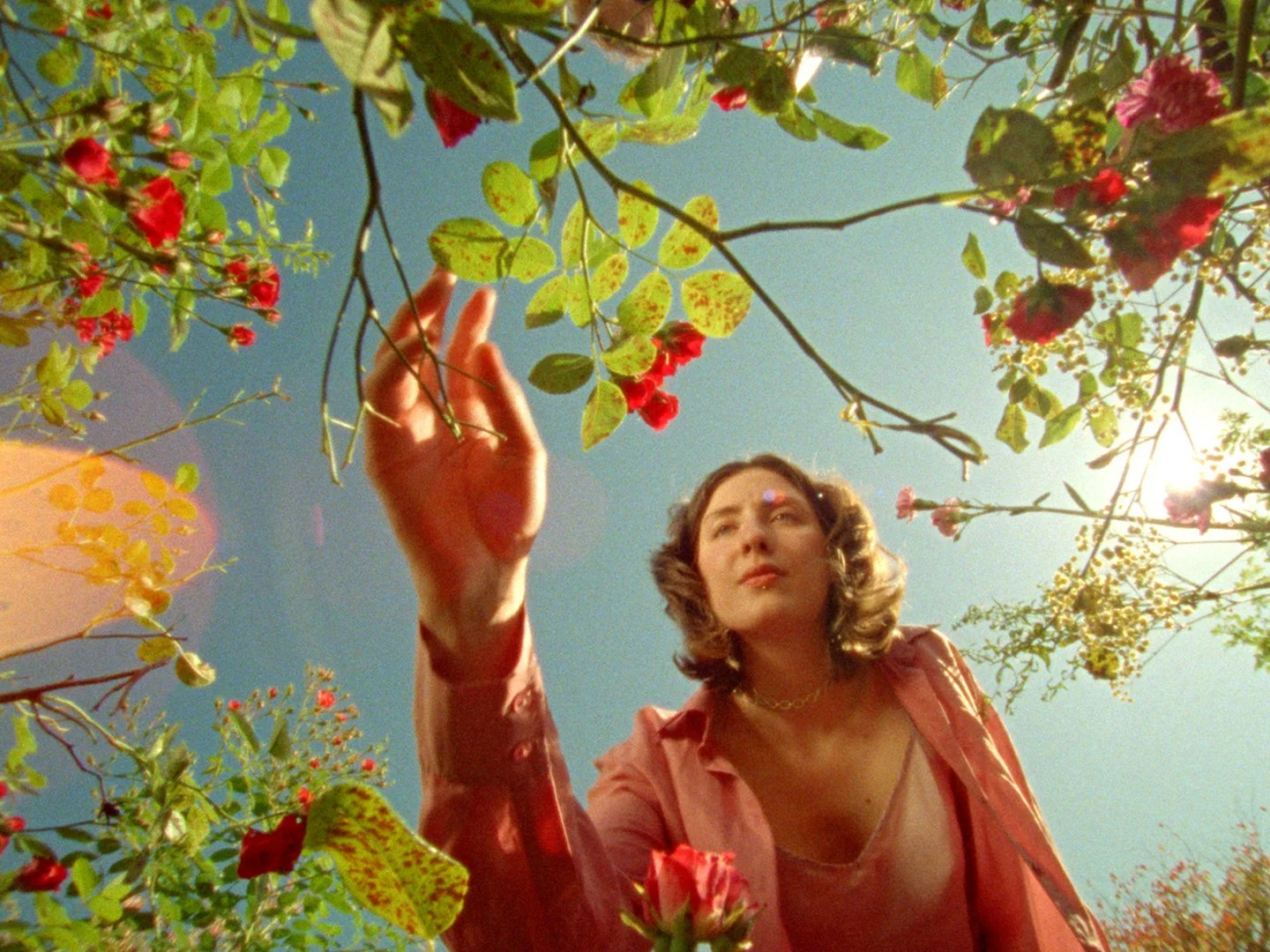
“We wanted the balance to show that despite everything, we keep making art and we don’t give up.”
Lera is both the subject of the film and an artist herself. How did her own relationship with image-making and painting influence the way you photographed her, and did you find yourself thinking differently about portraiture because of that?
Lera is a perfectionist, extremely detail-oriented. So am I. Imagine two people like that trying to make something together. But I honestly wanted to let her lead and learn from her. I asked a lot of questions. "How do you see it?" "What do you want me to show, and what don't you?" For me, that was the most important part: she was involved and she had a say.
Lera doesn't have a grand theory about why she paints the way she does. But we are both huge cinephiles. We went to the cinema in Minsk constantly, and we still talk about films and series all the time. When I told her Panavision was coming on board as a sponsor, she was genuinely excited. What mattered was the earnestness of the work. She brought her own ideas: the costumes she could wear, the locations we could shoot in. She wasn't standing there waiting for the film to happen to her.
You were born in Belarus and later moved to Germany, while Lera is a Belarusian-Polish artist living in Poland. How much of your own experience of displacement or navigating a new creative environment found its way into the way you approached the film?
There is a saying: "Life is hard. Make it harder. Move to another country." I always laugh at it, because then I went and chose the most challenging, most gatekept profession possible, at a time when there are still not enough female directors. I truly decided to make my life super hard.
But integration and migration teach you patience. They teach you to be kind, to stick to the community that supports you, and to find people who understand your path. Displacement makes you ready for whatever comes. It makes you stress-resistant, adaptive, diplomatic and creative with solutions, because you simply don't have another option. And it teaches you that you can survive a lot, as long as the right people are around.
On this shoot, what I really embraced was community. I had never worked with a Ukrainian and Polish team before. I considered myself thoroughly integrated in Germany, working only with crews who spoke German or English, and if I am honest, I had resented my roots for a long time. This shoot was a kind of healing. The people around me understood the story and the struggle. There was no passive aggression, no irritation, because they could see the mechanics of my fears without needing an explanation. It felt so freeing. We could disagree on set and it was no drama, just straightforward. My wonderful line producer Nadia, a superwoman, and my AD Ganna were so professional and grounded. Their attitude was simply: "What's the problem? What do you need?" And I could finally let go.
As a foreigner on set, I often feel that nobody cares how hard it is. You chose it. You decided to immigrate (even though we know that isn't always the case), so accept it and don't complain. But people who have migrated and been displaced themselves are more sensitive and more aware, and that gives you confidence and security.
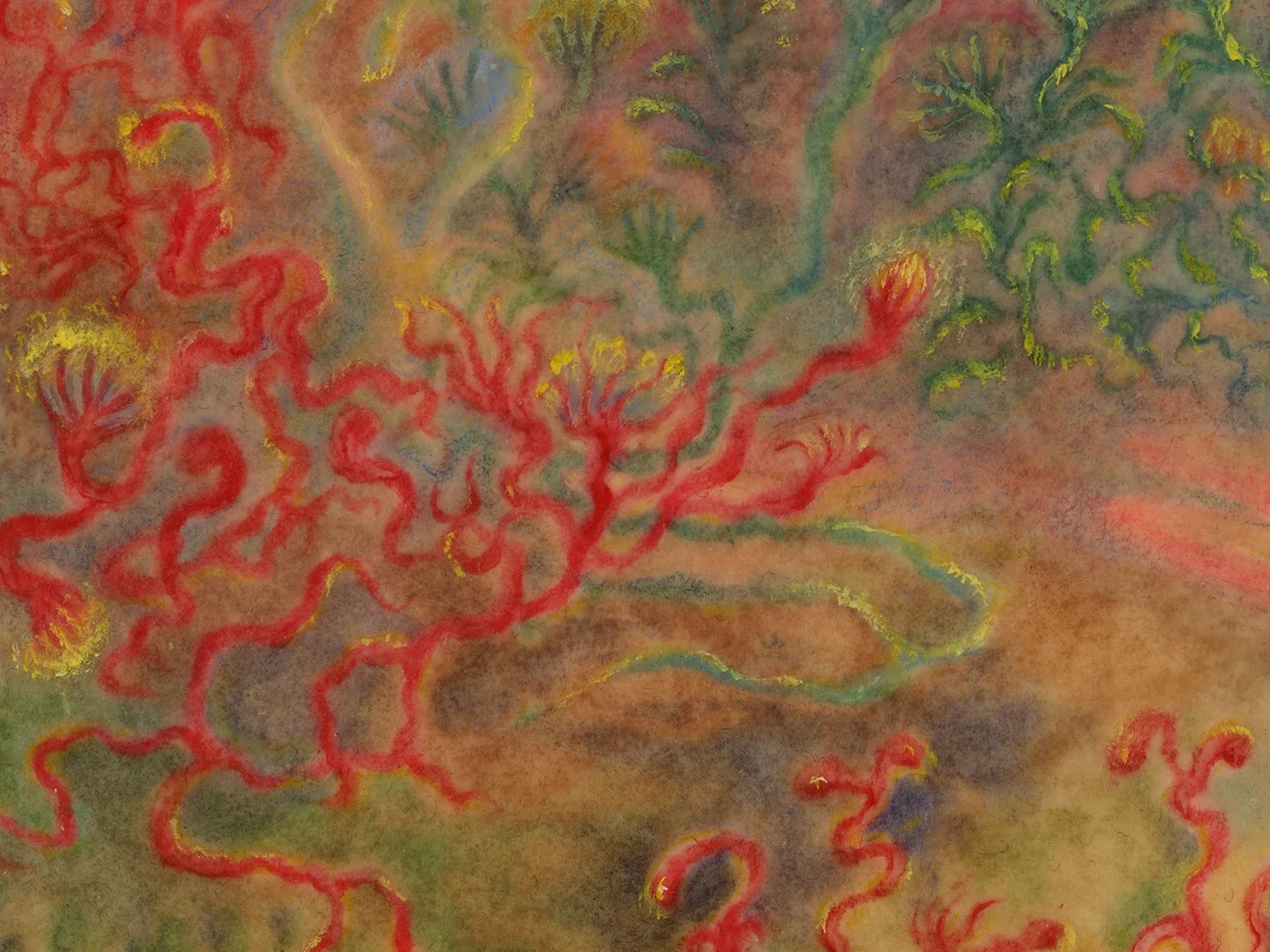
painter / protagonist — LERA DUBITSKAYA
director / writer — VERONIKA BOLOTINA
director of photography — ARSENY BOGUNOV
set designer — NATALIA ANNA MATEJKA
service production — LUCKY LUCIANO PICTURES
production assistant — JULIA SCHNEIDER
production manager — NADIA LYUDCHIK
1st assistant director — GANNA GNATENKO SHABALDINA
sound operator — SERGIO SZLOMO LABANDZI-JEWSKI
1st AC — JAN SADOWSKI
2nd AC — SENYA MARKOV
second unit camera — NASTYA ROSHUK
gaffer — ALEKSANDER SAKHNO
light assistant — ALEKSANDR PATKANIAN
co-production — ARTIC POSPO
editor — MARINA AYET
assistant editor — DIMA VERHUSHKIN
colourist — ALBERTO RODRIGUEZ
sound design — KONSTANTIN ARTHUR
mastering & mixing — ARVID KÖNIG
typography designer — JEREMIE GAUTHIER
music — SOFIE BIRCH & TOMASZ BEDNARCZYK
voiceover — RYAN WICHERT
backstage — ALEX SKIDAN & MARGARITA SNITOVETS
rentals — PANAVISION, OPEN MEDIA WARSZAWA, LITTLE BEAST
developed by — HAGHEFILM & CINEGRELL
sponsors — MILANOTE, PANAVISION, HAGHEFILM, WE STUDIO
partners — MILANOTE, KODAK, OB POWSIN, ATM SYSTEM