Straight 8: Why Every Director Should Try Shooting Without a Safety Net
Three filmmakers reflect on one roll of Super 8, no playback, no post-production, and why the limitations of Straight 8 might just make you a better director.
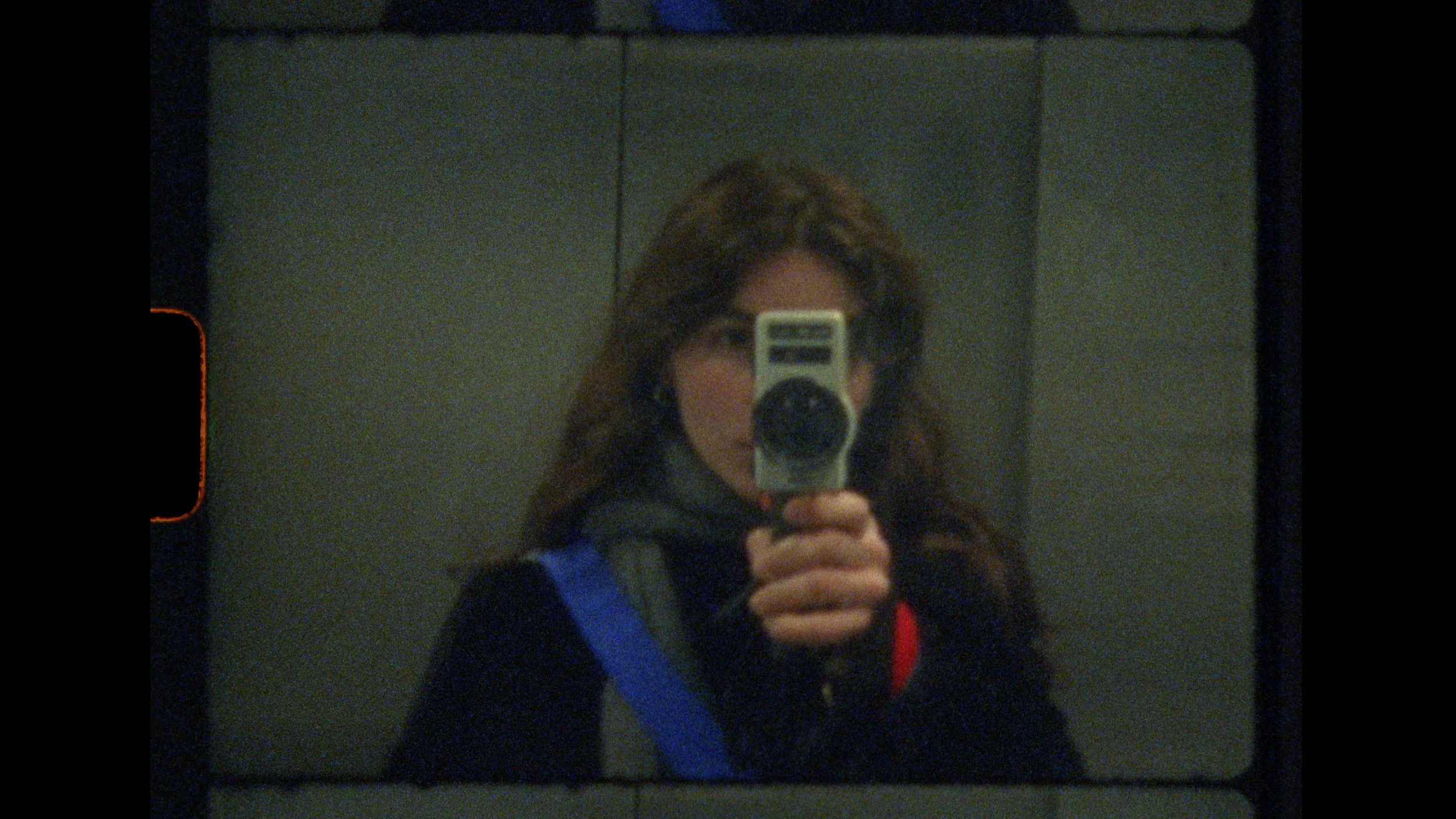
Filmmaker Nina Maria Allmoslechner.
By Isabella Bazoni
There are very few filmmaking challenges that ask you to completely surrender control. Straight 8 does exactly that.
Since launching in London in 1999, the competition has become something of a rite of passage for filmmakers around the world, built around one deceptively simple premise: create a film using a single roll of Super 8, with no retakes, no editing, no colour grade, and no post-production whatsoever. Every decision has to be made before the camera rolls. Even the soundtrack is created blind, before the film is developed. The first time directors see their own work is at the premiere, alongside the audience.
In an industry increasingly defined by limitless storage, instant playback, and the ability to refine almost anything in post, Straight 8 asks filmmakers to embrace uncertainty instead. The format strips filmmaking back to its essentials, forcing directors to trust preparation, instinct, collaboration, and the image itself.
To explore why the challenge continues to resonate more than twenty-five years after it began, we spoke to filmmakers Adrian-Florin Ardelean, Nina Maria Allmoslechner, and Lorenzo Fiale about their experiences, what they discovered through the process, and why every director should consider taking part at least once.
“Once you’ve taken that first shot, you know you’re committed. If something goes wrong, you adapt.”
Can you tell us a little about your first (or most recent) experience with Straight 8? What drew you to the competition, what was your film about, and why did that particular story feel right for a format built around such strict creative limitations?
Adrian-Florin Ardelean: I’d wanted to take on the Straight 8 challenge ever since university, as it always felt like the ultimate filmmaking experience. One of our first assignments was a 24-hour filmmaking challenge where we had to shoot and edit on MiniDV tape, so the concept itself wasn’t unfamiliar to me. The real challenge is finding an idea that can truly work within those limitations. My background is in post-production, so I naturally think about storytelling through the edit before I even shoot. Usually, that means a lot of experimentation with actors beforehand and searching for the right energy on set. With Straight 8, though, you have to be incredibly precise. If something goes wrong, you adapt—and I love that. From the beginning, we wanted the film to embrace the wacky and the surreal without becoming a comedy. We wanted people to genuinely feel something. The idea started out as a series of vignettes about elderly people taking over-the-counter medication and reminiscing about the past, but it quickly became too ambitious for the format. We eventually distilled it down to a simple story: Duncan's dad drifting through fragmented memories that blend into the real world: a small daydream about childhood and nostalgia. The voiceover was recorded over a bottle of wine between Duncan and his dad, which made it feel incredibly personal once we paired it with the images. We chose this format because it suited the kind of deconstructed surrealism we were trying to create—a blend of documentary and arthouse filmmaking that you rarely get to explore in a world where everything is so polished and heavily stylised. Straight 8 felt like the perfect home for that approach.
Nina Maria Allmoslechner: I came across Straight 8 just as I was finishing a personal artist short called About Wintering: Part One. For that project, I left a single roll of film inside my camera for a year to document the changing seasons, focusing on the mental health concept that 'wintering' comes and goes regardless of the time of year. It was mind-blowing to realize I could make a film with such tight limitations and only one roll of film. Because I love playing with the element of time in that way, I decided to challenge myself to make a film in just one day, on one roll of film, for the Straight 8 2025 competition. My film was called February Whispers the Light I See. I shot it on February 12th, which happens to be my birthday, and the narrative follows a search for the souls of loved ones in a busy city like London. Sadly, my family members all passed away either on or around February 12th, making it a very personal, experimental film that I loved creating. I suppose the whole point of making a Straight 8 film is to embrace the fact that you cannot edit anything afterward, fully leaning into the element of play. A format like that really forces you to get creative, whether you're working with a massive crew or just yourself and a composer. For this project, I got to collaborate for the first time with my wonderful friend Katy Hustwick, who is an incredibly talented musician and composer. Even though the film didn't make the final selection, it’s a piece I dearly love. Making it was a form of therapy, allowing me to transform difficult emotions into something deeply meaningful; which, in my opinion, is the whole point of making art. It is a form of expression, and if your art means something to you, you’ve already reached a really important person in your life.
Lorenzo Fiale: This was my first experience with Straight 8 (and with shooting on film in general) so I thought, why not also shoot it in chronological order without being able to edit it? Ahahaha! I was fascinated by the idea of stepping into the past and approaching my work with the mindset and limitations of decades ago. With HAHAHAH, I wanted to explore what it means to step outside the masks society hands us—everything that tries to define us and make us conform—and represent that in the most visual and dystopian way possible. A man runs into a tunnel to escape, but once he reaches the other side, something compels him to go back in and start running through it all over again. It was my first attempt at building a world, something I'd love to keep exploring in future work: a kind of constant lucid dream where you're never quite sure what's real and what isn't. I never really asked myself whether the story was right for this approach. I simply liked the idea of starting with self-imposed limitations and seeing what kind of path would reveal itself as we went—where the boundaries would end up, and whether they'd become obstacles or hidden routes I couldn't have discovered otherwise. Maybe only now, looking back, I can connect what the protagonist experiences to what we lived through on set. We stepped into a tunnel ourselves, and the moment we decided to enter, there was no way back. All we could do was trust the process, keep shooting, and believe it would all lead to something.
“You don’t need to go to film school or work on massive sets to earn that title. All you really need is an idea, a camera, a roll of film, and the belief that limitations aren’t scary.”
Straight 8 strips filmmaking back to its essentials, asking filmmakers to commit to every creative decision before the film is even developed, without playback or the safety net of post-production. How did those limitations shape the way you approached making the film, and were there moments where those constraints pushed you somewhere you don't think you would have gone on a more conventional production?
Adrian: It's nerve-racking, really. The build-up and the stakes are so much higher than on a normal shoot. With digital, you have a plan, but if the first take doesn't work, you simply reset and go again. With Straight 8, you're committed. If something goes wrong, you adapt. For some reason, the whole process feels more like cinema to me, where you have to arrive with a crystal-clear vision of how everything fits together. We actually assembled a digital edit beforehand and timed every shot, so we knew exactly how long we had. It was a bit like putting together a puzzle—you know exactly where every piece belongs because you've taken the time to map it all out beforehand. Once you've shot that first frame, there's no going back. We quickly settled into a rhythm of rehearse, shoot, rehearse, shoot. As soon as a take was done, we moved straight on. That's completely different from a conventional production, where you'd usually stop to review the footage and make sure you've captured the right performance or energy. The biggest challenge was shooting everything chronologically, which is a logistical nightmare and definitely not something we would've done on a normal production—especially when one of your scenes involves a staring contest between a man and a seagull.
Nina Maria: When I made my Straight 8 film, I hadn't really made films before. I was just using analog filmmaking as an art form rather than focusing on film as a primary medium for storytelling. I believe Straight 8, along with its incredibly wholesome community, is one of the main reasons I want to make films now. Part of it is the analog aspect and using 'limitations' as a tool within the types of films I want to create, which is why I didn't see the challenge as a massive, daunting task. The only major challenge was communicating my ideas to the composer to ensure the final film would perfectly synchronize and connect our visuals and score.
Lorenzo: The biggest shift was in the way I directed. It demanded absolute presence and complete attention. On a conventional production, you're almost always able to repeat a take if something isn't quite right. As fortunate as that is, with Straight 8 every scene has to be rehearsed and carefully considered beforehand because everyone knows there's only one chance. If you get it wrong, you're starting again from the beginning. That created an almost tangible sense of focus across the whole crew. There was a shared awareness and attentiveness because the idea of "we'll just do another take" simply didn't exist anymore. I also felt an adrenaline on set unlike anything I'd experienced before. Between "action" and "cut," it felt as though we all stepped into a bubble and stopped breathing together. Then came the beautiful sound of the film running out, a collective release, and straight into the next shot, repeating the same emotional cycle over and over again. By the time we reached the final take, there was a shared sense of epiphany that I'll probably never forget.
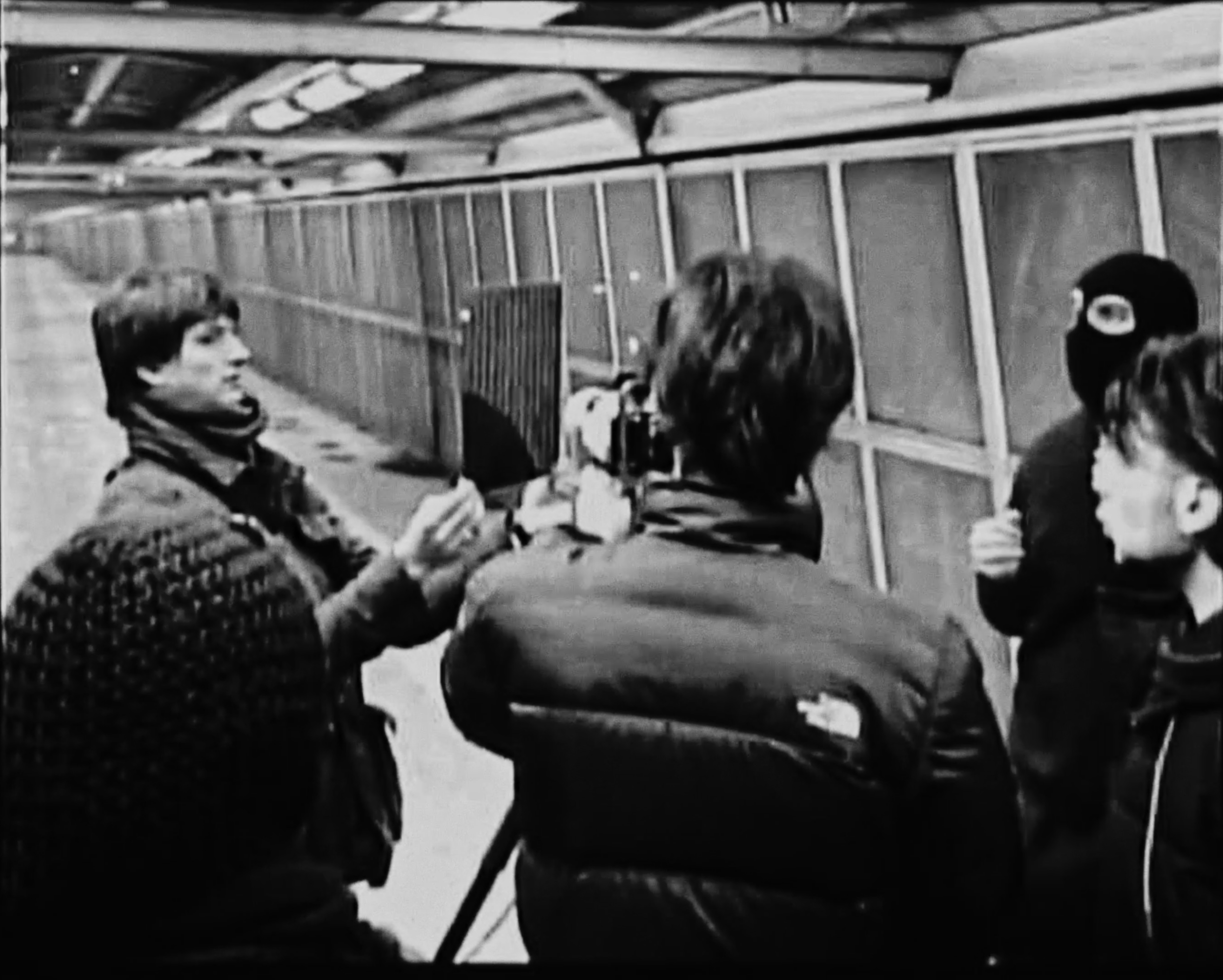
Filmmaker Lorenzo Fiale on the set of HAHAHAH.
“The moment we decided to step in, there was no way back. All we could do was trust the process and believe it would all lead to something.”
Looking back now, what stayed with you from the experience? Do you think making a Straight 8 film left a lasting mark on the way you direct, and what would you say to filmmakers who've always been curious about entering? What can they gain from the experience beyond the finished film itself?
Adrian: It's only been a couple of weeks since seeing the films on the big screen, but it has already left a huge mark on the way I think about directing and making films. It hasn't changed the fact that commercials are often driven by reaction and spontaneity, but it has reinforced how valuable rehearsal can be in narrative filmmaking. Taking the time to build performances before the camera rolls leads to something much more authentic. I'd also encourage every filmmaker to try the one-roll approach at least once. It forces you to think much more carefully about how you're telling a story and how you're guiding an audience through it. Digital is a luxury—you can always grab another insert or some extra B-roll, whether you use it or not. Straight 8 strips all of that away and really sharpens your storytelling instincts. I've seen some incredible films come out of the Shootout, and they prove you don't need a huge budget to make something impactful. You just need to put more thought and care into the preparation.
Nina Maria: First of all, I think Straight 8 is incredible. I’ve been to a few of the socials and events they put on outside of the challenge itself, and if anyone ever has the opportunity to mingle with fellow analog film nerds, they should absolutely go. It’s truly about the community in that space. Even though my film didn't make the final selection, the challenge was still such a beautiful reason to pick up my camera. I will definitely enter again in the near future, perhaps this time with a bigger crew, and to make a slightly less depressing film, haha. As I mentioned, I made that film during a time of transition and change, and I needed the reminder that I can give myself permission to be a filmmaker. You don't need to go to film school or work on massive sets to earn that title. All you really need is an idea, a camera, a roll of film, and the belief that limitations aren't scary. Instead, they're a reminder that you don't need much to create something beautiful, meaningful, and deeply connecting for both yourself and your collaborators.
Lorenzo: I genuinely think it's something every director should experience at least once, if only to understand how completely it transforms the energy of a set and, in turn, your own approach to directing. I'm constantly asking myself what kind of relationship I want to have with my role as a director, rather than focusing solely on the finished film. What kind of director do I actually want to be? Experiences like this, besides being incredibly fun, become the starting point for a much broader internal search. They plant a small seed that, if you keep nurturing it, can only lead to beautiful discoveries. And then there's the moment, months later, when you finally see the finished film projected for the very first time. Pure magic. For me, Straight 8 should be approached like a game. You shoot without being able to edit, everything happens inside the camera, out there with the people around you, and all that's left to do is enjoy the process and see where it takes you.
In each of these conversations, one idea kept resurfacing: Straight 8 isn't simply about shooting on film or embracing nostalgia. It's about committing to an idea, trusting your preparation, and accepting that the imperfections are an integral part of the work. By removing the safety net of playback, retakes, and post-production, the format asks filmmakers to rely on instinct, collaboration, and clarity of vision in a way that few other filmmaking experiences do.
Whether it's Adrian discovering a new approach to rehearsal and preparation, Nina Maria finding the confidence to call herself a filmmaker, or Lorenzo embracing the process as an act of trust, each director describes Straight 8 as something that reaches far beyond the finished film. The challenge becomes less about producing a perfect result and more about rediscovering the craft itself.
In an era where filmmaking often feels defined by limitless options, Straight 8 is a reminder that creativity doesn't always come from having more—it often comes from having less. And perhaps that's why, more than twenty-five years after it began, the challenge continues to attract filmmakers willing to put everything on the line, one roll at a time.
If you're curious to learn more (or even take on the challenge yourself) you can find everything you need to know about Straight 8, including upcoming competitions and past films, at straight8.net.