SUITCASE DO BRAZIL
Between body and building, a fashion film shaped by the curves, colour and scale of Brazilian modernism
Directed by Duda Bertho
words by Isabella Bazoni
Set against the modernist architecture of Oscar Niemeyer in Niterói, Suitcase do Brazil treats location as an active part of the fashion image rather than simply its backdrop.
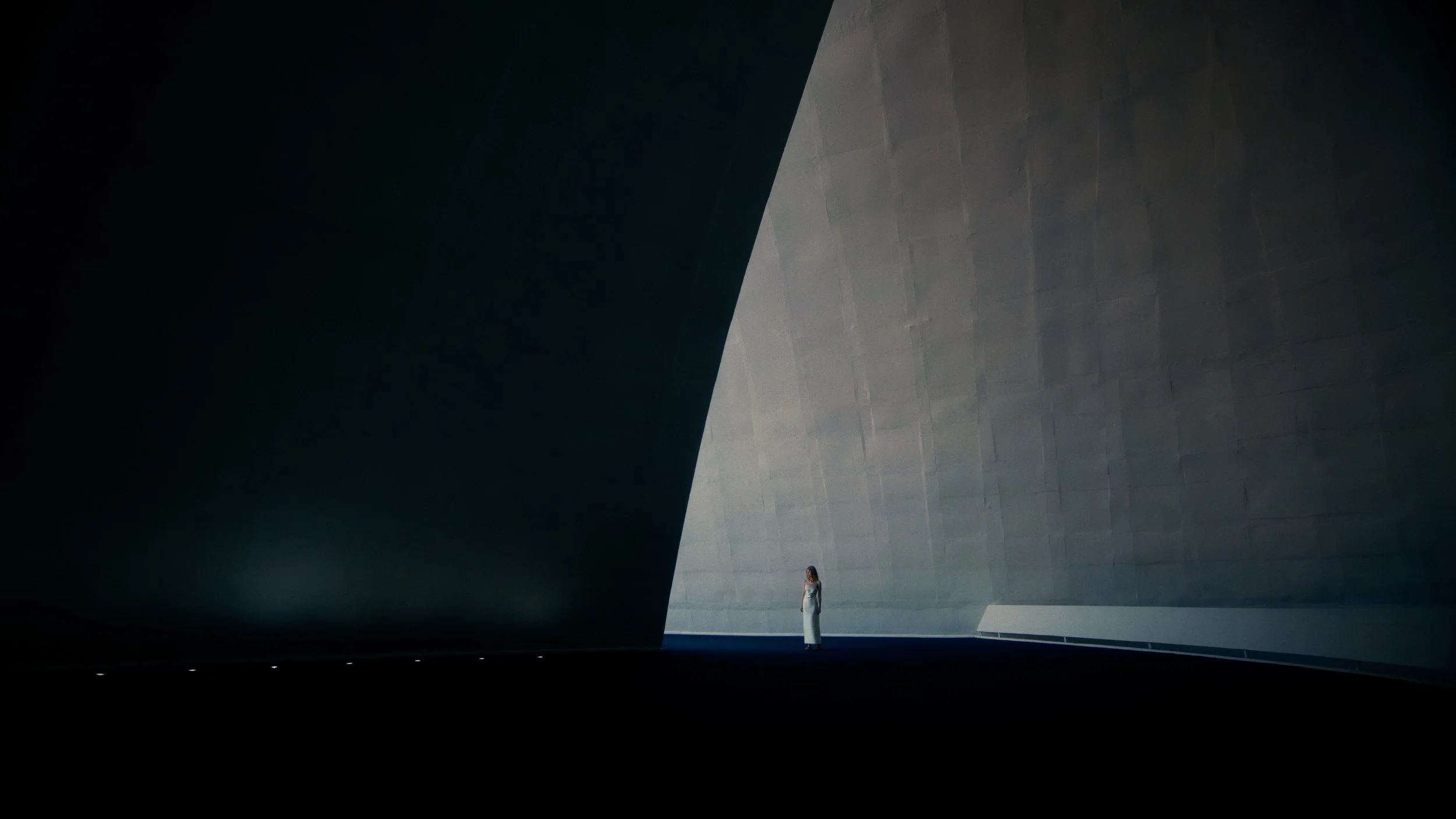
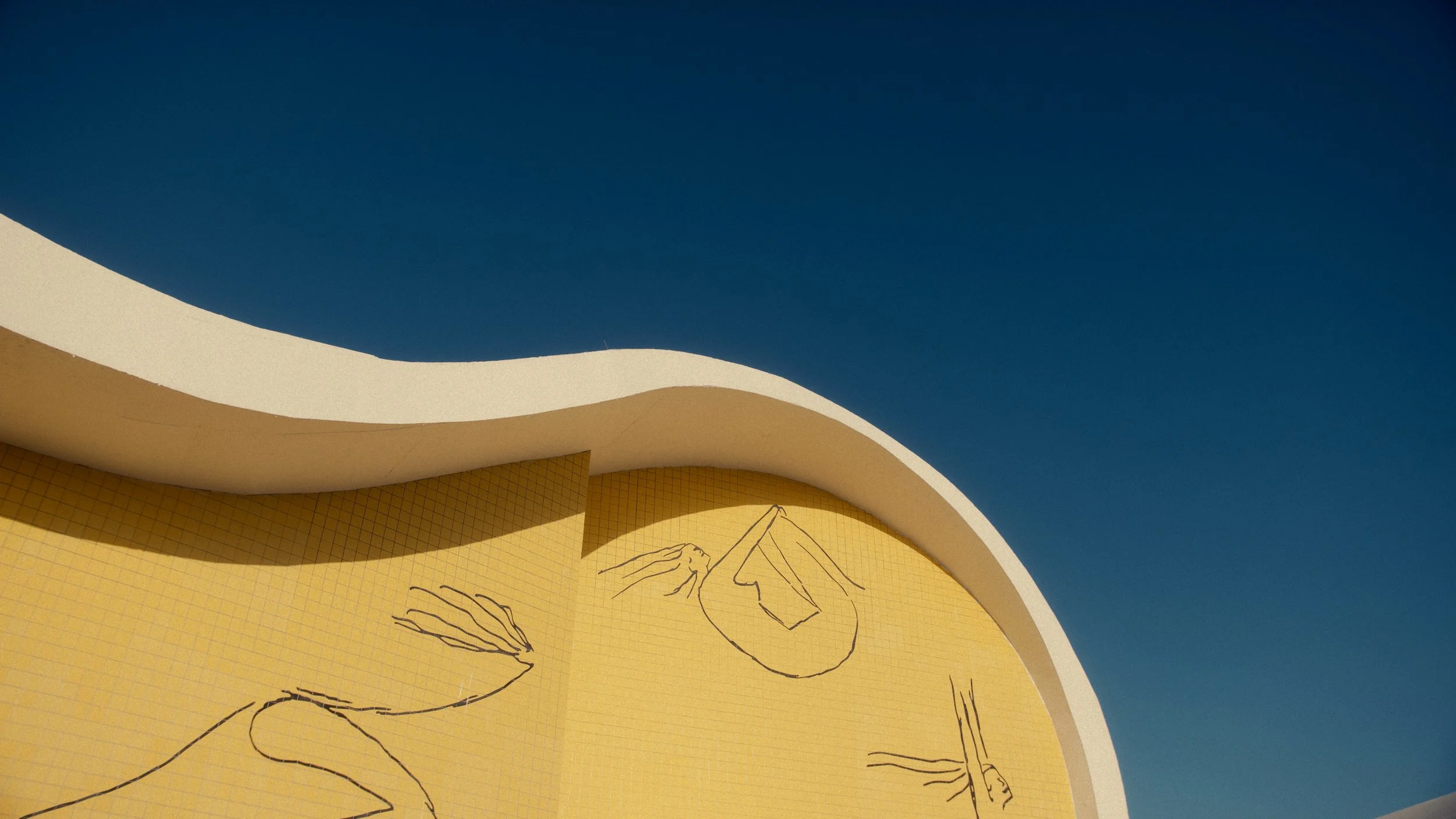
Directed and shot by Brazilian filmmaker Duda Bertho for TRESSÉ Paris, the film plays with the contrast between the scale of Niemeyer’s architecture and the human body moving through it: concrete curves dwarf the figure in one moment, while carefully framed details bring fashion back into focus in the next. There is a deliberate restraint to Bertho’s approach, with minimal movement, graphic compositions and bold interventions of colour allowing architecture, styling and landscape to share the frame without competing for it.
The result sits somewhere between fashion film, architectural study and visual travelogue, using the particular language of Brazilian modernism to explore how clothing can inhabit—and be transformed by—the spaces around it.
Suitcase do Brazil feels as much about architecture as it does about fashion, with Oscar Niemeyer’s buildings almost becoming another character in the film. What drew you to that relationship between fashion and space, and how did it shape your approach from the outset?
The original concept came from the brand and the amazing creative director Luciano Schmitz. From the outset, my role was to translate that idea into a cinematic language that still felt aligned with Tressé’s identity: restrained, elegant, and based more on observation than constant movement.
What interested me was the possibility of treating the architecture not simply as a location, but as an active part of the composition. The relationship between Tida’s presence and Niemeyer’s buildings was built through scale, geometry, and pacing. We often allowed her to remain almost completely still, giving the space room to breathe around her. At other moments, I would frame her from very wide angles, integrating her silhouette into the lines and shapes of the architecture. That relationship guided the entire visual structure of the film. The architecture informed when we should go wide, medium, or close, when an image needed time to breathe, and when a minimal camera movement could add something. Nothing was heavily choreographed.
We also had to remain very responsive to the location. The light would shift, or a particular composition would suddenly reveal itself, and we would adapt the scene around that moment. Some of those spontaneous alternatives became even stronger than what we had initially imagined. So, in many ways, the architecture established the framing, and the framing then established the rhythm of the film.
Rather than relying on big camera moves or performance, so much of the film’s rhythm comes from framing, colour, and the relationship between the model and the architecture. Was that always the intention, and how did you find that balance?
From the beginning, we never planned to rely on large camera movements. Whenever I have enough time and freedom on a fashion film, I prefer to begin each setup on a tripod. It allows me to establish the image through framing first, rather than using movement to create interest.
For each scene, I would usually start with a carefully composed wide or medium shot, paying close attention to how the model interacted with the architectural lines. From there, I would move closer for details and more unusual angles. Ítalo, our second camera operator, was working with a Ronin, so we also captured subtle push-ins, parallax movements, and a few circular or following shots as additional possibilities while keeping the set fast.
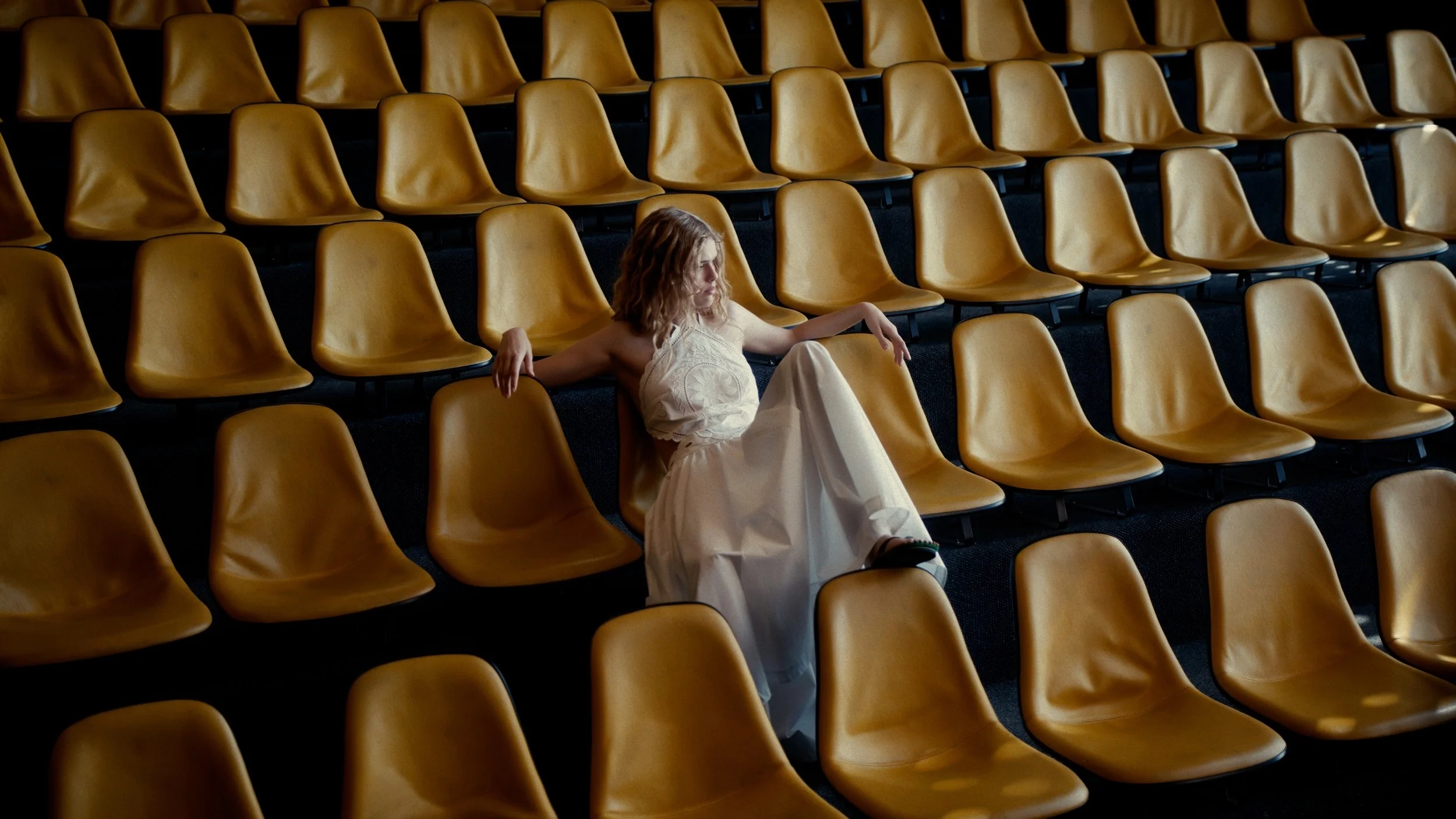
In the edit, though, I found myself using very little of that movement. What felt strongest were the static compositions: the yellow chairs, the repetition of lines across the buildings, or the image of Tida appearing very small beneath the dome. In those moments, the contrast between the weight of the architecture and the delicacy of her presence already created enough tension and rhythm. So the restraint was always intentional, but the balance became clearer once we were on location. We arrived with a visual method, and the architecture expanded it by revealing compositions that did not need much movement at all.
“So, in many ways, the architecture established the framing, and the framing then established the rhythm of the film.”
You directed, shot, and edited the film yourself. How does working across all three roles change the way you approach a project? Do you already have the edit in mind while you’re shooting, or does the film really come together once you’re in the edit suite?
For a graphic project like this, I usually have a strong sense of the edit before we begin shooting. The rhythm, the breathing space between cuts, and even the relationship with the soundtrack were already developing in my head. I made a playlist of around ten tracks before the shoot, not necessarily to choose the final song, but to establish the mood and tempo of the film.
Working as the director, cinematographer, and editor creates a very direct relationship between intention and execution. While I am framing a shot or directing the talent, I am also thinking about its position in the edit: how long it might hold, what could come before or after it, and whether I already have enough material to build that particular sequence.
Because this film was restrained and composition-driven, that approach felt quite natural. We were mainly working with a tripod, subtle movement, natural light, and relatively simple lighting setups for the interior shots. It allowed me to stay close to the camera, communicate directly with Tida, and constantly balance what we were discovering on location with the version of the film already forming in my mind. The first assembly came together in about an hour because the structure was already very clear to me, although I spent much longer refining the pacing, sound, and smaller details. That is one of the advantages of working across all three roles: certain decisions do not need to be translated into words for someone else. Sometimes the feeling I am looking for is very specific and difficult to explain, but I can recognise it immediately in the material.
At the same time, the process was not completely solitary. Gabriel Novis, an incredible director and my partner at Dear Stranger Films, supported the project throughout pre-production and post-production. He co-directed remotely and brought valuable creative input both to the nuances of the shoot and to the final piece. Having someone I trust looking at the film from a different perspective helped me refine the ideas without losing the immediacy of working across the three roles. The film is also never completely predetermined. One of my favourite parts of the process happens the following day, when I make a coffee and look through the footage with a clearer head. That is when I often discover the small, unplanned moments where something special happened inside those compositions. So I shoot with the edit in mind, but I still rely on the edit to reveal the film fully.
“The subject may change, but the way each filmmaker sees it remains deeply personal.”
Your work moves between fashion films, documentaries, and outdoor storytelling, but there’s a similar sensitivity running through all of it. Do you see those different worlds feeding into one another, and has moving between them helped shape your visual language?
Definitely. Those worlds feed into one another all the time. I have worked quite a lot in fashion over the past two or three years, but documentary filmmaking has had a major influence on the way I think. Working as a director, cinematographer, or editor on documentaries has made me much more conscious of narrative, even when the story is not immediately visible or expressed through dialogue.
That narrative awareness follows me into fashion. Even in a short, highly visual film, I am still thinking about progression, tension, rhythm, and where the viewer’s attention is being guided. The story may be contained in a gesture, a change in scale, the relationship between two shots, or simply the amount of time we allow an image to breathe.
Outdoor storytelling has always felt very natural to me because much of my early work was made outside, using available light and responding to real conditions. That taught me to observe closely and adapt quickly. Fashion has brought a different kind of precision into that process. It brought me a stronger awareness of shape, styling, composition, and control. Moving between those environments has allowed each one to influence the other.
It is difficult for me to isolate exactly where they merge, because the visual language appears quite instinctively whenever I pick up a camera or begin an edit. It might be expressed through a silhouette, a particular focal length, the way the light falls within a specific environment, or simply the moment when an image feels balanced to me.
Ultimately, I think visual language comes from personality, instinct, and subjectivity, what one person finds beautiful, meaningful, or worth observing. You could give the same project to two equally accomplished directors and receive two completely different films. That is one of the things I find most beautiful about this profession. The subject may change, but the way each filmmaker sees it remains deeply personal.
Looking ahead, what kinds of projects are you hoping to make more of? Is there anything you’re excited to explore next that feels like a natural step on from Suitcase do Brazil?
Looking ahead, I hope to make more projects that feel as graphically and visually impactful as Suitcase do Brazil. I would love to continue creating fashion films with a strong identity and to explore completely different conceptual worlds through each one.
At the moment, I am also working on a five-episode television series in Brazil. A narrative-driven project and a very different challenge, which is something I find genuinely exciting. It is pushing me to think more deeply about character, structure, and how a story develops over a longer period of time.
A natural next step would be to bring more of this visual language into narrative work, while continuing to direct and shoot those projects myself. I am interested in finding a space where strong composition, atmosphere, and visual sensitivity can exist alongside character and story.
Ultimately, my main goal is simply to create beautiful things and to keep looking at life through that lens. Whether it is a commercial film, a personal project, a television series, or photographs taken while travelling, I want to approach the world with sensitive eyes. For me, that sense of attention is enough to live a happy life.
director & cinematographer — DUDA BERTHO
co-director — GABRIEL NOVIS
executive production — MAWÉ PRODUCTIONS
production company — DEAR STRANGER
talent — TIDA ROSVALL
creative direction — LUCIANO SCHMITZ
creative direction assistant — MARIANO MORENO
photographer — GLEESON PAULINO
photographer assistant — DANIEL SULIMA
2nd unit camera — ITALO AMORIM
1st ac — GABRIEL GUERRA
still colour & retouch — BRUNO REZENDE
art — PAU A PIQUE DESIGN
styling assistant — ROBERTA CAMPOS
hmua — PIU GONTIJO
set manager — BOMBINHA
production manager — GIU MULLER
production assistants — LUCAS PETIT, CLEYTON MACHADO, NETO OLIVEIRA, NALDO
video post production — DUDA BERTHO