HUNDRED ACRES
A theatrical reverie unfolding on the streets of Los Angeles
Directed by Daren Rabinovitch
words by Katie Huelin and Isabella Bazoni
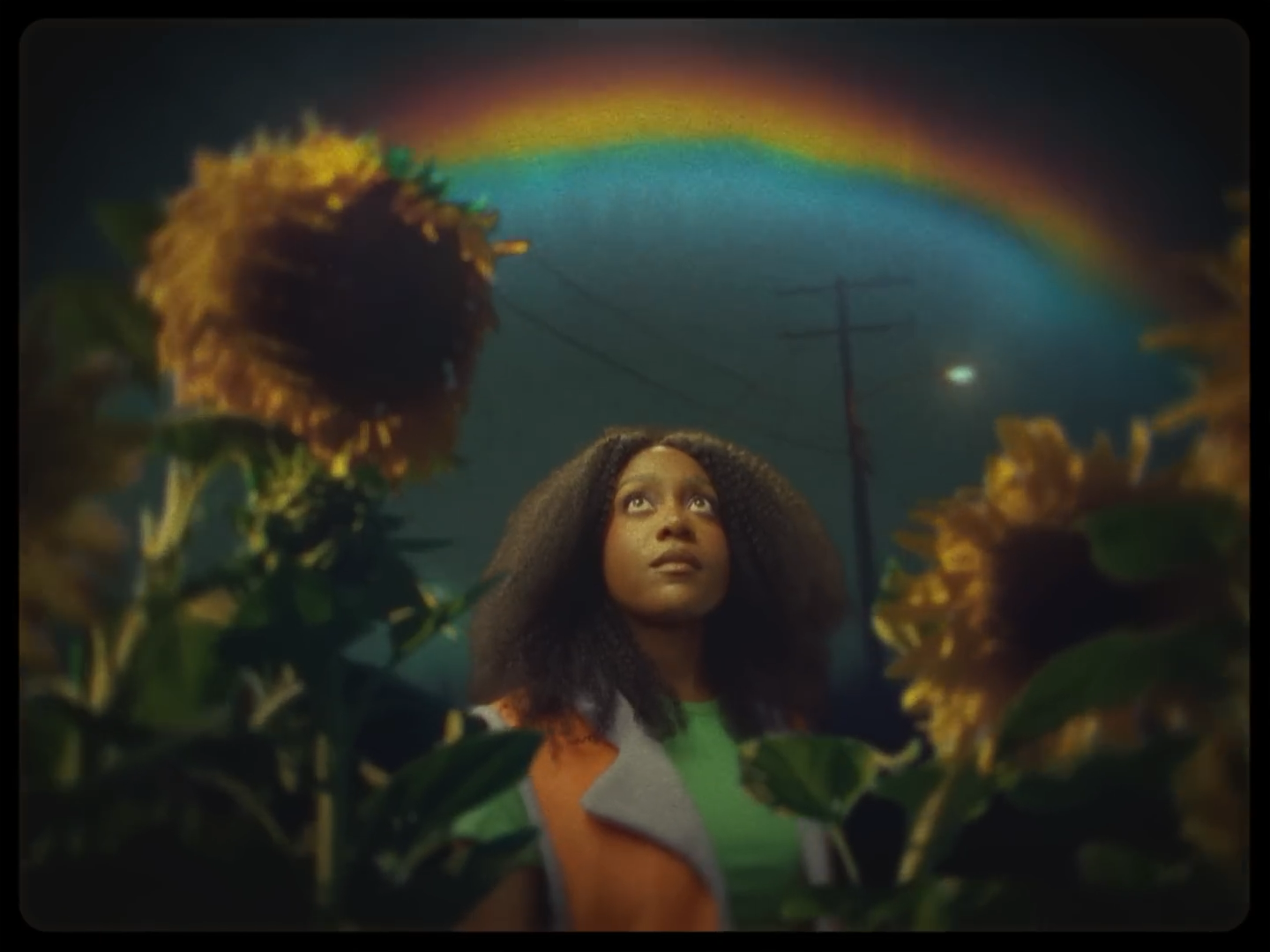
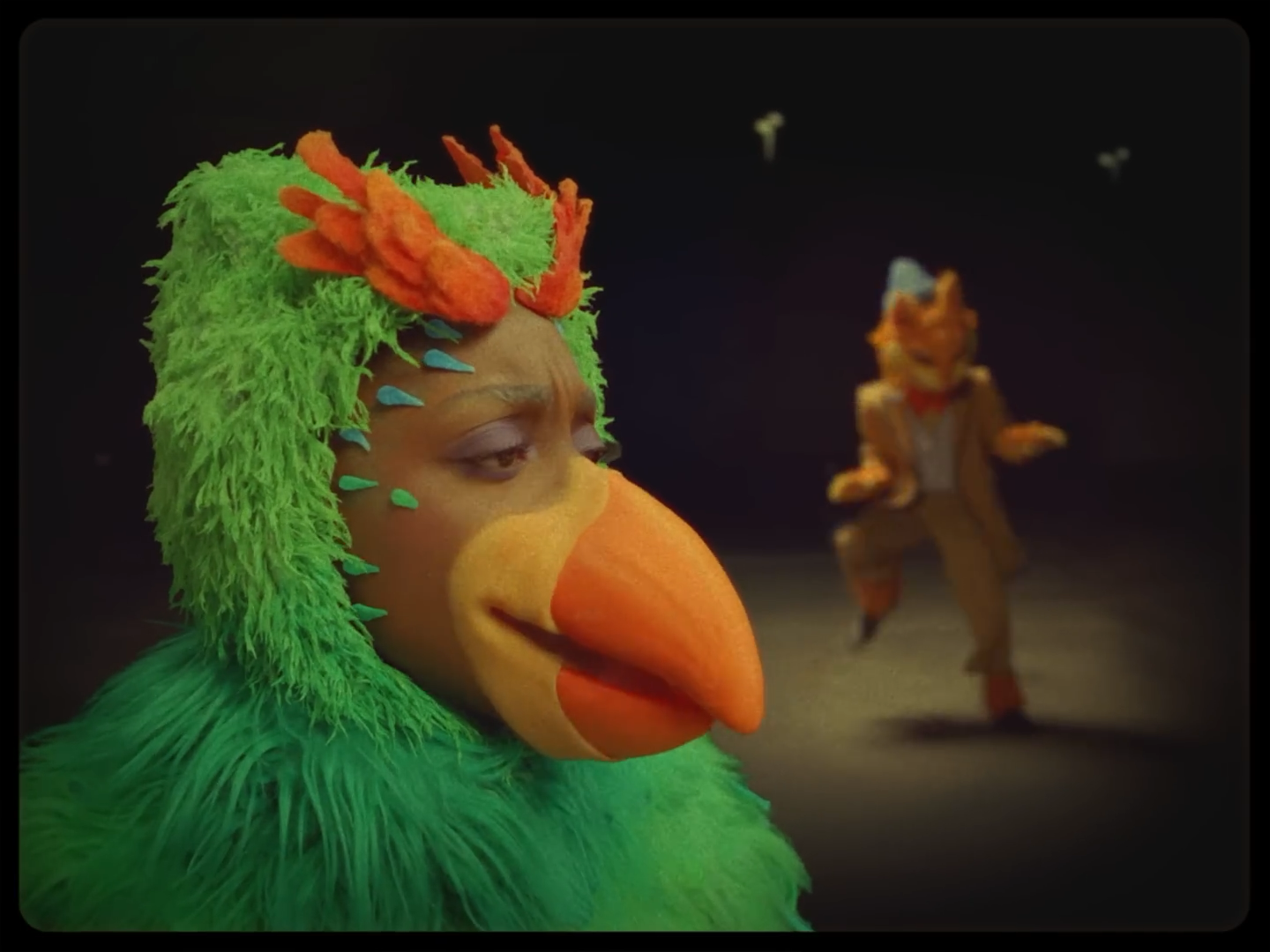
HUNDRED ACRES unfolds across the streets of Los Angeles, where felted creatures, dance, and the urban landscape quietly converge. Directed by Daren Rabinovitch of Encyclopedia Pictura, the music video for Noname revisits magical realism through tactile craft and spontaneous discovery. Prosthetic transformations, handmade costumes, and in-camera effects shape a world that feels playful yet grounded and oddly nostalgic.
Filmed in streets and parking lots, the piece resists digital spectacle in favour of presence. Fantasy emerges not as escape, but as something discovered through motion, collaboration, and the subtle elasticity of everyday reality.
HUNDRED ACRES feels like a burst of magical realism. How did the collaboration with Noname first come about, and how did that relationship shape the theatrical world you built for the video?
Noname reached out to us directly after seeing our previous videos, which are even more theatrical in nature. Given the real things she talks about in her lyrics, we thought “magical realism” would be a good way to spin that theatricality. We shot everything in L.A., using our studio as a base, and filmed mostly in the streets and alleys nearby, which brought a looseness that fits the vibe of her song.
In contrast, the puppets were very intentional. They were inspired by some of Beatrix Potter’s ballet costumes that we love. And we put a lot of work into them to make them magical enough to carry their scenes on their own. When we finally met up with Noname to shoot, it felt like giving her a present to unwrap, and I think she was genuinely delighted.
The prosthetics and creature design bring the lyrics to life in such a tactile way. Why was it important for you that so much of this world-building happened in-camera rather than digitally?
If I had my way, we’d do everything in-camera. You can feel a heartbeat under there. It’s an aesthetic choice and also a lifestyle preference. I’d rather be with people – rehearsing with dancers, working on costumes, discovering locations. The joy I take in that comes through to the audience, too. I actually did a fair amount of post afterwards, expanded the world, and gave some more liveliness to the characters. However, those changes are largely invisible to maintain realism.
“If I had my way, we’d do everything in-camera. You can feel a heartbeat under there.”
You created a really striking colour universe; neon accents, warm saturation, and a textured glow. How did you and cinematographer Devin Whetstone develop that palette, were there any key visual references guiding the look?
Devin was a great collaborator. Leading his team with a camera strapped to his chest, navigating through LA traffic, choreography, and FX studio setups. He also did an incredible job shaping the magical lighting in the dance sequence. However, I would say that the costume design and final grade are the two primary reasons for the specific color of the video. Isaiah Saxon, my editor and colorist, contributed a great deal to that. And Michaela Ross and Sajida Silva were very conscientious in how they executed the costumes based on our concept art.
You’ve long worked at the intersection of fantasy and reality, from Wanderlust to now. What did HUNDRED ACRES allow you to explore or refine in your practice, especially when collaborating with an artist as grounded and poetic as Noname?
As I mentioned, the realism dictated the looseness of the shoot. I’d only ever made one other video with that style – our Dirty Projectors piece with Drew Daniels, now shooting for Sean Baker. So, I know that you can create something magical and visually compelling while essentially finding it as you go, staying open and alert to the moment. Fatimah(Noname)’s groundedness was key – her authenticity carries a lot of it. Noname’s playfulness encouraged us to build this puppet dream world, just as we had on Wanderlust. And it was a chance to explore within the vocabulary we developed with Wanderlust, as well as in my films before that, The Tale of Hillbelly and Tactical Advantage – felted patterns, a bold color language, and playful yet detailed character design.
“You can create something magical and visually compelling while essentially finding it as you go, staying open and alert to the moment.”
Movement is a quiet but powerful part of the storytelling. What was your process working with choreographer Mike Tyus to shape how these hybrid characters move?
I was really honored when Mike joined the project. Mike’s playfulness is constant and free-flowing. I admire how he can fit into any project – from FKA twigs to something very childlike like this. He worked very spontaneously within the cartoonish, modern jazz musical style we wanted– and made it his own. He also made two brilliant casting choices, Marco Palomino and Lucas Diabasi, whose dance styles looked like those creatures. Amazing!
You’ve directed for global artists like Harry Styles, bringing true creativity to the video for Two Ghosts, as well as working across commercial work. What’s next for you, are there any kinds of worlds are you hoping to build next?
I’m developing a feature about human-animal telepathy at a school for troubled teens. It’s associated with many ideas from California, including alternative schools, techno-spiritualism, animal consciousness, and altered perception. I think about those sorts of things. However, I think other people will enjoy it because of the subtle family dynamics that hold the whole thing together.
An ENCYCLOPEDIA PICTURA film
written & directed by DAREN RABINOVITCH
production company - ENCYCLOPEDIA PICTURA
executive producers - DAREN RABINOVITCH & ISAIAH SAXON
senior creative producer - ISAAC KARSEN
edit, color & titles - ISAIAH SAXON
cinematography by DEVIN WHETSTONE
choreography by MIKE TYUS
dancers - LUCAS DEBIASI & MARCO PALOMINO
costume design - DAREN RABINOVITCH, ISAIAH SAXON, MURRAY NELSON
FX fabrication - DAREN RABINOVITCH & MICHAELA ROSS