THE DREAMING
A meditative journey through darkness, light, and the body’s subconscious landscapes
Directed by Vanessa Choi and Benson Koo
words by Katie Huelin and Isabella Bazoni
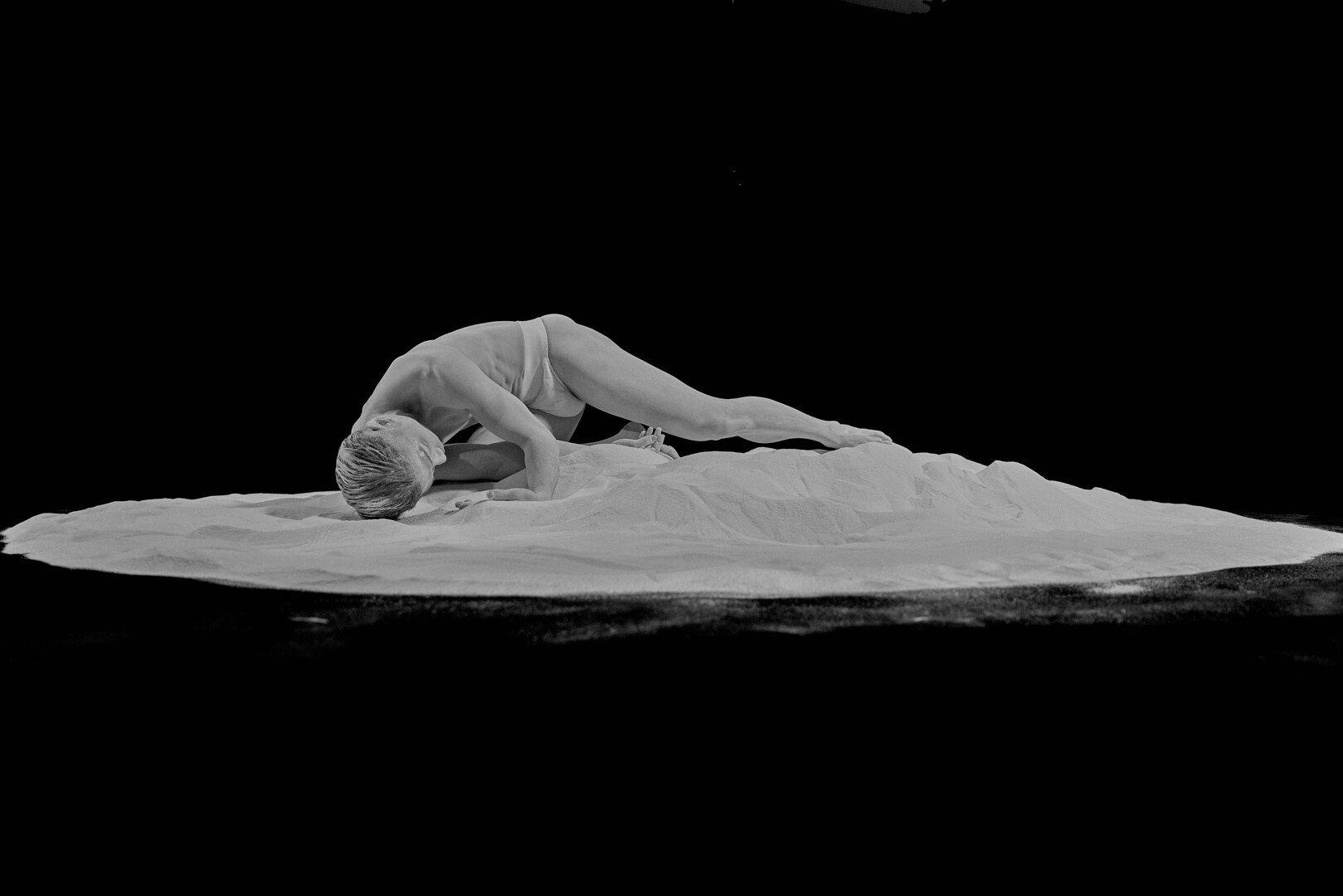
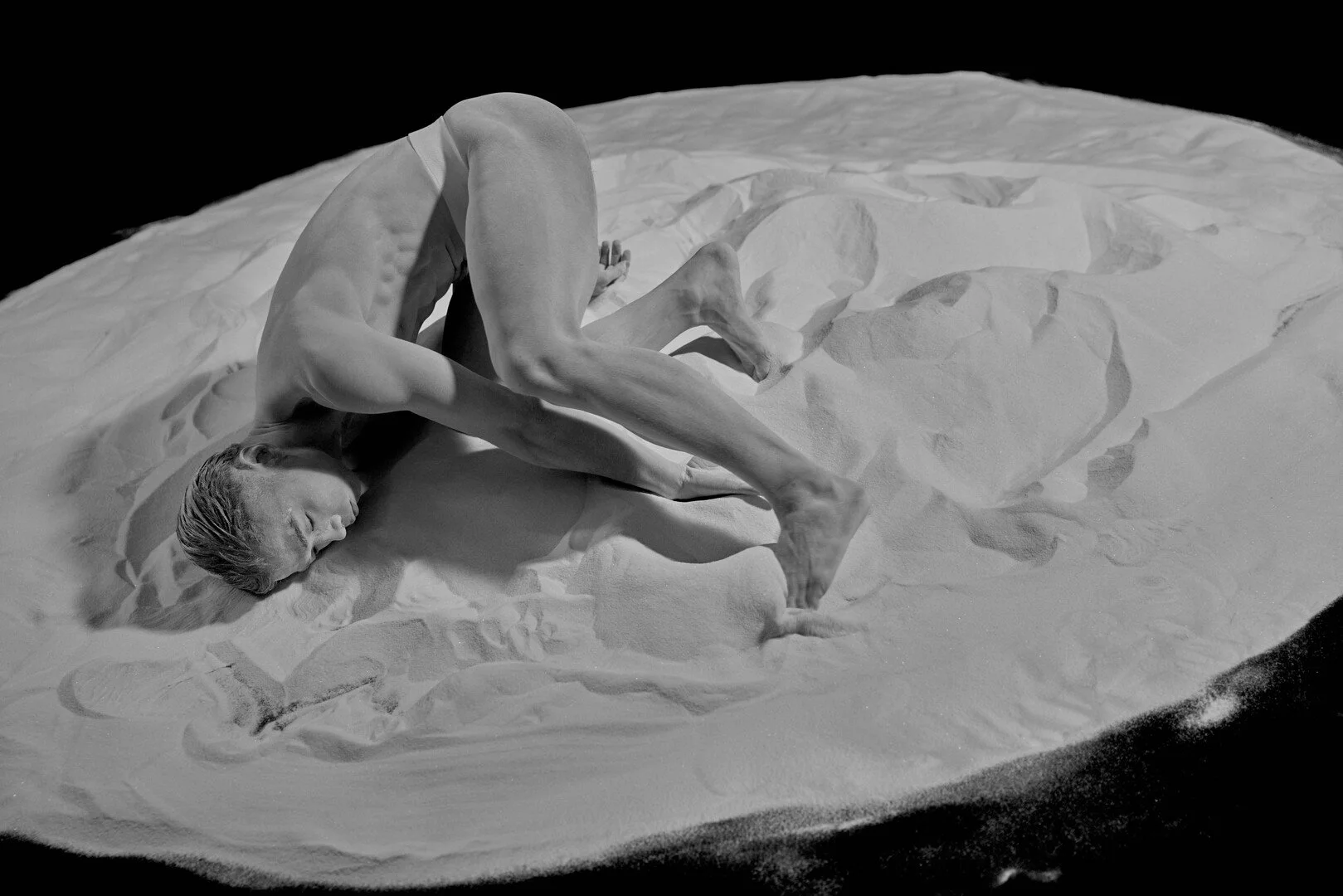
The Dreaming explores the fertile interplay between darkness and light, revealing how one nourishes the other in a perpetual cycle of becoming. Through a choreography that blends Butoh-fu and folk dance, the piece transforms the body into a vessel for the subconscious, where desire, fear, longing, and potential emerge in movement. Darkness is not absence but presence, a living space from which light arises, expands, and ultimately returns.
Guided by directors Vanessa Choi and Benson Koo, whose work bridges ritual, aesthetics, and embodied memory, the performance invites audiences to witness the transformation of the self through trial, presence, and the poetic language of the body.
The Dreaming centers around humanity’s oldest questions about existence and desire. What first compelled you to explore these themes through a live, multi‐sensory performance rather than through traditional narrative forms?
Subjects such as human existence and desire are often so visceral and primal that I want to communicate with my audience at a more personal level — to create an experience that engages all their senses and connects with and awakens their inner self. Besides, this version of The Dreaming is a remake of my 2023 live performance, in which I explored the meaning of being human. My belief is that holiness or ‘god’ in a loose sense exists in every one of us. We all carry a piece of holiness within, and only by connecting with one another can we piece together the full picture of god. Given the nature of my exploration, I would like to continue this journey of discovery through a live performance as an extension of my inquiry.
Your work grows out of a deep engagement with your own roots and heritage — from Butoh to indigenous studies, folklore, and ritualistic art forms. Which aspects of that lineage felt most resonant as you shaped The Dreaming, and how did they inform the movement and sensory language of the piece?
The Dreaming is choreographed using Butoh-fu, in which I create a vocabulary with my dancer based on text I have written and imagery I have found. I think Butoh has been such an inspiration for me, as it has pushed the dancer to really look into themselves and connect with their inner-scape while shifting and expanding with its transformation. And what’s interesting about this transformation is that it can be inspired by so many things. In The Dreaming, I drew inspiration from Hinduism — something I’ve been studying lately — especially the imagery surrounding Lord Shiva, and incorporated it into my choreography and characters.
In the choreography of The Dreaming, I drew a lot of inspiration from nature and the everyday, seeing rituals as an artistic expression of our daily lives. And when we truly immerse ourselves in nature, we’ll be able to observe and capture the rawest way of living. Thus, if you look closely at The Dreaming, you might see the birth of a giraffe, the mating dance of the bird, and so on.
“My work often explores human connections, and being able to establish that with my audience (in a live context) creates unexpected sparks in the performance, which may even lead it somewhere my performers and I have never envisioned.”
The show dissolves the boundary between performer and audience. What guided your decision to create such direct interactions and what do you hope that proximity unlocks?
My work often explores human connections, and being able to establish that with my audience (in a live context) creates unexpected sparks in the performance, which may even lead it somewhere my performers and I have never envisioned. Personal interactions and connections are powerful and inspiring, and often expand our perceptions when we least expect them, giving us insights into our human nature and emotions and inspiring more in-depth conversations.
I also hope that my audience will find themselves in my performance and begin their own exploration within.
You weave live music, dance, film, and vocal recordings into a single experience. How did you develop a sensory vocabulary where each element feels essential rather than ornamental?
For me, I don’t see these elements as independent, I see them as a whole. Just like when we go on with our day, we subconsciously engage our vision, voice, senses, and body; these are the things that make us human — and so, the same goes for my dance. I’m working with the most visceral sense of our being. Dance is merely the body moving; Music is our voice and the sound of our minds; Film is our eyes, capturing all these through lenses that extend from our minds and bodies.
The work invites audiences to confront their own fears, desires, and inherited identities. What questions about humanity felt most urgent for you to explore through this piece?
Fear. I think fear is such an interesting emotion because not only does it inhibit us from living our truth, but it also makes us do unexpected, and sometimes hurtful, things. In The Dreaming, darkness is omnipresent, but it is never truly empty. It’s constantly buzzing with life, and at any given second, light might burst through and live its course, creating possibilities in the dark. I think the same goes for death and life. We’re heartbroken by death because we perceive the dead and the living as linear, but as soon as we see that death exists in every life, and life continues after death, this superficial concept of death and life becomes less daunting.
The name of my dance piece, The Dreaming, is actually a tribute to the Indigenous concept of a non-linear perception of time where past, present, and future connect and exist without division.
“Fear… not only inhibits us from living our truth, but it also makes us do unexpected, and sometimes hurtful, things. In The Dreaming, darkness is omnipresent, but it is never truly empty. It’s constantly buzzing with life, and at any given second, light might burst through and live its course, creating possibilities in the dark.”
After creating a work that asks so much of both performers and audience, what did the process leave you holding, both creatively and personally?
I definitely want to go even deeper with my performers and respond more deeply to our evolving inner-scapes. For me, each performance is a death-and-rebirth cycle, and I see my performer transform every time. I hope to capture this beauty and morph it into creative energy for our next work. At the same time, I always love to hear back from my audience so I can connect more deeply with them and open my mind to deeper exploration in the future.
director - VANESSA CHOI, BENSON KOO
producer - VANESSA CHOI, KA LUN YAU
key cast "light" - CHIA MING LEE
key cast "dark" - VANESSA CHOI
music - OLIVIER CONG, THE FREESPACE ENSEMBLE
assistant director - BUNNY YUK MING LEUNG
director of photography - RAY TANG
camera assistant - BRENDA WONG