Axel Digoix on his decade-long collaboration with Tinariwen and his UKMVA-winning Erghad Afewo
Directed by Axel Digoix
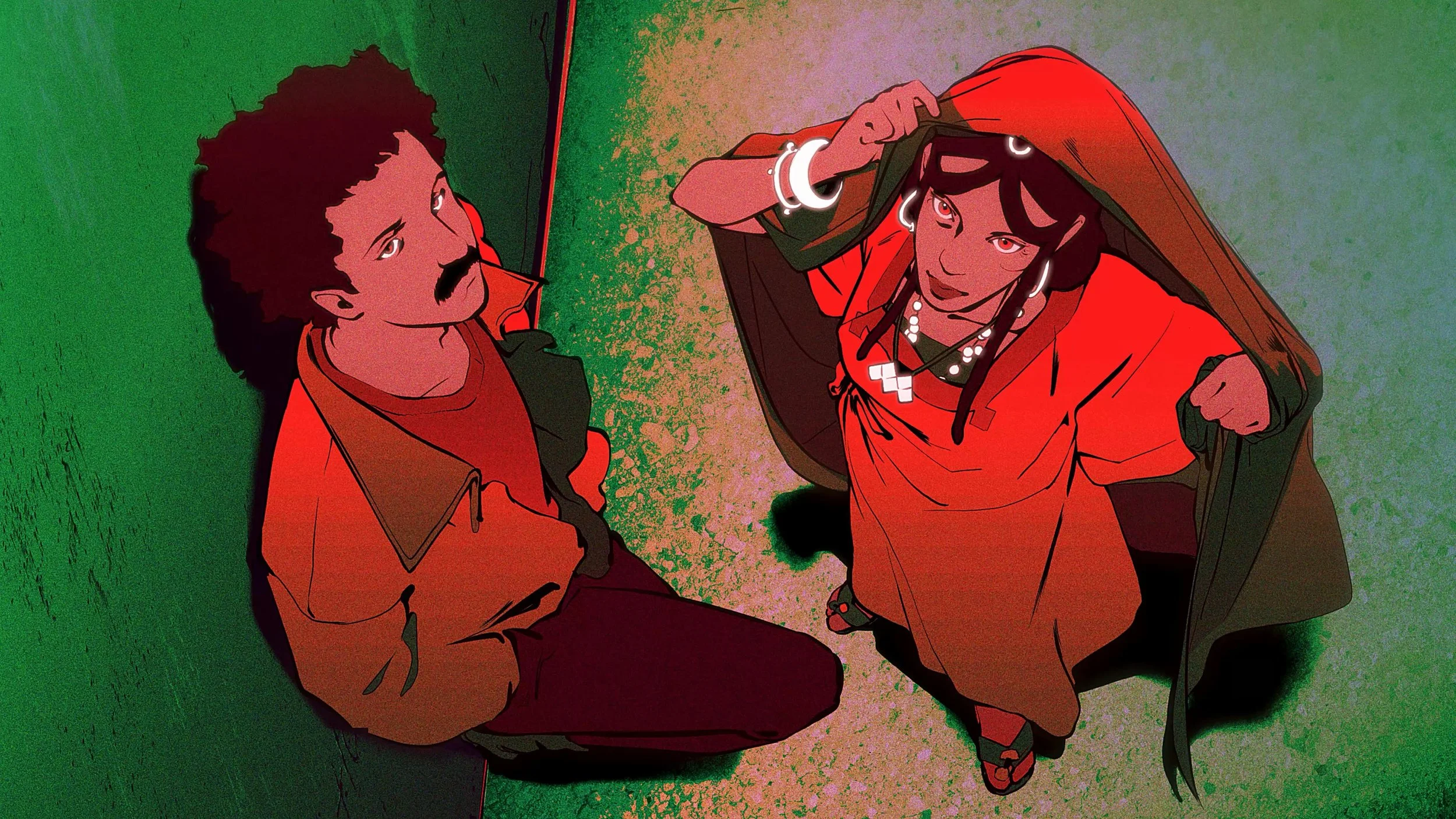
The UKMVA returned to London’s Roundhouse on 4 November. Romain Gavras’ video for Gener8ion starring Yung Lean was the big winner of the night, taking five awards including Video of the Year. Kneecap took three awards, two of them for Thomas James’ Irish Goodbye, Nicolás Méndez’s video for Rosalía’s Berghain featuring Björk and Yves Tumor won two, and Aidan Zamiri was named Best Director for his work with Charli xcx. Among the videos we were especially fond of were Ahmed Razeek’s BZNS for Mond, which won Best Cinematography for Mostafa El Kashef; Alex Acy and Rémi Belleville’s Bad Moons for American Football, winner of Best Rock/Alternative Video – Newcomer; and Erghad Afewo by French director and animator Axel Digoix, for whom the Sahara has become a second home. Ten years after Ténéré Tàqqàl and Nànnuflày, Digoix returned to Tinariwen and won Best Animation in a Video. The collaboration started almost by accident: a chance meeting with the band’s manager in a Paris bar, at a time when the situation in the desert made live-action shoots very difficult. Since then, Digoix has slowly built a closer understanding of Kel Tamasheq culture and of the political turmoil that shapes daily life across the region.
First of all, congratulations on winning Best Animation in a Video at this year’s UKMVA! Erghad Afewo marks your return to Tinariwen, ten years after Ténéré Tàqqàl and Nànnuflày. Can you share how this new collaboration came about?
Thank you for the UKMVA! My collaboration with Tinariwen began somewhat by chance. In 2015 in a bar in Paris, a friend randomly introduced me to Tinariwen’s manager, and we got talking about animation as he mentioned that the situation in the desert made live-action shoots particularly difficult. The vibe was cool and we felt like giving it a shot. It was the first time I heard Tinariwen's music, I was immediately moved by it, and also very impressed by the freedom and resistance they represented.
I quickly came back with a pitch, the band liked the idea and, to my surprise, gave me complete creative freedom to make their first animated video. It might seem like a detail, but I was a complete nobody who had directed nothing; still, they gave their absolute trust. It was a huge responsibility considering the band's influence. I couldn't disappoint them so I dropped everything I was working on and poured all my energy into it.
The response to that first film really took me by surprise. A lot of people loved it and it had a huge impact, both for me and for the band. So we decided to keep walking together.
“I was a complete nobody who had directed nothing; still, they gave their absolute trust”
The video weaves politics and personal drama into a story of epic scale set in the Sahara. How did you approach the themes, and how did you balance the wider political context with the intimate human story at its centre?
The political themes are fundamental in Tinariwen's music. It is in the lyrics, in their personal lives, and it even resonates in the sounds. The political situation in the Sahara is not something that happens aside from your work, relationship or private life; it regulates everything, it destroys everything. When you listen to the life stories of the Kel Tamasheq (Tuareg) people, the chaos is omnipresent. So there is no way of addressing one point and dismissing the other, as they are connected.
You are a French director telling a story rooted in Tuareg culture and the realities of the Sahara. How did you approach representing this heritage and how did your long relationship with Tinariwen shape the way the story and its world come across on screen?
Strange how someone as far from the Kel Tamasheq like myself ended up in this position. I still wonder how it happened in the first place, but it worked because I didn't take it for granted. I couldn't be lazy and place my ignorance on film, I would have been ashamed to do so. I had to get curious and learn before talking.
In the different music videos I directed for Tinariwen, you can clearly see the evolution of my awareness of the Sahara region and the confidence in my narrative. Starting from basic knowledge in Ténéré Taqqal (2016), I took the choice of a very poetic, distant and metaphoric film. Then in Nannuflay (2017) you can feel that I went into the desert and met people, as it tells a much more intimate story about the loss of a close friend in times of resistance. Ten years later with Erghad Afewo (2026) I had gained so much more experience and knowledge in the field that I felt fully legitimate and confident addressing these topics.
Beyond the films themselves, I love the story behind their making: a complete stranger who was invited to dive into an unknown world, and in a way, found a home there.
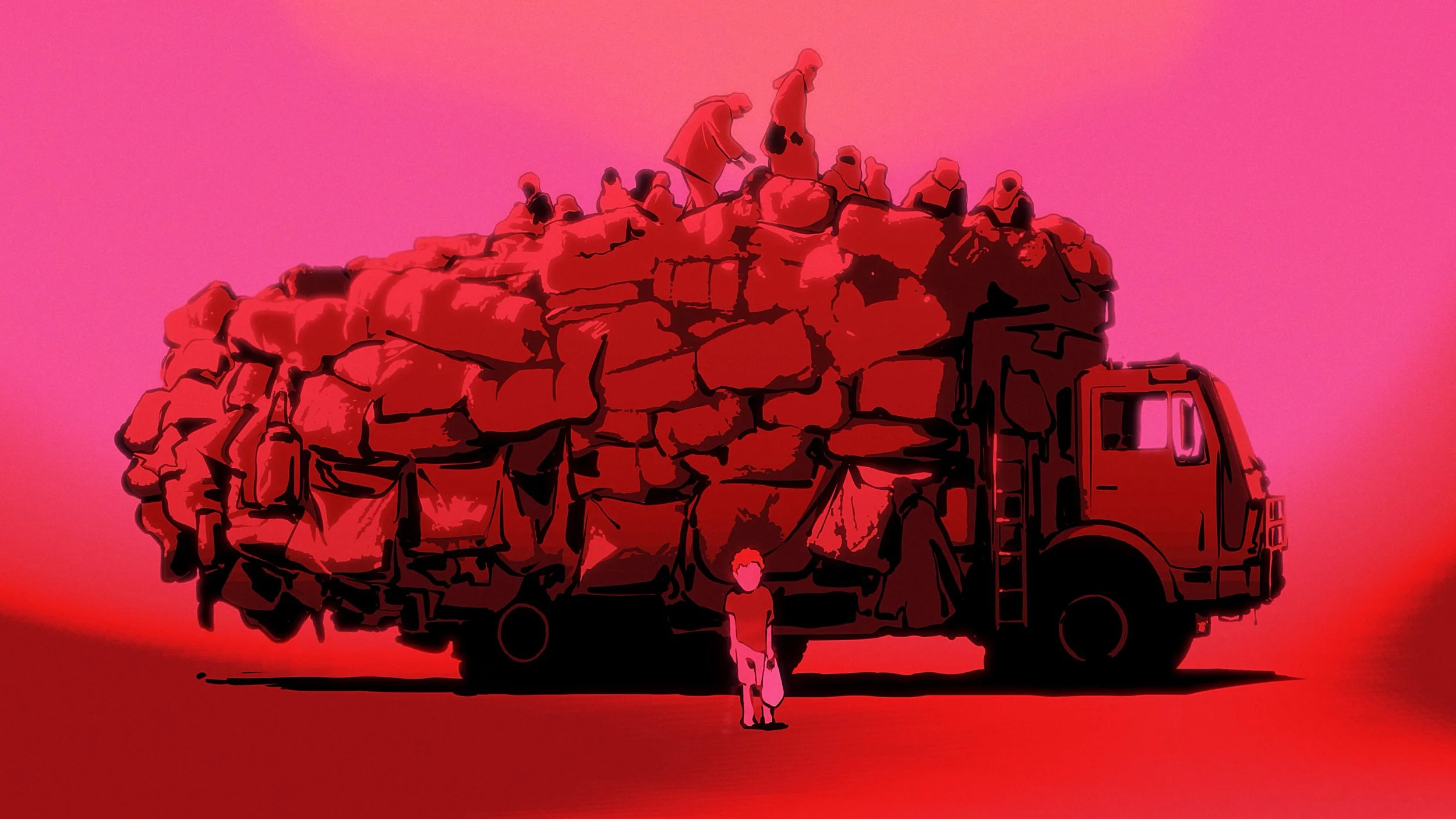
“The thick lines and rough treatment come from an attempt to save time and skip the lengthy animation cleanup process, so my rough stage had to be nice enough to make it in the final edit, which kind of became a signature”
The comic book-like style lets you cover a long timeline while keeping the piece musical. What drew you to this approach, and how did you make the animation follow the rhythm and mood of the music? You’ve also worked across 2D, 3D and VR. How did that experience inform the techniques you chose for this project?
I strongly believe that an artist can't choose what his/her art looks like, it's influenced by everything that surrounds you. It’s like your personality, it just happens to you and you have to go with it whether you like it or not. At first it's shit, but give it time and care and it will start to make sense. Eventually people will like it.
In my case, I guess it’s the lack of skills in colors that pushed me to work with extreme colors, so my flaws weren't that obvious. Ultimately I learned to play with those palettes. The thick lines and rough treatment come from an attempt to save time and skip the lengthy animation cleanup process, so my rough stage had to be nice enough to make it in the final edit, which kind of became a signature. For Tinariwen, I really wanted my image energy to match the music one: no artifice, just rough, bold and emotional. It's like when you talk to someone new and you try to match their vibe and it ends up playing a part in your own personality.
When it comes to technical choices, I simply took the most rational solutions to deliver the best results while offering the most straightforward approach.
You handled art direction, character design, storyboard and lead animation yourself, alongside a team of animators, background artists, 3D and compositing. How did you keep the visual language consistent across the team and what were the biggest challenges in producing a piece of this scale?
The first challenge was to gather finance. Even a huge band like Tinariwen can't cover the expensive cost of an animation project of this scale. Thanks to Wizz Production, who supported the project and helped find the budget to make it happen.
The second challenge was timing, as we had a few months before the album release, no time for doubts, retakes or comebacks. That’s why I needed to meticulously pave the way on every aspect for the team so that they knew precisely what to focus on. It cost me most of my nighttime, but it allowed everyone to be very productive and finish on time.
Your career has gone from training at the Georges Méliès School and feature films like Despicable Me and The Little Prince to VR projects for Google shown at the V&A, a residency at Tenjinyama Sapporo Art Studio. How have those experiences fed into your work as a director? And what does the UKMVA win mean to you, both for this collaboration with Tinariwen and for where you want to take your work next?
I loved working in the animation industry as a technician at many levels, in both 3D and 2D for Despicable me, Arcanes and Arco, to name a few. Also had the pleasure of directing commissioned projects for Riot, the Olympics Games or Netflix, among others, I even co-founded and managed an animation studio for several years. I kind of have seen enough now and I really want to focus on directing and what feels most important to me, which is writing. I have different fiction projects going on, a comic book is on its way, a short film script in refinement, and I even wrote a fantastical western feature film inspired by the Tinariwen music video universe. I always wrote stories, but the opportunity to bring one to life on screen is very rare. Tinariwen gave me that chance and allowed me to share my vision freely as an author and I'll forever be thankful for that.
This UKVMA price means a lot to me, I like to see it as a symbolic way of praising human connection. Against all logic, this weird animation nerd from the city met some dudes from a desert rock band and somehow it was bright enough to shine worldwide.
Director: Axel Digoix @axel.digoix
Produced by WIZZ @wizzdesign
Supported by @le_cnc
Art Direction: Axel Digoix
Character design: Axel Digoix
Storyboard: Axel Digoix
Lead animation: Axel Digoix
Animation: Camille Lherminier @camcamoufle , Léo Schweitzer @leo.m.schweitzer , Jean
Courtois @jean__courtois , Anaïs Maumet @anais.maumet , Paul Surmont @paulsrmnt
Background: Paul Duru @paul_duru_ , Mélodie Charrier Rangel @_.melococo._ ,
Alessandra Rosmarino @rosmaless
2DFX: Matis Inserra
3D: Hugo Garnier @hugo__garnier
Compositing: Benoit Galland @benoitgalland_art
Production: Amanda Stubbs @amandaletoeuff & Julie Bellemare @jujumasta
Production coordinator: Sara Burgio, Alice Sammut, Akito Martel
Editor: Anne Pulce @tatane_plc